


Cats certainly know how to swim, and it’s quite an interesting spectacle if you’ve ever seen them in action! For example, breeds like the Turkish Van are nicknamed “swimming cats” due to their natural affinity for water, while Bengals also display strong swimming abilities, often enjoying a splash around due to their water-resistant fur.
It’s important to note, though, that while cats can instinctively move in the water, not all felines have a liking for it, and it’s best not to generalize their abilities or preferences.
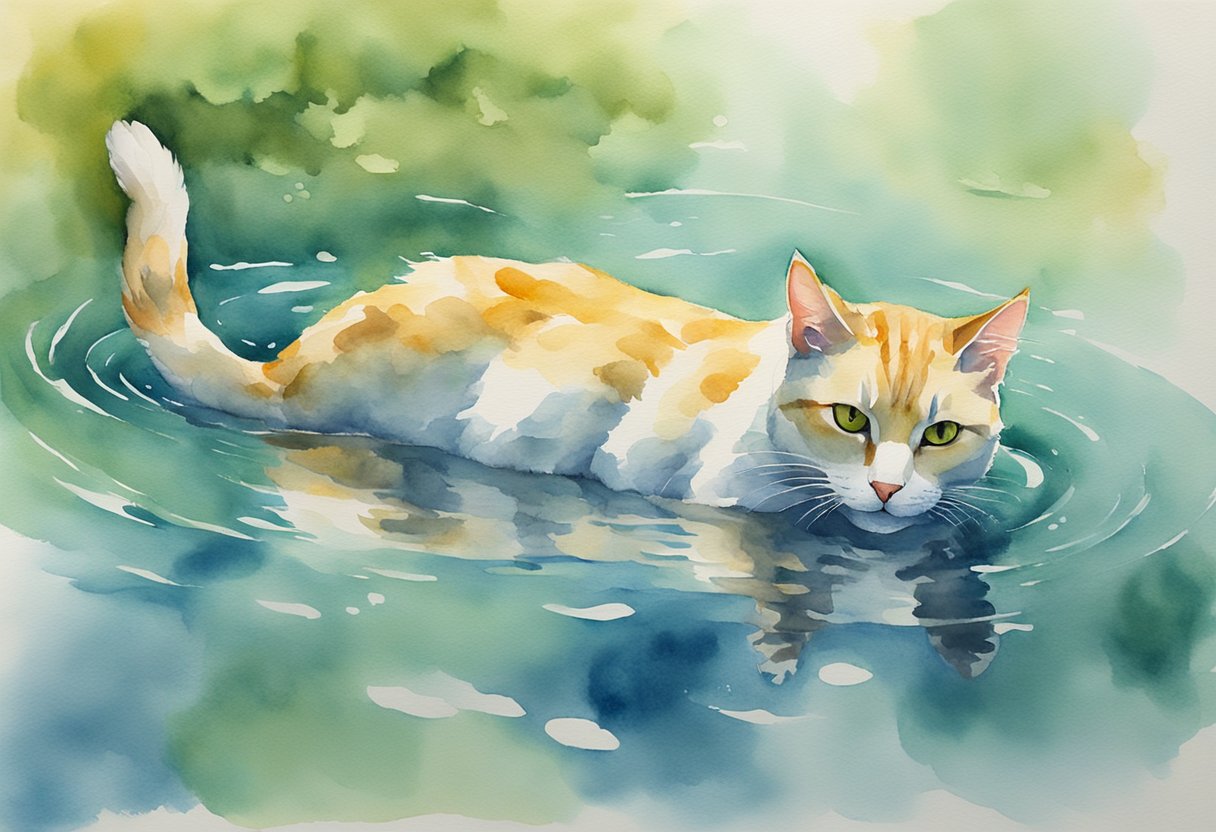
Drawing on my own experience as a cat owner, it’s been a mix of curiosity and surprise seeing my cat react to water. My little adventurer got himself into a bit of a situation by falling into the tub; to my amazement, he paddled his way out with efficiency that would make a doggy-paddle look amateur.
However, most of my other cats have shown a wide berth around the water bowl, let alone a body of water.
Understanding your cat’s individual preferences can turn the daunting task of a bath into an enjoyable experience—or at least a tolerable one. Some cats may never warm up to the idea of swimming or being in water, and that’s perfectly okay.
For those with water-curious kitties, small, supervised introductions to shallow water can be a safe way to explore this hidden aspect of their behavior. Whether your cat views water as a friend or foe, ensuring their safety and comfort should always be your priority.
Understanding Feline Swimming Instincts

When you think of cats, you might not picture them paddling through water. However, you’d be surprised to know that many cats have inborn swimming abilities.
Inborn Swimming Abilities
Your cat comes equipped with some natural instincts for swimming. Remarkably, despite popular belief, cats can swim from birth. Kittens display a paddling reflex which suggests that if placed in water, they instinctively know how to propel themselves – it’s hardwired into their brains.
Cats’ Relationship With Water
The connection cats have with water is shaped by their environment and past experiences. While domestic cats often appear to hate water, it’s usually due to a lack of familiarity. Introduce them to water gently and patiently, in a safe and comfortable setting such as a shallow pond, and they may become more comfortable over time.
Water and Breed-Specific Behaviors
Some breeds, like the Turkish Van, Maine Coon, and Bengal, show more of a propensity for water. They have physical adaptations like water-resistant coats and even webbed paws in some cases. Other breeds, such as Persians, may not be as keen due to their dense fur that gets heavy when wet.
Health Benefits of Swimming for Cats
Swimming offers cats low-impact exercise that can be great for weight management and easing joint problems like arthritis. For cats comfortable with water, swimming can improve cardiovascular health, keeping your pet agile and healthy for years to come.
Always remember to keep their safety in mind with appropriate precautions like life jackets and supervision to avoid accidents, such as drowning.
Introducing Your Cat to Water
When you decide to introduce your cat to water, it’s essential to do so with patience and careful planning. Creating a positive and safe experience is paramount to help your cat learn that water can be fun and not something to fear.
Preparation and Safety
Before you even fill the bathtub or bring out the kiddie pool, ensure that the environment is secure and free of hazards. Remove anything that could harm your cat or add stress to the situation.
Equip yourself with the necessary items like a life jacket for cats, especially designed for their anatomy, and have it ready in case your cat needs extra support. Always have multiple towels on hand for comfort and drying off afterwards.
- Checklist for safety gear:
- Life jacket specifically designed for cats
- Skid-proof mat for traction
- Towels for drying and comfort
Consider starting with just a few inches of water in a shallow tray or sink to get your cat accustomed to the feeling of water on their paws.
Training and Acclimation
The key to successful training is to take it slow. Begin with short sessions, perhaps just dipping their paws into the water and offering them rewards and encouragement for their brave behavior. Gradually increase the water level as they become more comfortable. Introducing toys that float can make the experience more game-like and enjoyable.
- Example training session steps:
- Let your cat investigate the water-filled area on their terms.
- Gently place your cat in shallow water — no deeper than ankle height.
- Encourage play with floating toys to distract from the water.
- Reward with treats and praise for positive reactions to water.
Recognizing Cats’ Limits and Enjoyment
While some cats might take to water naturally, showing signs of paddling with their hind legs, or even appearing to enjoy the sensation of floating, many will not.
Understand that each cat is unique and while they can learn to swim or tolerate water, it is often not their preferred activity. Watch closely for signs of stress or panicking, and be prepared to end the session if your cat seems overwhelmed.
Signs that your cat is not enjoying the experience:
- Vocalizing more than usual (meowing, hissing)
- Clawing to escape the water
- Rapid breathing or wide eyes
Remember, while teaching your cat to swim can have benefits like strengthening the bond between you and providing them with a unique form of exercise, forcing a cat into an uncomfortable situation can lead to mistrust and anxiety.


My name is James, and welcome to FAQCats!
Along with our team of cat owners, expert pet enthusiasts, and pet professionals, we aim to write engaging helpful, engaging content about cats. At FAQCats we strive to provide content that’s accurate and fun to read. Our team writes about everything related to cats; even the most complex of topics. Through extensive research and caring for our own fur-pals, we’re able to provide something cat owners worldwide will love. Have a look around, and leave us feedback anytime!