

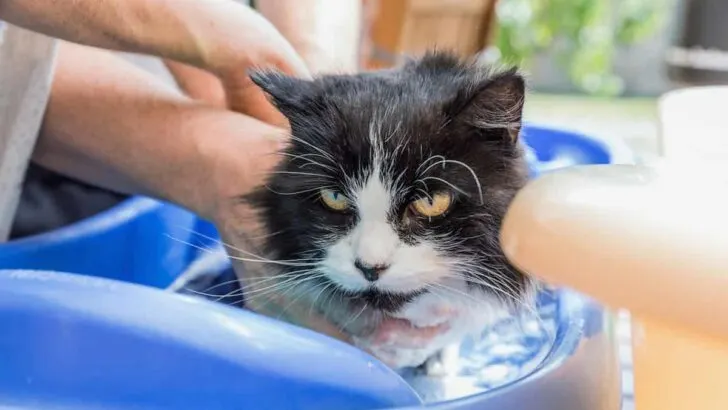
One of pet owners’ most common questions is whether it’s safe to give a cat a bath after giving birth.
The answer is that it can be safe if done correctly. Proper postpartum hygiene is critical in maintaining the mother cat’s and her kittens’ health. It also limits the likelihood that your mother cat will spread infections to her kittens or catch them.
It is prudent to wait for at least fourteen days after the mother cat delivers before bathing her, yet a gentle bath can keep her and her kittens clean and healthy.
I know what you’re thinking; this contradicts the common belief that cats should not be bathed following their delivery (or at all, really); however, a hygienic environment significantly decreases the chances of illnesses or infections that could prove fatal for the newborn kittens.
There’s a lot to cover here, but the TLDR is that you must bathe your mother cats for safety. We’ll delve into the importance of postpartum hygiene, understand the cat’s behavior, address the potential for pain or discomfort when bathing, and provide step-by-step instructions for a safe bath.
Let’s get into it!
Postpartum Hygiene
So, what exactly is Postpartum hygiene? Well, it’s bathing your cat following the delivery of her new kittens. While cats can clean themselves, the kind of cleaning they’ll need post-birth should be at a higher level.
Postpartum hygiene is vital in keeping the mother and her kittens healthy. If there is a lack of hygiene, it increases the risk of infections and illnesses. This can be dangerous and even deadly for kittens. Here are some other things to think about:
- The mother cat’s nutrition also plays a role in postpartum hygiene
- Postpartum hygiene can help prevent the spread of illnesses to other cats in the household
- Cleaning the mother cat’s nipples after each nursing session is essential to prevent infections
If a new mother cat does not practice adequate postpartum hygiene, she is at an increased risk for bacteria, viruses, and parasites to transmit infections to her kittens. This can be avoided by ensuring the environment remains clean and free from potential contaminants.
One infection that mother cats sometimes get is mastitis. This is when the mammary glands are swollen and sore. Mastitis is usually caused by bacteria getting into the mammary gland through tiny cracks or injuries in the nipple area.
The infection can cause fever, pain, and redness, and if left untreated, it can lead to abscesses or the formation of pus-filled pockets. The most important and scary part is that Mastitis can also be transmitted to newborn kittens through infected milk.
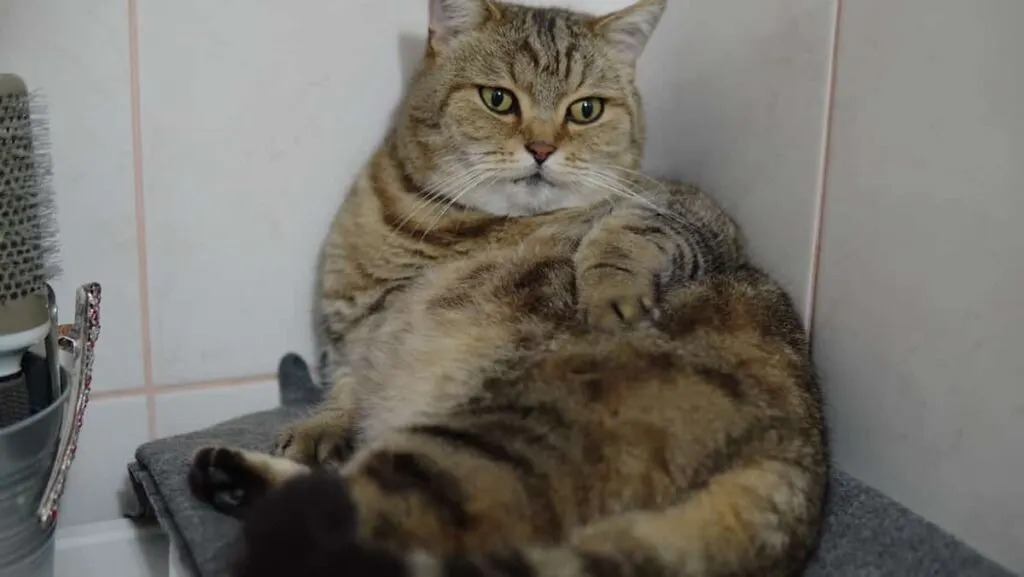
Yikes!
Another infection mother cats can develop is metritis, an inflammation of the uterus. Metritis is usually caused by bacterial infections, bringing about signs and symptoms such as fever, vaginal discharge, and unnecessary abdominal pain.
Unless it is tended to, the contamination may develop into sepsis and other serious issues. Furthermore, newborn kittens can be infected with Metritis through tainted birth fluids, resulting in fatal ailments.
Toxoplasmosis is another infection mother cats can develop, caused by a parasite called Toxoplasma gondii. The parasite is found in the feces of infected cats and can be transmitted to humans and other animals, including newborn kittens.
Toxoplasmosis can cause a range of symptoms, including fever, muscle pain, and eye infections. If a newborn kitten gets this infection, it can have problems growing and learning new things.
Sol, as you can see, mother cats are vulnerable to various infections if proper postpartum hygiene is not maintained. These infections can spread to newborn kittens through infected milk, birth fluids, or feces.
Cat owners can help reduce the risk of infections by maintaining postpartum hygiene and ensuring that their furry companions stay healthy and happy.
Bathing a Cat After Giving Birth (Step By Step)
Bathing a mother cat after giving birth can help maintain her hygiene and reduce the risk of infections. However, it is essential to only bathe a cat after giving birth if it is necessary. Do it with extreme care.
Here’s a step-by-step process to give a mother cat a bath after giving birth:
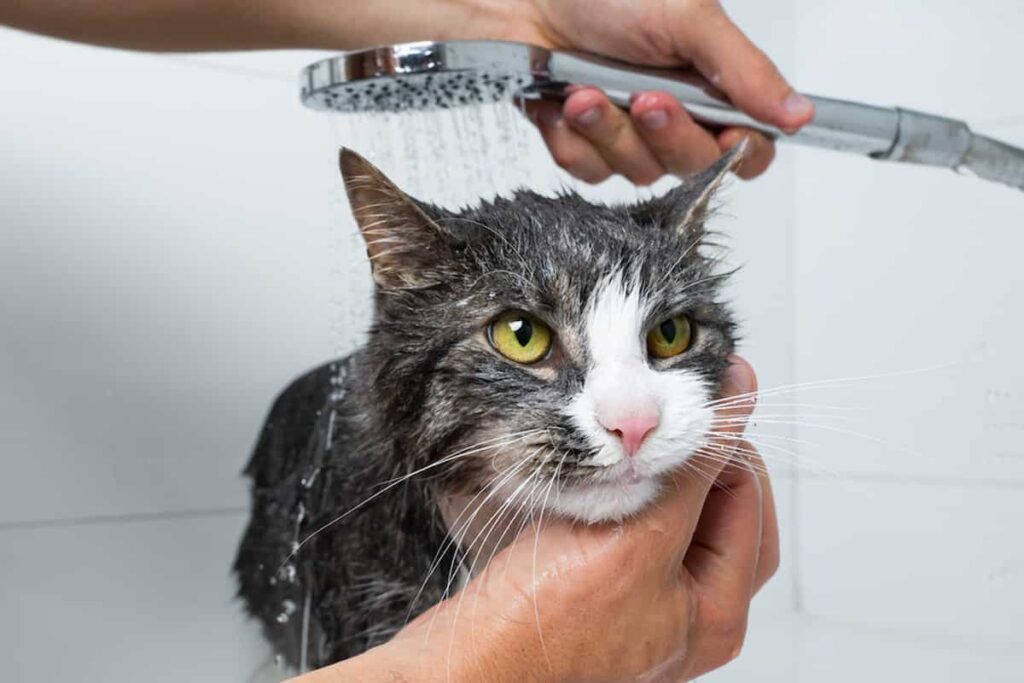
Step 1: Gather the necessary items
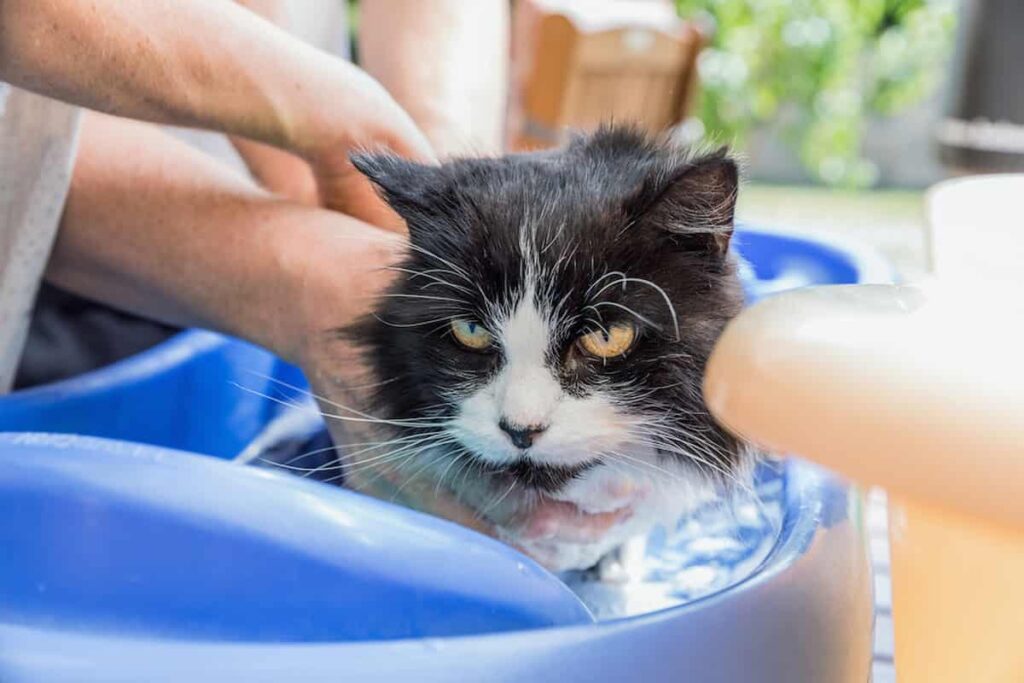
Before beginning your cat’s bath, it is essential that you have all the necessary items handy such as a specially formulated shampoo for cats, a warm towel, and a plastic basin. Remember to ensure the room temperature is cozy and free of any cold drafts before running water at lukewarm temperatures in the tub.
If tubs scare your cat, consider a small bath basin, so they’re less intimidated.
Step 2: Prepare the mother cat
Prepare the mother cat by placing her in a safe and secure location. Make sure she’s calm and relaxed before starting the bath. If her body language is reminiscent of a scared cat, pause and come back to this later. Half the battle is won right here regarding bathing a cat, whether post-pregnancy or not.
Step 3: Wet the cat
Wet the mother cat with lukewarm water. Start at the back of her neck and avoid her head and ears.
Step 4: Apply shampoo
Carefully lather up cat-specific shampoo and thoroughly massage it into the mother cat’s fur. Take care to avoid getting any shampoo in her eyes, ears, or nose.
Some brands I recommend are PetArmor, Sentry, or Earthbath. It’s gentle on the fur and handles matted fur well if you’ve got a longhaired cat.
Step 5: Rinse the cat
Rinse the mother cat with lukewarm water. Start from the back of her neck. Avoid her head and ears. Make sure all shampoo has been removed.
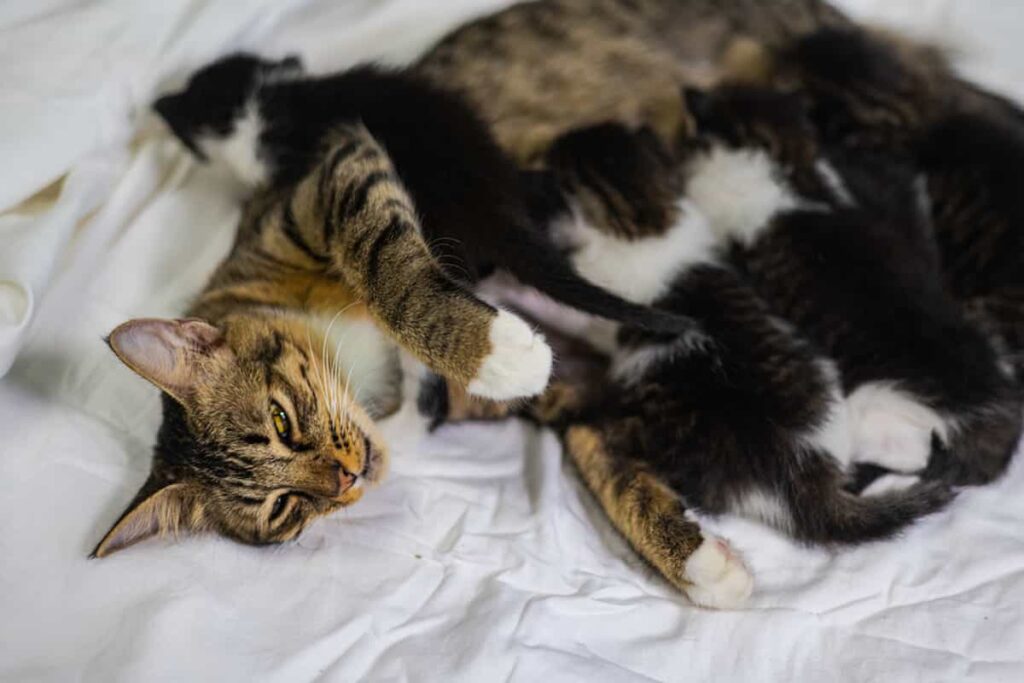
Step 6: Dry the cat
Towel dry the mother cat. Be careful not to rub her fur too much. You can also use a blow dryer on a low setting. Keep it at least one foot away from the cat.
It is important to remember that the mother cat should only be given a bath once a week. Also, during the first two weeks after she gives birth, it is best to avoid giving her a bath at all.
Moreover, it is essential to be mindful of the mother cat’s emotions both during and after bathing. Pain or unease can be signified by vocalizing, agitation, or skulking away from people. And so, it is critical to watch out for these signs to guarantee a safe and pleasant experience for the beloved pet.
Potential for Pain or Discomfort
Some cats may experience pain or discomfort during or after a bath, but it is important to note that this is not common. Here are some additional points to consider:
- Older cats or those with health issues may have more difficulty with baths.
- It’s important to avoid using loud or sudden noises during the bath to prevent stress
- Some cats prefer a sponge bath instead of being fully immersed in water.
Final Thoughts
It is important for a mother cat and her kittens to be clean after birth. This helps reduce the risk of problems, helps the mother heal, and ensures no stress.
If done correctly, it is safe to give a mother cat a bath after birth. Cat owners can help keep their furry companions healthy and happy by maintaining postpartum hygiene.


My name is James, and welcome to FAQCats!
Along with our team of cat owners, expert pet enthusiasts, and pet professionals, we aim to write engaging helpful, engaging content about cats. At FAQCats we strive to provide content that’s accurate and fun to read. Our team writes about everything related to cats; even the most complex of topics. Through extensive research and caring for our own fur-pals, we’re able to provide something cat owners worldwide will love. Have a look around, and leave us feedback anytime!