

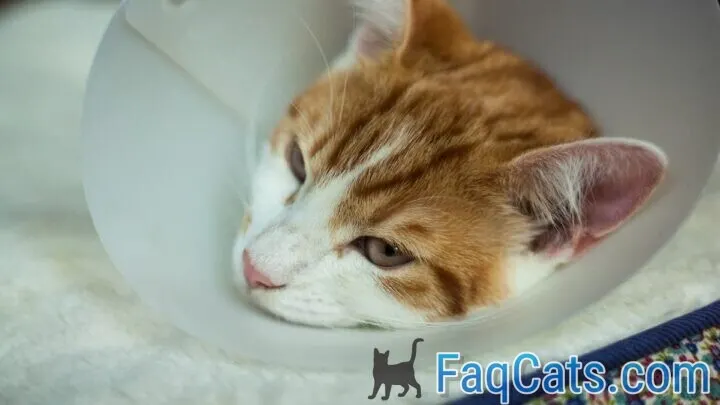
When your cat gets neutered, it can be scary thinking about after-care, especially if it is your first cat getting neutered. You may not be fully aware of the proper after-care or normal behavior that may follow the procedure. Is it normal for my cat to do this or that after being fixed? Can my cat lick himself after being neutered?
Never allow your cat to lick their incision as this can cause pain and infection and an increased risk of opening the incision site.
You likely have more questions regarding your cat licking himself after this procedure or even questions about what to expect. This article aims to provide you with all the information you need to keep your cat safe after this procedure.

How long does it take for a cat to get neutered?
The procedure for neutering a cat can take as little as 2 minutes. However, if there are complications, the surgery can go for 20 minutes or more. Be sure to get your cat neutered while it is 5-6 months old to lessen the chances of complications. Younger healthy cats tend to get through procedures with no complications, while the more mature your cat is, the higher the chance for complications.
Is it dangerous for my cat to lick his testicles after being neutered?
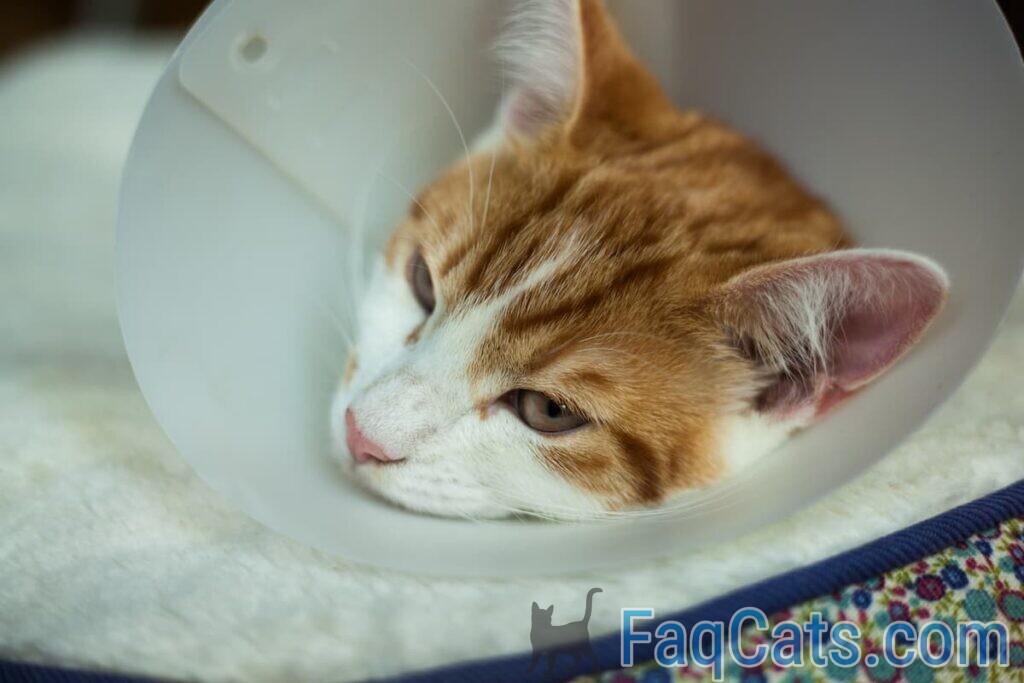
If your cat licks himself after his procedure, he is at a higher risk for infection. It is also possible for him to damage his incision area. If you want to prevent your cat from licking himself, it is ideal for you to get your cat an e-collar (the cone) if the vet does not provide one, as this will prevent your cat from licking the area. It is ideal to have your cat wear the cone for 5-7 days.
However, if your cat had an abdominal incision, the cone should be left on for 10-14 days. Abdominal incisions are necessary when one or both testicles reside inside the body. If you are unsure whether to remove the cone yet or not, wait until your cat’s follow-up appointment. The follow-up appointment will determine where they are in the healing process allowing the vet to determine if they can take the cone off and proceed with normal grooming activities.
How long after being neutered can a cat lick himself?
After 5-7 days, your cat can have its cone removed and begin grooming himself as usual if he had the regular neutering procedure. However, if your cat had abdominal incisions to remove retained testicles, the cone should be left on for 10-14 days or until the follow-up appointment. The follow-up appointment is the safest way to determine when the cone is safe to come off and when your cat can resume normal cleansing activities.
What are the alternatives to a cone to get my cat to stop licking himself after being neutered?
The best way to stop your cat from licking its incision area is by having him wear an e-collar. Wearing an e-collar will prevent your cat from licking the incision area, lowering the risk of infection. E-collars will also lessen the risk of the incision being torn open.
Although your cat may not like this option at first, they will get used to it, and it is the best preventative method to keep your cat safe. When the collar is on, it is crucial to make sure your cat can comfortably eat, drink and use its litter box. If necessary, you can take the collar off for feedings, but you will need to monitor him to ensure he is not trying to lick his incision.
Be sure to put the collar back on if you notice your cat becoming curious about the area or when it finishes eating. Alternatively, you can give your cat a neck collar to prevent it from harming the incision area. A neck collar is similar to a human neck brace. It will limit the cat’s ability to get to its wound.
However, if your cat is extra bendy, long, or just very determined, it is possible this may not be enough to prevent your cat from licking the wound. If your cat can slip it off or reach the incision, this will not work to protect the incision. Monitor your cat closely when trying a neck brace.
What to expect after your cat has been neutered?
Your cat will require a lot of rest after this procedure. It is best to isolate your cat in a small room. Providing your cat with space for itself allows it to rest and heal without being disturbed.
Your cat should get left in the cat carrier until the morning after the procedure. It is common for your cat to have a sensitive stomach after the surgery due to the anesthesia administered during the neutering. You may find that your cat is also urinating more frequently due to the fluids administered during the surgery. Be sure your cat has an e-collar on to prevent damage to the incision site and keep the infection risk low.
What should a healing neuter incision look like?
A healing neuter incision should have a pink appearance with little to no swelling. Additionally, the incision should not produce any discharge other than the first day, where it is common to secrete a small amount of clear blood-tinged fluid. If you have any concerns about your cat’s health and if something does not look right with the incisions, contact your vet immediately for a check-up appointment.
How do I know if my cat’s neuter incision is infected?
It is crucial to know what the indications are for infection so you can bring your cat back to the vet for proper treatment. These signs include bruising, increased redness, incision not closing, a bad smell, excessive swelling, fluid discharge, or the incision site being hot to the touch.
If your cat is experiencing any of those signs, along with being lethargic, bring your cat to the vet immediately so your vet can pinpoint the problem and fix it accordingly. Be sure to follow the care instructions given to you by the vet beforehand to prevent infections.
Conclusion
It is critical to follow the care instructions given by the vet to keep your cat healthy. Do not let your cat lick himself after being neutered. You should provide your cat with an e-collar to prevent self-inflicted damage caused by licking the incision site. Keep the e-collar on for 5-7 days if your cat had a typical neuter procedure.
However, if your cat had a more complicated surgery, keep it on for 10-14 days or until your vet tells you otherwise. Your cat should have a secluded location to rest away from other animals and children after surgery. Keep your cat in the cat carrier that first day. When allowed out of the cat carrier, you should keep your cat in a small but comfortable area away from stairs or anything else that requires jumping.
My name is James, and welcome to FAQCats!
Along with our team of cat owners, expert pet enthusiasts, and pet professionals, we aim to write engaging helpful, engaging content about cats. At FAQCats we strive to provide content that’s accurate and fun to read. Our team writes about everything related to cats; even the most complex of topics. Through extensive research and caring for our own fur-pals, we’re able to provide something cat owners worldwide will love. Have a look around, and leave us feedback anytime!