
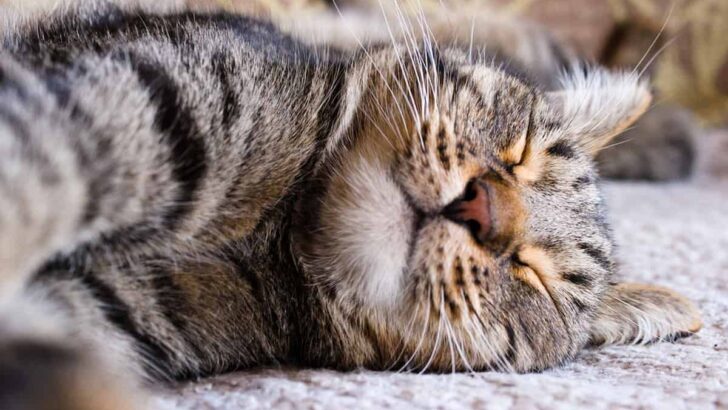
Cats are known for their ability to fall asleep quickly and easily. It’s common to see a cat dozing off in the middle of an activity or even while sitting upright. But have you ever wondered how cats can fall asleep so fast?
Unlike humans, cats can enter a state of sleep known as slow-wave sleep almost immediately. This is the deepest sleep stage, allowing cats to recharge quickly and efficiently. Additionally, cats can nap throughout the day, which helps them maintain their energy levels and stay alert when needed.
So, what exactly makes cats such expert sleepers? In this article, we’ll explore the science behind feline sleep patterns and delve deeper into why cats can fall asleep so quickly.
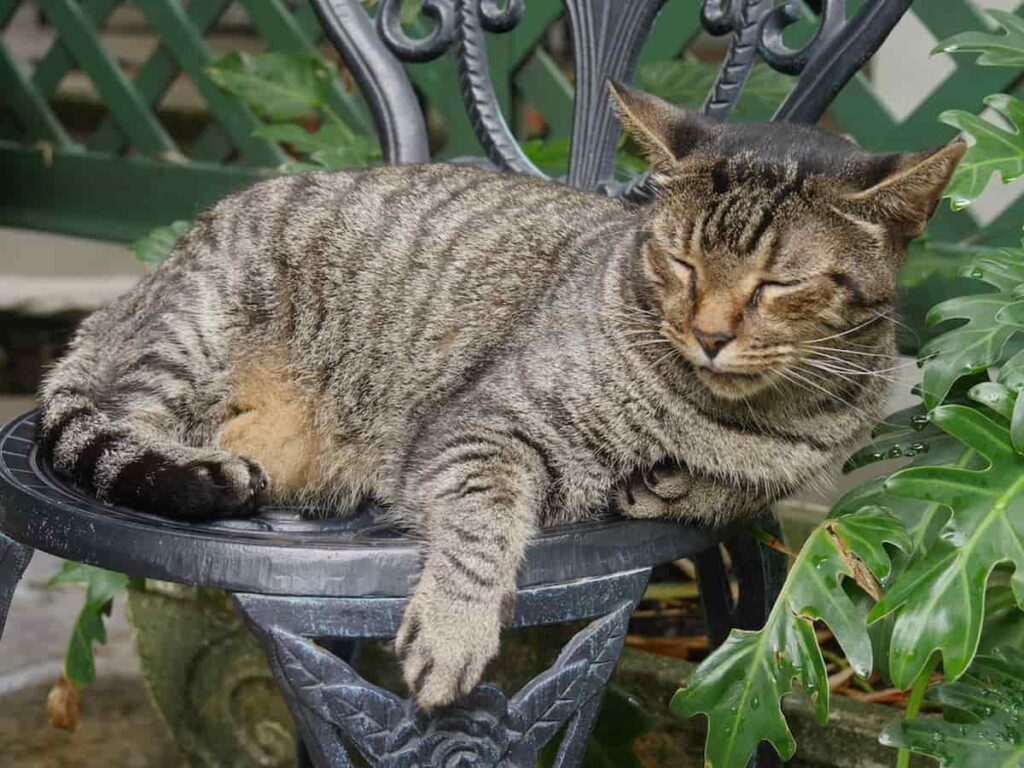
Understanding A Cat’s Sleep Patterns
Have you ever wondered how your feline friend can fall asleep so quickly? Understanding a cat’s sleep pattern can give you insight into this phenomenon.
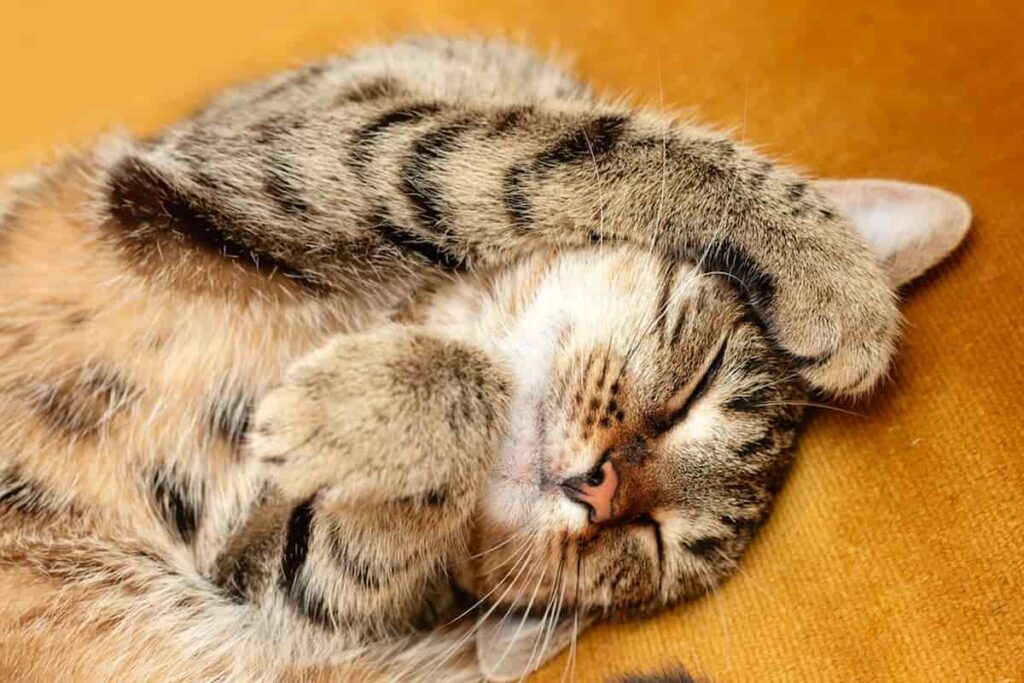
Cats are known for their love of sleep and can sleep up to 16 hours a day. But, unlike humans, cats don’t have a typical sleep pattern. They can go from deep sleep to fully awake in an instant. This might explain why every time I walk into the room my cat seems to already be awake before I can make any significant sound.
Here’s a breakdown of a cat’s sleep pattern:
- Dozing: This is the lightest stage of sleep, where a cat can easily be awakened. During this stage, the cat can still hear and respond to sounds. Whenever my cat is dozing, his breathing is a bit faster than in his deep sleep stages.
- Slow-wave sleep: This is the stage where the cat’s muscles relax, and their breathing and heart rate slow down. During this stage, the cat’s brain is still active, and it can easily wake up if they need to.
- REM sleep: This is the stage where the cat’s eyes move rapidly and are in their deepest sleep. During this stage, the cat’s brain is very active, and they are dreaming. In these cases when I walk in on my cat, he doesn’t wake up right away. But, a couple of loud noises from me, and he’s alert!
Cats can cycle through these stages several times during their sleep, going from deep sleep to being fully awake in an instant. This is why they can fall asleep quickly and wake up just as fast.
Another interesting fact about cats’ sleep patterns is that they are crepuscular animals. This means they are most active during dawn and dusk and sleep day and night. So, if your cat sleeps during the day, don’t worry; it’s just their natural sleep pattern.
The Science Behind Cats’ Fast Sleep
While humans take a while to drift off, cats can fall asleep in seconds. Let’s explore the science behind this fascinating phenomenon.
Brain Waves During Sleep
Cats, like humans, have different stages of sleep. During the first stage, called slow-wave sleep, brain waves slow down, and the cat’s muscles relax. This stage lasts about 10 minutes and is followed by the rapid eye movement (REM).
During the REM stage, the cat’s brain waves become more active, and its eyes move rapidly under its closed eyelids. Interestingly, cats spend most of their time in the REM stage, which is when they dream.
REM Sleep in Cats
REM sleep is essential for cats as it helps them consolidate memories, process emotions, and regulate their mood. During this stage, their brain is highly active, and they experience vivid dreams that can last several minutes.
What’s fascinating is that cats can fall asleep and enter the REM stage almost instantly. This is because their brain is wired to switch between the different stages of sleep more quickly than humans. So, while it may take us several minutes to enter the REM stage, cats can do so in seconds.

Factors That Affect Cats’ Sleep
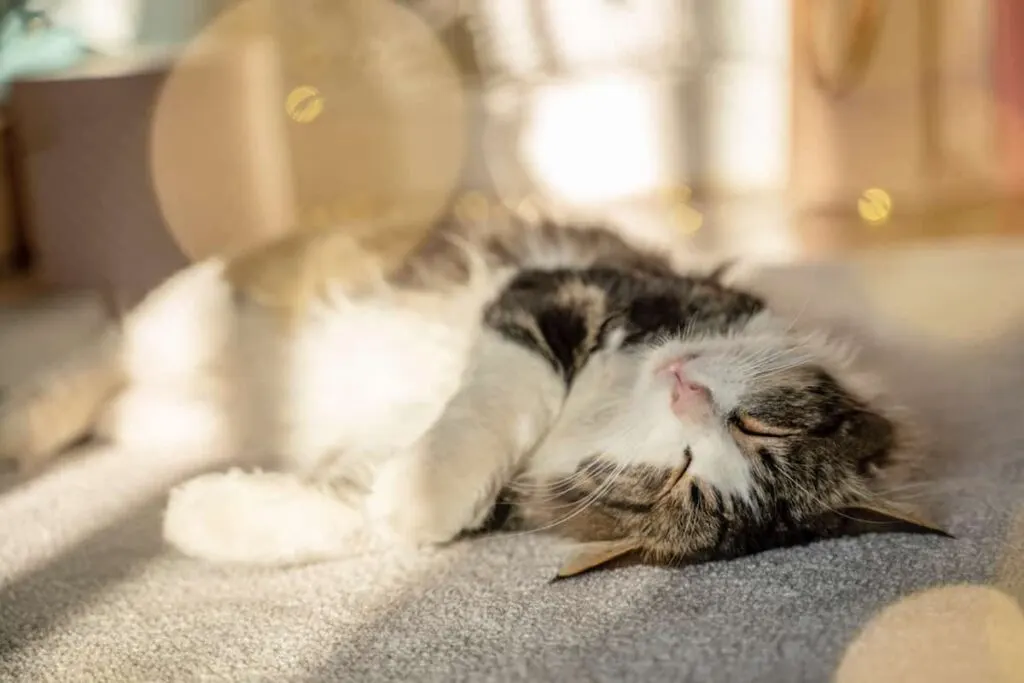
Not all cats experience the same sleep patterns, and much of it has to do with your cat’s age and activity level. More on this below:
Age
Age is an essential factor that affects cats’ sleep. Kittens and senior cats tend to sleep more than adult cats. Kittens need more sleep to support their growth and development, while senior cats may sleep more due to age-related body changes. Adult cats, on the other hand, tend to sleep less as they are more active and have more energy.
According to a American Veterinary Medical Association study, kittens can sleep up to 20 hours a day, while senior cats can sleep up to 16 hours a day. Adult cats, on the other hand, sleep for an average of 12-16 hours a day.
Environment
The environment also plays a significant role in cats’ sleep patterns. Cats are sensitive to their surroundings and can be easily disturbed by noise, light, and temperature changes. A comfortable and quiet sleeping area can help cats fall asleep faster and longer.
It’s important to provide cats with a cozy and safe sleeping area away from high-traffic areas and loud noises. A comfortable bed, blankets, and toys can also help cats relax and sleep better.
Health
Cats’ health can also affect their sleep patterns. Medical conditions such as arthritis, hyperthyroidism, and kidney disease can cause discomfort and pain, making it difficult for cats to sleep. Stress and anxiety can also affect cats’ sleep patterns.
If you notice any changes in your cat’s sleep patterns, such as excessive or difficulty sleeping, it’s important to consult your veterinarian. They can help identify any underlying medical conditions and provide appropriate treatment.

Tips for Helping Your Cat Sleep
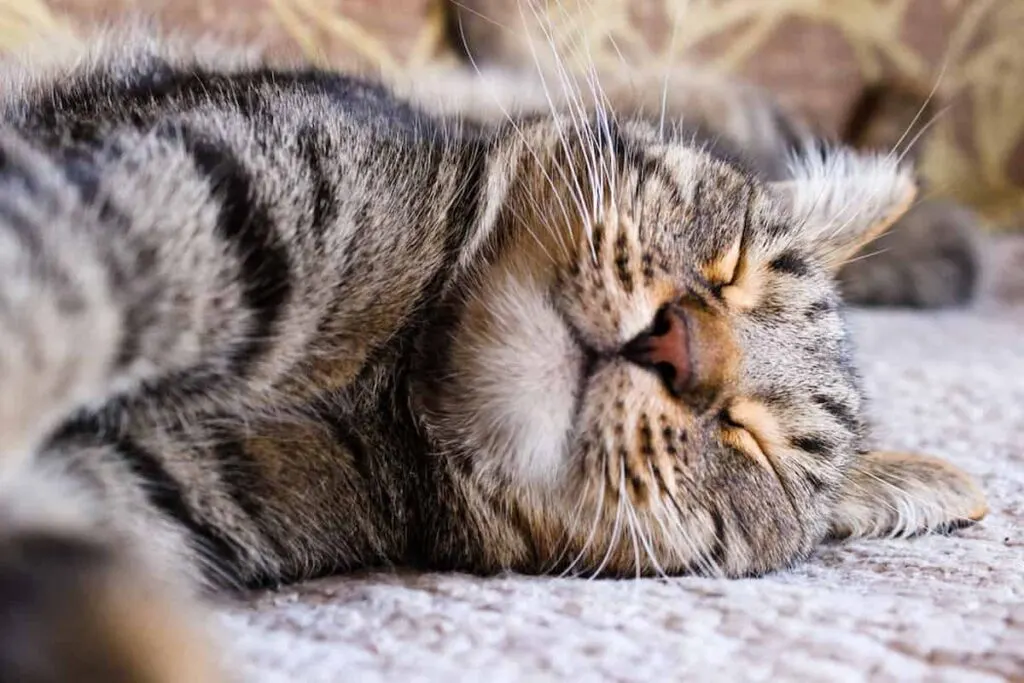
If your cat isn’t getting enough sleep, there are plenty of things you can do to help encourage more sleep. Check out the list below:
Creating a Comfortable Sleeping Environment
One of the most important things you can do to help your cat fall asleep quickly is to create a comfortable sleeping environment. Here are some tips:
- Provide a cozy bed or sleeping area with soft blankets or pillows.
- Make sure the sleeping area is quiet and free from distractions.
- Keep the room temperature comfortable, neither too hot nor too cold.
- Provide a litter box in a separate area away from the sleeping area.
Establishing a Bedtime Routine
Establishing a bedtime routine can help your cat develop a regular sleep pattern. Here are some tips:
- Set a regular bedtime and wake-up time for your cat.
- Engage in calming activities before bedtime, such as grooming or cuddling.
- Provide a small bedtime snack or treat.
- Keep the lights low and avoid loud noises or activities.
Providing Adequate Exercise and Playtime
Giving your cat enough exercise and playtime during the day can help them sleep better at night. Here are some tips:
- Provide your cat with toys and scratching posts to keep them active and engaged.
- Engage in interactive play with your cat, such as chasing a toy or playing hide-and-seek.
- Provide opportunities for your cat to climb and explore, such as a cat tree or shelves.
- Make sure your cat gets enough physical activity during the day to tire them out for bedtime.


My name is James, and welcome to FAQCats!
Along with our team of cat owners, expert pet enthusiasts, and pet professionals, we aim to write engaging helpful, engaging content about cats. At FAQCats we strive to provide content that’s accurate and fun to read. Our team writes about everything related to cats; even the most complex of topics. Through extensive research and caring for our own fur-pals, we’re able to provide something cat owners worldwide will love. Have a look around, and leave us feedback anytime!