

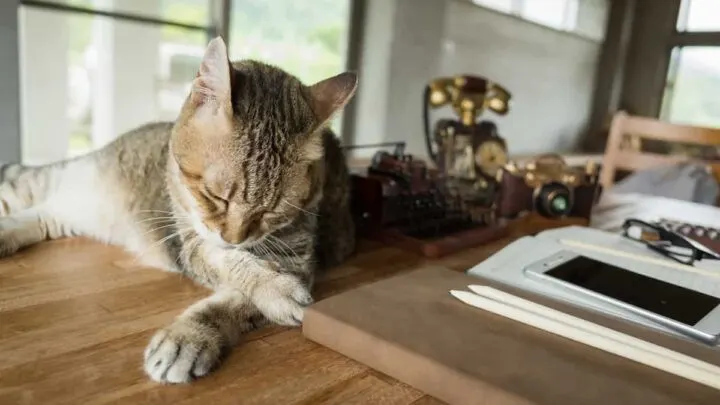
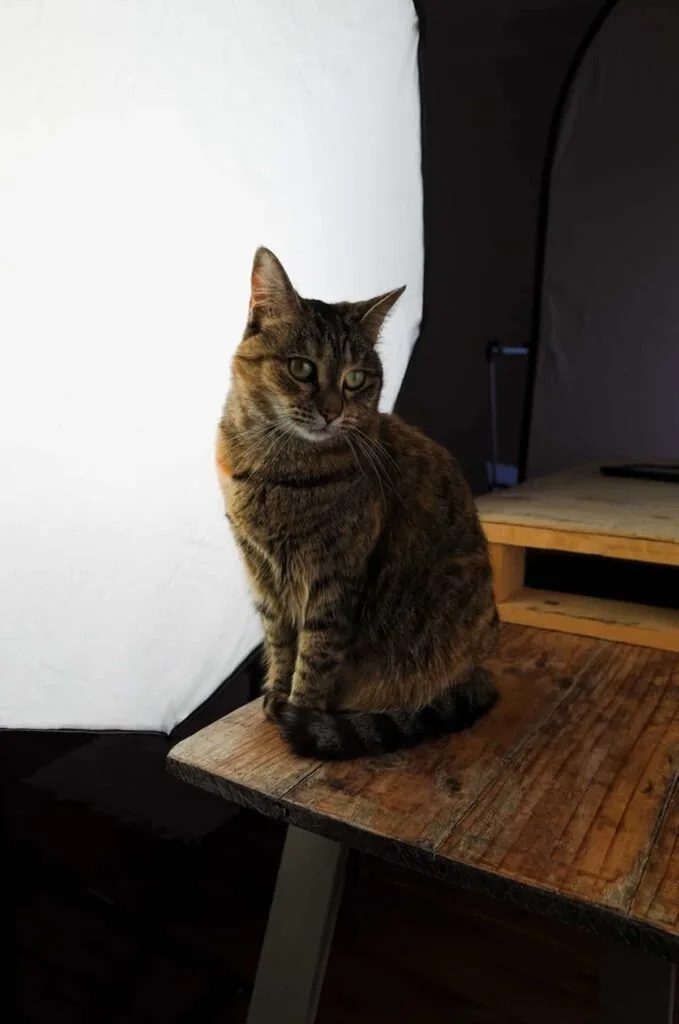
Countertops are that one place in the house that should be forbidden for cats – but is it always? It can be a war in your house to keep your cat off the counter. When you’re arguing with your cat (and probably losing), you may ask in exasperation: should cats be allowed on the table?
Cats should not be allowed on the table because their claws can ruin tabletops, their hair gets everywhere, and they’ll be into everything they find. Plus, having your cat on the table can lead to sickness.
There are ways to keep your cat off the table, like moving food, giving it other spots in the house, or putting sticky tape where they jump.
While it may not be easy to keep your cat off the table, it is one you should try to do, whatever your personal reason is. Keep reading to learn why your cat shouldn’t be on the table and get tips on keeping your cats off your counters and table.
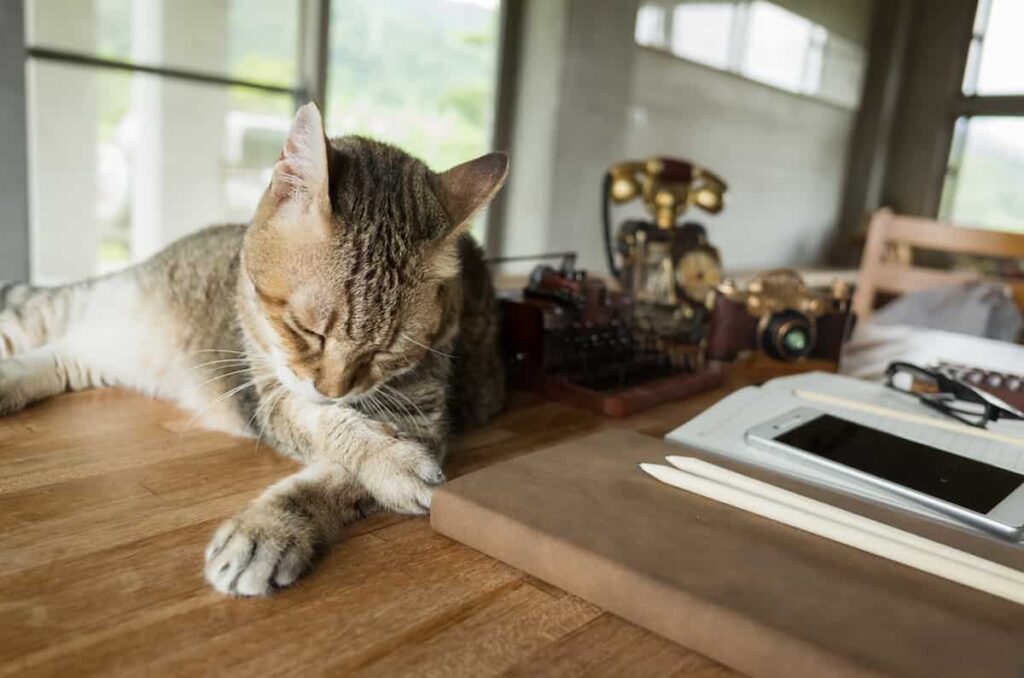
Is It Okay To Let Your Cat On The Table
Although it is up to every person, it is generally agreed upon that cats should not be allowed on tables.
You should not allow your cat to get on the table. Do not allow the habit to begin because it is difficult to break.
There are many reasons why people say that cats should not be allowed on the table, but here are some of the most common reasons that you might see:
- Cats will get footprints and hair on the counters
- Cats will get into things that they shouldn’t, including food
- Not letting your cat on the counter sets boundaries and rules in the house
- One cat can teach another cat bad habits
- Cat nails can scratch countertops and tables, especially when they jump up and down
However, your cat on the counter can also adversely affect your health, which you may not even know about. We’ll cover that next.
What Happens If You Let Your Cat On The Table
Letting your cat on the table can lead to health issues you may not even know about.
As much as we love our pets, they are still animals. Cats clean themselves often, but if they are on the table, they still put their feet and butt on the counter as they walk and sit.
It is no guarantee that you will get sick simply from this, but it increases the chance that fecal matter will end up on your hands or in your food.
Ingesting fecal matter and bacteria from your cat can lead to food poisoning, which comes with symptoms like:
- Vomiting
- Diarrhea
- Fatigue
- Lethargy
- Lack of appetite
Let’s also remember all the other places your cat goes and what other matter your cat can bring onto the counter:
- Cat litter
- Dirt if they are outdoor cats
- Carpet fibers or other fibers from walking on rugs, beds, couches, or blankets
- Cat food, whether dry or wet
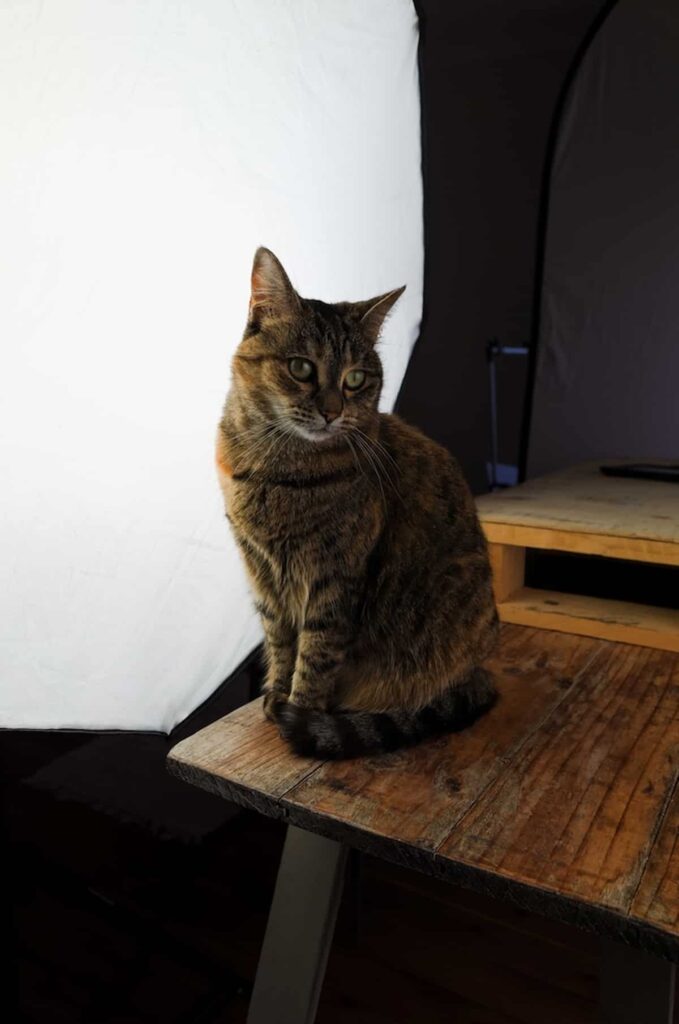
How Do I Teach My Cats Not To Get On The Table
Cats can be stubborn, but there are ways to teach your cat not to get on the table.
Keep Enticing Items Off The Counter
Countertops can have several things to attract cats, so it’s important to take these items off the counter.
Items like cat nip or cat treats may be on the counter for easy access. If your cat knows that you get the treat from the counter, then it’s only a matter of time that your cat goes exploring.
If you have a cat that likes to sample food, keep open food containers off the counter or cover them before leaving.
That’s right: make sure you cover your dinner while eating or put the lid back on your leftovers container.
You’ll need to get into this habit, but it will stop your cat from getting on the counter.
Put Double-Sided Sticky Tape On The Edges Of The Counter
Use pet-safe sticky tape on the edges of the counter where you know that your cat jumps off.
Double-sided sticky tape is not there to hurt your cat in any way.
Instead, the tape acts as a nuisance for your cat. The fur on his stomach, toes, or tail will stick against it, which is a sensation that your cat probably doesn’t like.
Since your cat will hit the tape as he jumps on the counter, he will learn not to jump on the counter if he wants to avoid the tape.
Give Your Cat Other High Spots To Go To
Offer your cat other high locations in your home.
Your cat may be looking for an elevated, safe place to be.
This may be because:
- Your cat is trying to avoid other animals or children
- Elevated places are warmer
- Sunlight hits higher places
- There is a better sightline
You can give your cat a perch for the window or a cat tree that will give your cat another spot to relax off the floor.
Make A Noise
Associate getting on the counter with a noise.
Much like with sticky tape, a sound like a clap or a buzzer can become something your cat negatively associates with getting on the counter.
You can make a noise in several ways, but the easiest way to make noise is to clap your hands.
You do not need to start yelling as well, though; this may only scare your cat, causing negative side effects.
Avoid Getting Physical With Your Cat
Do not hurt your cat if they get on the counter.
The solution to getting your cat off the table and counters does not come from getting physical with your cat.
Do not:
- Hit your cat
- Push your cat off the table
- Shove your cat away
- Drop your cat from table height
Doing such things will not make your cat learn that they should not be on the table. Instead, it will only scare your cat and make him afraid of you.


My name is James, and welcome to FAQCats!
Along with our team of cat owners, expert pet enthusiasts, and pet professionals, we aim to write engaging helpful, engaging content about cats. At FAQCats we strive to provide content that’s accurate and fun to read. Our team writes about everything related to cats; even the most complex of topics. Through extensive research and caring for our own fur-pals, we’re able to provide something cat owners worldwide will love. Have a look around, and leave us feedback anytime!