
Although it can be hard to see the skin under a cat’s fur, you’ve noticed something unusual about your cat’s mouth area. Does the cat have black spots or small bumps on its lips and chin? Or maybe something black and crusty on his lower lip? Not knowing the cause of your cat’s issue is frustrating and worrisome. You don’t know if it’s something you can treat yourself or if it’s something that needs a prescription. Why does my cat have black stuff around his mouth?
Black stuff around your cats mouth, spots or crusty bits are likely cat acne, but they could also be due to a bacterial infection or a side effect of a dental problem.
Some cats, especially orange tabby cats and cats with orange as one of their fur colors, are prone to a spotty black coloration on their lips, gums, and inside their mouth, which is a genetic condition called lentigo. It’s not harmful and does not require treatment.
Now that you know a few possible causes of this condition, let’s dive in to learn more about what might be affecting your cat and how to treat it.

Can Cats Get Acne?
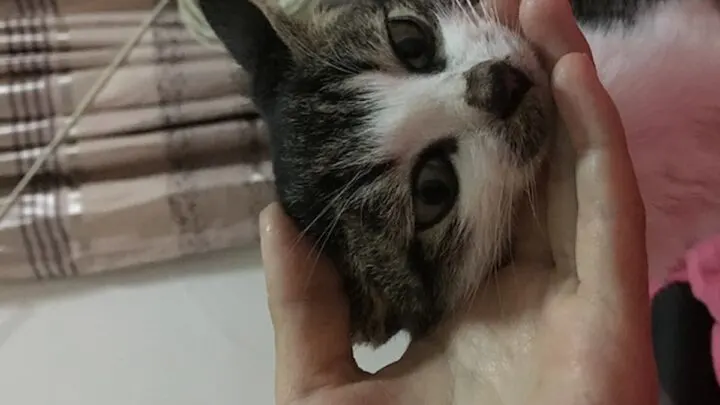
Yes, believe it or not, cats can develop what is known as feline acne, and it looks similar to the blackheads humans can get. It will appear as tiny black spots on your cat’s lips or chin. These are blocked hair follicles or blackheads. There are scent glands along the mouth that cats use to make their territory, and the oil from these can clog up the follicles. It can be itchy, and if your cat scratches the area, it can become painful and bloody with scabs.
What Causes Cat Acne?
Overproduction of oil by the scent glands, bacteria from a water or food bowl, an allergy, or stress are all possible causes of acne. Your cat may be sensitive to the plastic from which its bowl is made or bacteria on it built up from the food or water. Other sources of an allergy could be dust, pollen, or chemicals from cleaners or fragrances used around your home.
It is always best to consult with your veterinarian for any health issue to rule out anything that needs medical treatment. Your vet may do diagnostic tests to determine if your cat has acne or a more severe condition and the underlying cause.
How Do You Treat It?
You may need to treat the acne itself and your cat’s surroundings. A prescription may be necessary or a change in your cat’s routine or living area in your home. Here is a list of possible solutions:
Treating the Clogged Follicles
Always ask your veterinarian for recommendations. Suggestions may include using a warm compress, medicated shampoo or soap, witch hazel, coconut oil, pet-friendly wipes, or an ointment. Do not use any products for humans on your cat without their approval.
If the acne is a mild case, these home treatments may be all that is needed. However, if it’s a more severe case or becomes infected, an antibiotic prescription may be necessary.
It’s essential to keep your cat’s bowls clean. Use stainless steel bowls rather than plastic or ceramic. Bacteria can more easily adhere to porous plastic than steel, and ceramic bowls can develop tiny cracks. Use hot soapy water and clean the bowls daily.
Improving Your Cat’s Habitat
For allergies, vacuum and clean the areas your cat occupies. Be aware of the ingredients in your cleaning products and use all-natural, pet-friendly versions. Limit the amount of fragrance used around your cat.
If your cat seems stressed or anxious, check this list for possible strategies to help him be calmer:
- Multicat household: Ideally, have one litterbox per cat, individual food bowls, and, if necessary, separate water bowls. A pheromone plugin or spray such as Feliway may be helpful to minimize conflicts between the cats.
- Peaceful environment: Locate the food, water bowls, and litterbox in a quiet place to prevent your cat from being startled. Keep the box clean and placed so that he can see another cat approaching when your cat is inside.
- Toys and playtime: Offer toys, especially interactive ones, and rotate them to prevent boredom. Play with your cat daily.
- Stimulation: Provide a cat tree or platform so your cat can climb and jump. An outside view, either from the cat tree, windowsill, or table in front of a window, will give your cat hours of amusement. A scratching post will allow your cat to stretch.
What Are Other Causes of This Black Stuff?
If your cat has a hard dried crust or what looks like black lipstick on his lip, it could be a bacterial infection. If a strong odor accompanies it, it could be an abscessed tooth.
Both of these conditions need immediate treatment. An abscessed tooth can cause a lot of pain for your cat. Mouth infections can be dangerous, even life-threatening, if the infection spreads to the body.
A bacterial infection could be caused by a scratch or cut on your cat’s mouth, perhaps by scratching or catching his lip on something. Your veterinarian will clean it up and probably prescribe a round of antibiotics. You may have to clean the area daily until it’s healed.
We usually don’t think of a tooth abscess as causing a black residue on the lips. Still, it is possible due to drool resulting from the condition. The tooth will need removal, and since infection is present, your veterinarian will fill a prescription for antibiotics.
It can be hard to remove the crusty black stuff, and the process may cause pain to your cat. It may require your vet to sedate your cat to get it all off, so he can see what is underneath and begin treatment.
Final Thoughts
As you have learned, there can be a few reasons for your cat to have black stuff around his mouth. While it’s most likely to be a case of feline acne, it’s best to make an appointment with your veterinarian to rule out an infection or abscess. Your cat will need antibiotics or tooth extraction. If it turns out to be cat acne, you will learn how severe it is and receive instructions for home treatment.
Note that this condition may recur, and you must repeat treatment.
Even if stress doesn’t seem to be a factor, the suggestions for reducing a cat’s stress level can help your cat be more content. It’s worth reviewing those tips to enhance your cat’s life. After all, don’t we all want to spoil our cat?


My name is James, and welcome to FAQCats!
Along with our team of cat owners, expert pet enthusiasts, and pet professionals, we aim to write engaging helpful, engaging content about cats. At FAQCats we strive to provide content that’s accurate and fun to read. Our team writes about everything related to cats; even the most complex of topics. Through extensive research and caring for our own fur-pals, we’re able to provide something cat owners worldwide will love. Have a look around, and leave us feedback anytime!