

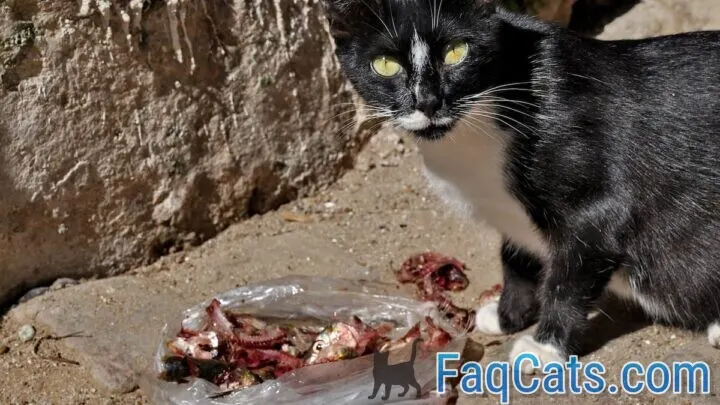
Most cat parents aren’t too surprised to discover a dead critter in their house because felines are adept hunters. But, feline owners can’t help being puzzled when their pets start leaving half-eaten beasties around, leading to queries like – why don’t cats eat gallbladder?
The reason cats don’t like eating gallbladder is that they include a digestive fluid, bile, in them. Bile consists of bile acids and can be toxic in high concentrations. Besides that, bile is bitter, which might also play a role in cats avoiding gallbladders.
If you’re curious about your domestic feline’s eating habits, you’re in the right place. This article will cover all relevant details about why kitties have such peculiar gastronomical tastes when hunting smaller animals.
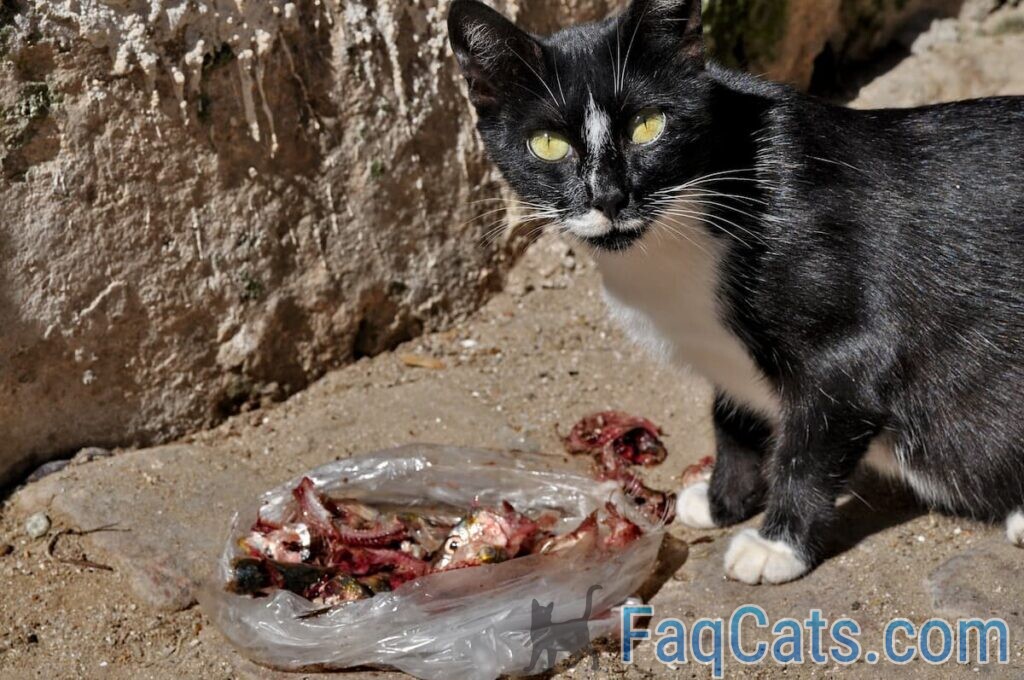

Do Cats Eat Organs?
Cats, be they wild or domesticated, can eat raw meat, including organs, without many concerns. Felines are obligate carnivores. That means the species need to eat meat in order to survive. Feeding a feline a plant-based diet isn’t a good idea because their digestive systems are designed to tolerate meat.
Felines in the wild derive most of the nourishment they require from a raw-meat diet. Essential cat nutrients can be divided into six broad-based categories. These include protein, fat, carbohydrate, vitamin, mineral, and water.
Aside from that, when felines hunt, they tend to eat the entire carcass (except some bits) because organs are powerhouses of essential nutrients.
For example, the nutritional breakdown of a liver includes components like protein, carbs, essential fatty acids, and an assortment of vitamins. In short, eating organs is healthy for your cat, and your pet knows this.
If you’re wondering whether the same can be said of organs of smaller animals like mice or birds, the answer’s yes! To put things in perspective, here’s a list of nutrients present in 100 grams of raw chicken liver:
| Chicken Liver (100 grams) | Nutrition Facts |
| Calories | 116 |
| Total Fat | 4.8g |
| Potassium | 230mg |
| Proteins | 16.9g |
| Vitamin A | 222% |
| Vitamin B12 | 276% |
| Iron | 50% |
Why Don’t Cats Eat Gallbladder?
There’s not much scientific research on why cats avoid eating gallbladder, but animal experts claim it can have a lot to do with the function of a gallbladder. If you’re not aware of that is, allow us to explain.
A gallbladder is one of the lesser-known organs. It’s found underneath the liver and stores the digestive fluid produced by the liver to help with digestion. This digestive fluid is referred to as ‘bile’ or ‘gall,’ hence the name ‘gallbladder.’
Bile comprises several elements, including bile acids, cholesterol, pigments, electrolytes, and even metals like copper. Research has revealed that bile acid can be toxic to humans and animals in high concentrations. That’s likely the biggest reason why felines avoid eating gallbladder because it’s full of bile.
Another factor why cats don’t eat gallbladder might have to do with the organ’s taste. Since gallbladders store bile, which is bitter in taste, it’s possible their flavor doesn’t appeal to the feline population.
Is It Okay To Let Your Cat Eat Mice Or Other Animals?
Hunting and eating wild animals like mice, squirrels, or rabbits may provide numerous benefits to felines, but it’s not without concerns. The biggest problem with allowing your pet to eat mice or other similar critters is the presence of disease or bacteria, which can lead to health concerns for your pet.
Cats have shorter and slightly more acidic digestive tracts than humans or canines, making them adept at digesting raw meat. While many pathogens in raw meat will pass through your fur baby’s digestive system without too many problems, some can cause problems.
For example, pathogens like Salmonella and E.coli can cause stomach infections and symptoms like vomiting, diarrhea, fever, etc. That may not sound too scary, but a severe illness can lead to septicemia and even death. As such, it’s something feline parents should always be on the lookout for.
Additionally, if your feline is immuno-compromised due to factors like stress, age, or other diseases, the presence of Salmonella or E.coli can be even more problematic. Experts often recommend against feeding felines raw-meat diets because unless the meat is cooked, there’s no way to make sure there aren’t any dangerous pathogens inside it.
How To Get Your Cat To Stop Eating Mice?
Felines have a strong hunting instinct, making stopping them from going after animals like mice or squirrels pretty tricky. However, before you get too disheartened, you can take specific measures to prevent your kitty from eating mice and other critters. Here’s how:
Get Your Cat A Bell Collar
Cats make excellent hunters because of their stealth skills. They generally sneak up close to their prey and then pounce for the kill. You can throw a proverbial spanner in your cat’s hunting routine by making it wear a bell collar.
The collar will make noise whenever your cat is moving about and will alert any small prey nearby to make a run for it before your feline has the chance to go in for the kill.
Restrict Your Pet’s Outdoor Access
Many pet parents are against keeping their kitties cooped up in the house for too long. But, restricting your feline’s outdoor access can be helpful in more than one way.
To begin with, keeping your cat indoors is a sure-shot way of keeping it from hunting and eating mice. If your cat can’t go outside, there’s no way it can eat disease-carrying varmint. Other benefits of stopping your indoor kitty from going outside include safety from picking up pests from other animals and getting into fights with other cats.
Let Your Cat Out During the Afternoon Only
Most of the critters cats like hunting are active during dusk or twilight hours. If you’re not willing to stop your kitty from straying outdoors altogether, it’s best to let it out during the afternoon when chances of it running into mice and birds are low.
Conclusion
Cat enthusiasts will agree that felines are intelligent animals. They’re observant, agile, and adapt to their surroundings pretty quickly. That’s why it’s not too hard to imagine that cats don’t eat gallbladder because they sense it’s not good for them. Then there’s the bitter taste of bile to put felines off completely.
We’re at the end of yet another of our feline-centric articles and hope our readers have all the information they’ve been searching for. Join us next time for more cat-based facts and knowledge. Till then, stay paw-sitive!


My name is James, and welcome to FAQCats!
Along with our team of cat owners, expert pet enthusiasts, and pet professionals, we aim to write engaging helpful, engaging content about cats. At FAQCats we strive to provide content that’s accurate and fun to read. Our team writes about everything related to cats; even the most complex of topics. Through extensive research and caring for our own fur-pals, we’re able to provide something cat owners worldwide will love. Have a look around, and leave us feedback anytime!