


Cats are adorable companions and can be some of the best friends and pets you’ll ever have. But they can also have some annoying or unsanitary habits that make keeping them challenging.
For instance, almost every cat will jump up on the counter or on your dining room table at some point, and they might even get into some food or make a mess while doing it.
But is jumping up on the counter a problem if they don’t misbehave? Should you let your cat on the counter?
Generally, it’s okay to let your cat on the counter. Counter-jumping is instinctive for cats. They want to be somewhere high up so they feel safer and can keep an eye out for prey and potential predators in the area. However, it can also be unsanitary because cats don’t wash their paws or fur the same way we do and can carry potentially harmful bacteria onto and off your counters.
Ultimately, letting your cats on the counter is up to you, but you might have to take some precautions to keep yourself and your cats safe if they are counter-jumpers.
Taking a few minutes a day to wipe down your counters with hot water and dish soap is a great way to help keep them clean, even if your cat decides to hang out there. It’s also a good idea to wipe everything down before and after cooking, especially with chicken or fish or any ingredients your cat thinks smell good.
Of course, you can also train your cat not to get on the counter to (mostly) avoid germs and bacteria spreading onto the counter and onto your cat.
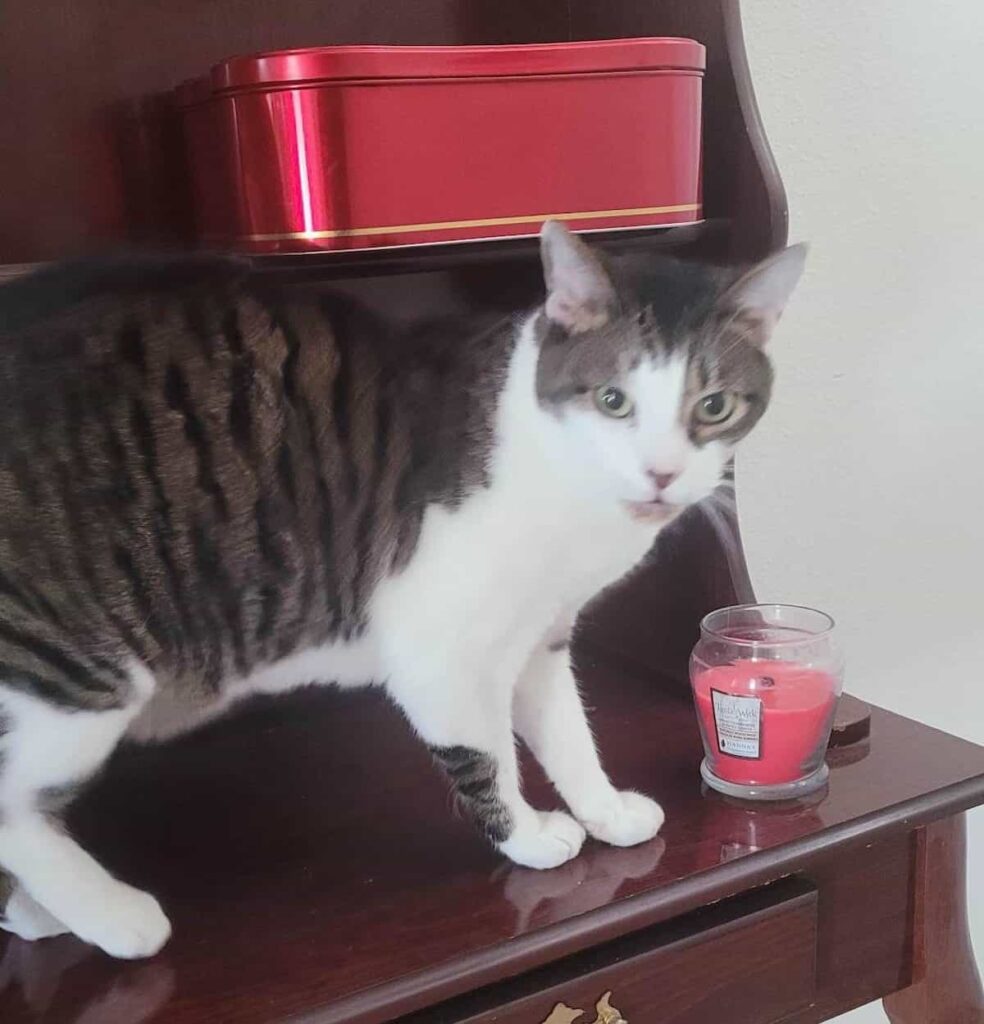
Why Does My Cat Sit On The Counter?
Cats have many instincts designed to keep them safe and minimize the effort they have to spend while hunting. Remember that your adorable little fluff ball is a highly skilled and dangerous predator in her natural environment, but also potentially a target for other larger predators, raptors, and other ambush attackers that can take her by surprise.
Being on a taller surface, especially one with a wall behind it and cabinets overhead, can offer your cat many advantages that make her feel safer, more confident, and better prepared.
For instance, even though a cat’s eye doesn’t see much detail in the distance, it can spot movement from a long way away. That means the added height of your counter might be the difference between spotting the (hopefully imaginary) mouse across the room or missing out on a potentially tasty snack.
Your cat might also be interested in the counter (and everything on it) because You are interested in the counter. One of the ways cats bond with the people they love is by mirroring or showing interest in the same things. They like participating in group activities, even if they don’t understand what you’re doing.
The last big reason your cat might be interested in getting on the counter is that your counters smell good! Fish, eggs, almost any meat protein, and even some of your fruits and vegetables all smell tasty to your cat, and they want to get their portion while they can!
Can You Train A Cat To Stay Off Counters?
Training cats is a mixed bag. Some cats are very trainable, and some people have a talent for getting their cats to understand and listen to specific commands. At the same time, some cats aren’t interested in training, don’t like the word no, and can be willfully disobedient to get what they want.
The real fun is when you have a very trainable cat and willfully disobedient when they want something bad enough, even if what they want is just your attention!
Here are some tips for training your cat to stay off counters.

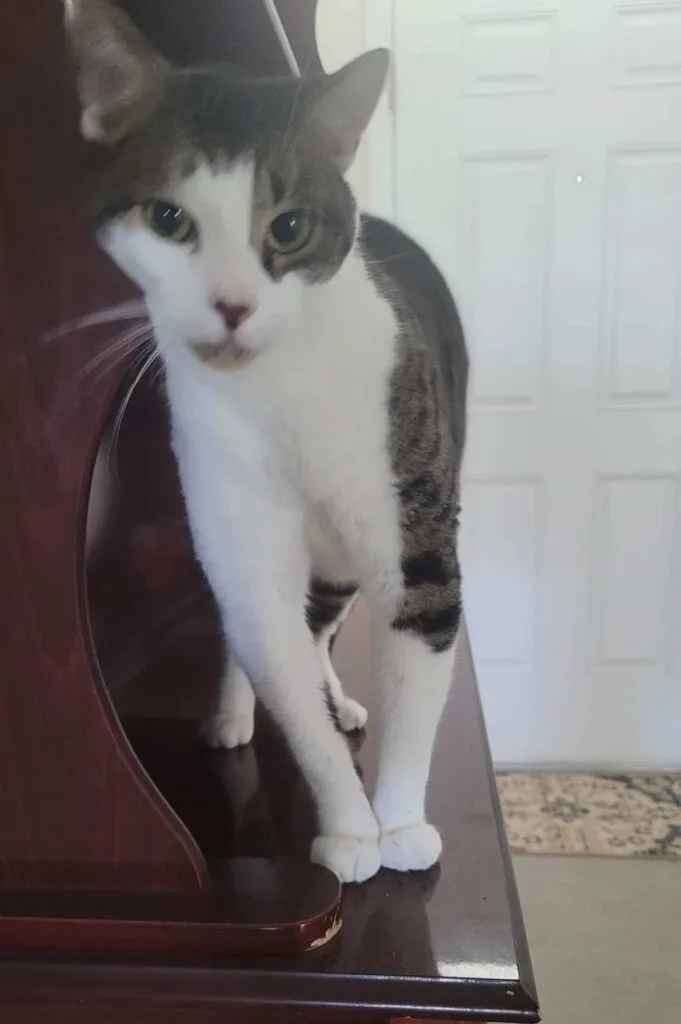
Start Young
Start training your cat before they jump on counters. Feed kittens on the floor, and try to redirect their attention to other tall spaces like a cat tree or the back of a couch when they show too much interest in the counter.
If your kitten climbs you to see what you’re doing on the counter or even as a path to the counter itself, tell them no and put them on the floor again.
Cats can learn what they like and don’t like, so this training will signal what areas are for cats and people-only areas.
Be Consistent
Consistency is vital when it comes to training most animals, including cats. Don’t let it pass when your cat gets on the counter, no matter how tired you happen to be at the time. At the same time, only escalate a little when your cat responds immediately. Your cat needs to trust and like you to want to listen to your commands, and being too harsh with them can ruin that trust.
Remember, your cat doesn’t know why the rules are there and can’t understand when you explain them. They can understand the rules, but they need to know that you’re trying to keep them safe or make sure your food is litter-free.
Figure Out What Motivates Your Cat Best
Some cats are motivated by a simple command and like being praised for obedience. Other cats don’t like misbehaving and will avoid specific actions as soon as they know they are off-limits.
Other cats won’t change their behavior unless given a healthy outlet. For instance, if your cat keeps getting up on the counters, giving them a cat tree that lets them see the counter might be a good alternative outlet for their desire to be tall and see the counters.
Still, other cats might use the counter rule to get your attention and ask for more play time or tell you they’re bored and need more stimulation. These cats often seem the most willful or intentionally disobedient, but it’s not because they are being bad on purpose; they need something they aren’t getting.
Consider giving your cats more toys or getting an electric toy if they need to run off more energy throughout the day. Or give them a treat puzzle while you’re cooking, anything that occupies their mind and gives them more stimulation.

Is It Okay To Spray Your Cat With Water To Get Them Off The Counter?
Spraying water is a common but sometimes harmful training tool cat owners use.
There are a few problems with breaking out the spray bottle, though, so it should be used sparingly and only as a last resort.
For one thing, spraying water can damage your cat’s trust that you are safe, that you want to keep them safe and comfortable, and that you prioritize them and their comfort. Your cat might not put all of that into words or meows, but it’s a huge part of your relationship.
Your cat won’t want to be around you if you aren’t safe.
Spraying your cat can also be a health risk. Getting water in their ears can cause many problems for cats or even lead to a vet visit.
Lastly, getting your cat wet can make them too cold, and keep them cold until they are completely dry. So, short-term discipline can be a lot of discomfort for your cat.
We aren’t saying don’t spray your cat, but be very aware of the effect spraying can have on your cat and only use it if you need to.
Things To Consider
Many pet owners get frustrated when their cats need to pick up on the rules or expected behaviors quickly. The truth is that cats can be more willful than other animals and break the rules with a little more intent than your typical dog or other trained animal.
The key is figuring out what is motivating your cat. Do they need attention? Are they dealing with an unfulfilled need? Are they asking for more of your time to be focused on them?
Once you know your cat’s goal, it gets much easier to train and take care of them.
You also should expect something other than perfect behavior from a cat. Like any pet, cats will break the rules from time to time, no matter how well-trained they are.
Lastly, we realize that cats need more stimulation and play than ever. They need toys, things to do throughout the day, cat furniture, and other features to keep them entertained, happy, and healthy. It can take trial and error before you find the right combination of cat beds, scratchers, and toys to keep your cat happy.
You also need to change out what they have access to and what toys are available from time to time. Cats can get bored with their toys just like you do, so giving them something new, taking away a boring toy, and then trading them out later can help keep everything fresh and entertaining.


My name is James, and welcome to FAQCats!
Along with our team of cat owners, expert pet enthusiasts, and pet professionals, we aim to write engaging helpful, engaging content about cats. At FAQCats we strive to provide content that’s accurate and fun to read. Our team writes about everything related to cats; even the most complex of topics. Through extensive research and caring for our own fur-pals, we’re able to provide something cat owners worldwide will love. Have a look around, and leave us feedback anytime!