


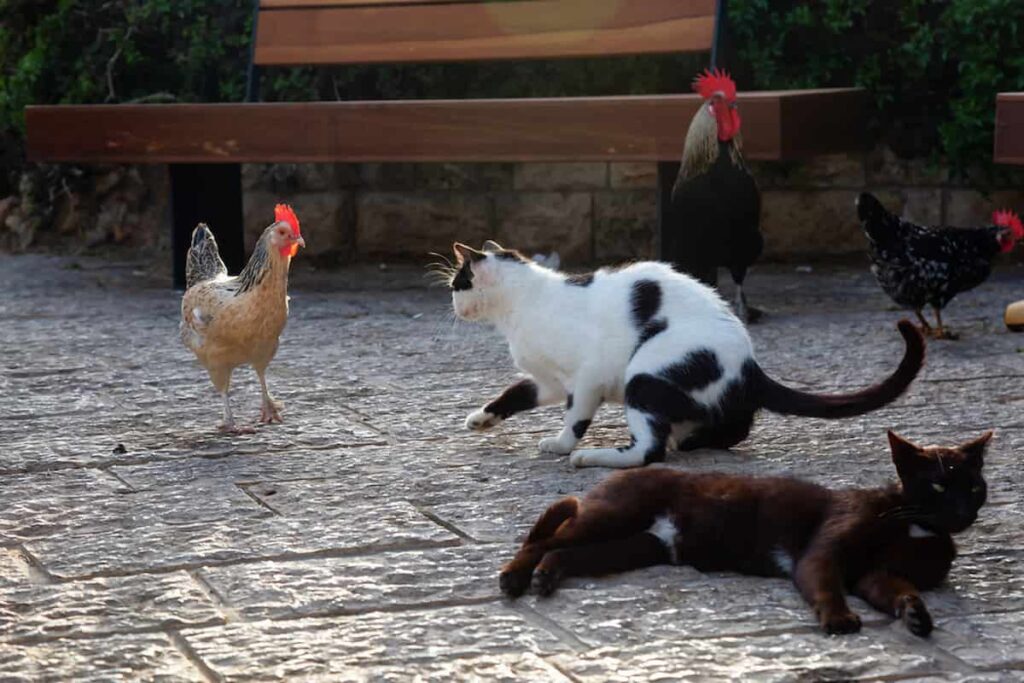
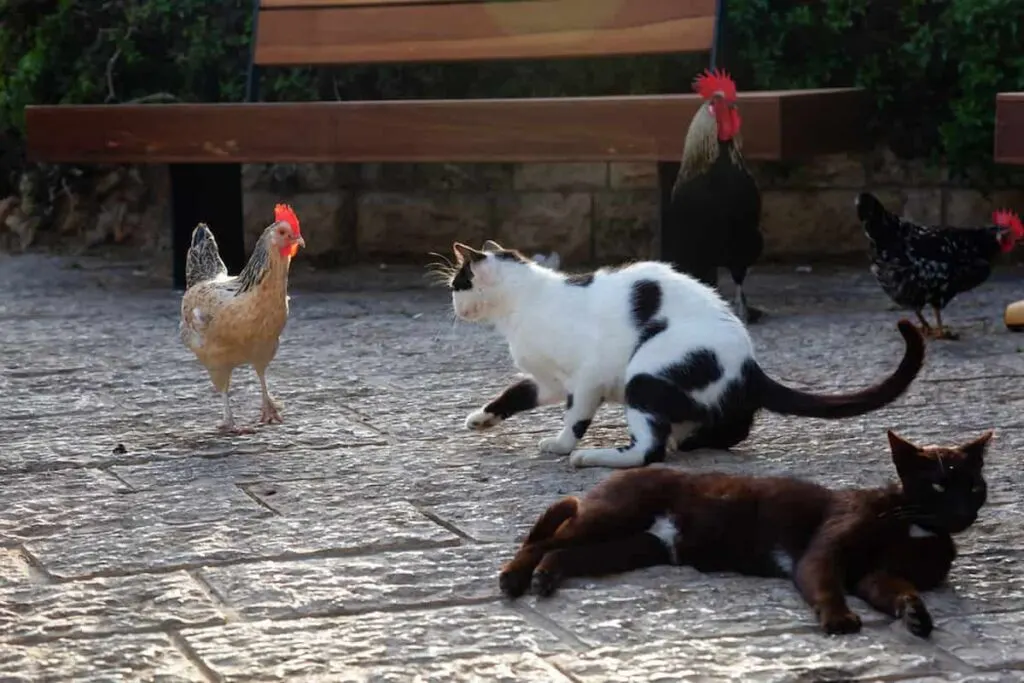
Feral cats are found in many regions worldwide, and their natural hunting instincts can make them a potential threat to backyard chickens. However, the question remains: Will feral cats attack chickens?
Generally, Feral cats won’t attack chickens, but the risk is always there.
This article dives into the risks feral cats pose to chickens and provides tactics for safeguarding your flock from their menacing presence. We’ll look in-depth at what makes these felines predatory so you can better understand how to protect them from harm.
Additionally, we will present helpful strategies that can be employed to deter these hunters and secure your birds’ safety.
Chickens as Prey
Feral cats are born hunters, and their innate disposition compels them to hunt for small animals, birds, and rodents.
Feral cats often think of chickens as possible prey. Several factors make these birds particularly vulnerable to attack, and owners must be aware of them to protect their chickens from harm.
Natural Instincts of Feral Cats as Hunters
Feral cats have all the tools necessary to take down a chicken of any size. Whether it be large or small, the risk is always there. They boast tremendous agility, allowing them to pounce and pursue any creature they set sights upon.
Feral cats often find chickens to be an appealing target due to their small size, activity, and vocalizations. Because feral cats lack training and consider themselves the alpha, it’s hard to stop an attack on a chicken once it starts.
Vulnerability of Chickens
Chickens cannot defend themselves against predators, and their physical characteristics can make them easy prey.
The diminutive size, slow speed, and inability to take flight make chickens helpless against the predatory nature of feral cats. Without some shelter or obstacle, chickens will immediately be in danger from a feral cat.
Examples of Feral Cats Attacking Chickens
Countless news stories have documented feral cats preying on chickens in rural and city landscapes.
Feral cats frequently target chickens that roam freely, and these attacks can harm the poultry owner’s livelihood and their flock’s wellbeing.
Potential Dangers to Chickens
Aside from the physical impact of predation, other risks are associated with feral cats attacking chickens.
These include the spread of diseases, stress and behavioral changes in chickens, and economic impacts on chicken owners.
The transmission is easy too. Cats can carry the bacteria in their mouths or even their nails. Whichever they choose to attack the chicken with can greatly threaten their chances of living. And that’s even if they aren’t killed on the initial attempt.
Diseases Transmitted by Feral Cats
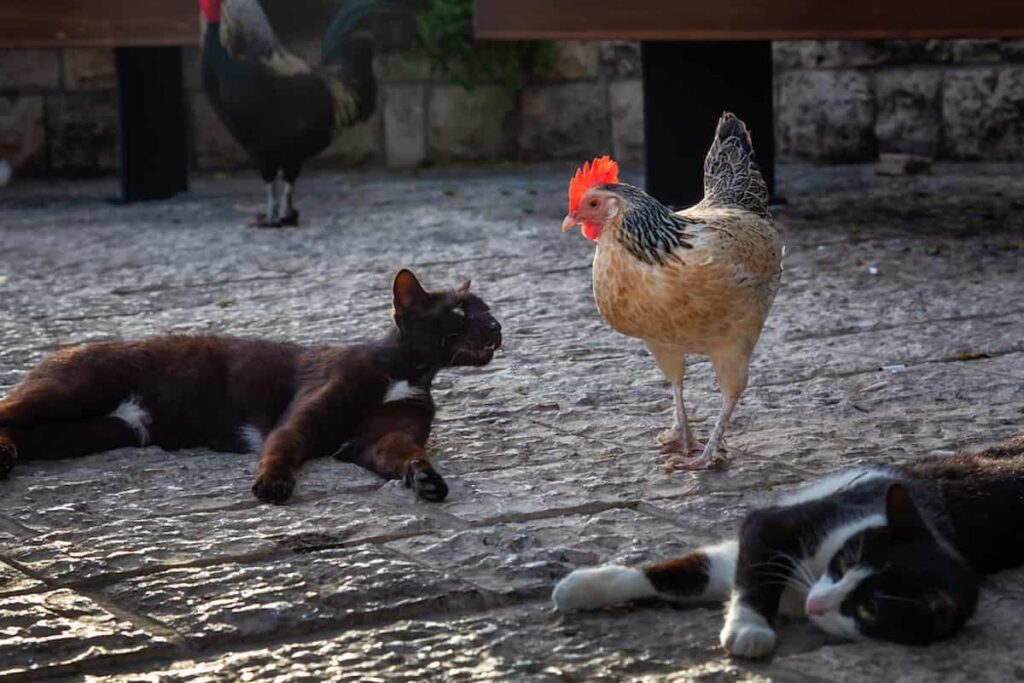
Feral cats are a real threat to the well-being of chickens, as they can spread several diseases that may also be dangerous for humans and other animals. These zoonotic illnesses can cause serious health consequences if not adequately prevented or treated.
Feral cats put people and other animals at risk of illnesses, such as feline leukemia virus, toxoplasmosis, and rabies. Fortunately, implementing preventive measures and management strategies reduces the potential for transmission of these diseases.
Behavioral Changes in Chickens
Feral cats can cause severe distress in chickens, leading to fear-induced behavior changes like decreased mobility and activity. This psychological trauma has ramifications not only for the chicken’s overall health but also for its egg production abilities.
To maintain the health of your chickens, it is essential to identify and address any predation threats they could face.
Economic Impact on Chicken Owners
Predation can wreak havoc on a chicken owner’s finances and peace of mind, as significant losses can be incurred.
For small-scale chicken farms, every bird contributes significantly to income and productivity. Thus, if a flock is affected by disease or illness, it can be devastating to their bottom line, not just through the loss of potential earnings but also due to additional costs related to prevention methods and medical treatment.
Prevention and Protection
Keeping your chickens safe from predators, including wild cats, necessitates a combination of security precautions such as fencing, deterrents, and scare tactics. Additionally, it is essential to confine the chickens in their coop overnight for maximum safety.
Besides community-based approaches to managing feral cats, you can use numerous other strategies to keep your flock safe. You should reduce any sources of stress or risk they face and consider alternative methods for free-range chicken management.
Fencing and Physical Barriers
Shield your chickens from feral cats by building a robust wall of defense around their coop or open-range area. A secure fence, mesh wire, and other enclosures are great options for keeping those pesky felines away!
When looking to make your space feline-proof, it is essential that you opt for a durable material and design that can withstand the strength of a feral cat. Additionally, reinforcing any existing structures will help guard against pesky break-ins.
Deterrents and Scare Tactics
Deterrents and scare tactics can also be effective in keeping feral cats away from your chickens. This can include sound and light-based deterrents, such as motion-activated lights or alarms.
Utilizing chemical and scent-based repellents, like vinegar or citrus sprays, can act as a formidable deterrent against feral cats. Additionally, predator decoys and visual cues such as faux owls or snakes create the illusion of danger, preventing encroaching felines from approaching your area.
Secure Coop Design and Management
A well-constructed coop is an absolute must to ensure your chickens remain safe from any potential threats. The framework should be solid and regularly maintained for optimal security; doors and windows should be properly shut during the nighttime hours.
Design the coop emphasizing security and safety, ensuring correct lighting and ventilation. Additionally, regular upkeep will help keep waste accumulation at bay and discourage predators like feral cats from entering.
Taking these measures can protect your chickens from any potential danger or harm ahead!
Other Strategies for Protecting Chickens
Other than these techniques, you can protect your chickens from feral cats and other predators through community-oriented programs for cat management. Trap-neuter-return initiatives are a great way to limit the number of ferals in your area.
To protect your chickens from predators, it is imperative to eliminate other sources of stress and risk. This includes avoiding densely vegetated areas and food sources that may attract potential predators.
Alternatives to free-range chicken management, such as keeping chickens in a secure run or enclosed space, can protect your flock.
Final Thoughts
To sum up, feral cats present a serious hazard to domestic chickens, and chicken owners must take action to protect their birds.
By comprehending feral cats’ behavior and their threats to chickens, you can secure your poultry’s well-being with effective prevention and protection measures.
To guarantee the safety of your chickens, consider a combination of deterrents and strategies such as physical barriers, scare tactics, and secure coop designs. Additionally, community-based programs for feral cat management or other alternatives to free-range chicken keeping can help ensure their well-being. By considering all these measures, you can rest easy knowing that your flock is safe!


My name is James, and welcome to FAQCats!
Along with our team of cat owners, expert pet enthusiasts, and pet professionals, we aim to write engaging helpful, engaging content about cats. At FAQCats we strive to provide content that’s accurate and fun to read. Our team writes about everything related to cats; even the most complex of topics. Through extensive research and caring for our own fur-pals, we’re able to provide something cat owners worldwide will love. Have a look around, and leave us feedback anytime!