
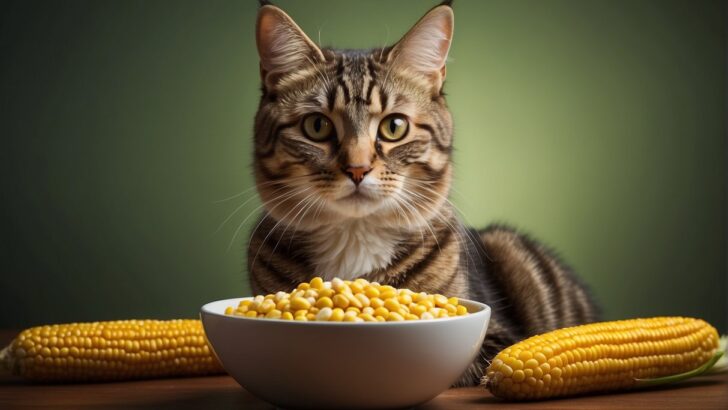
Cats can indeed eat corn. You might have noticed that it’s often included in the list of ingredients in many commercial cat foods. From my own experience with my feline friends, corn has occasionally popped up as a treat or in their kibble, and they’ve had no trouble with it.
While corn is not toxic to cats, it’s important to remember that their diet should mainly consist of high-quality animal protein.
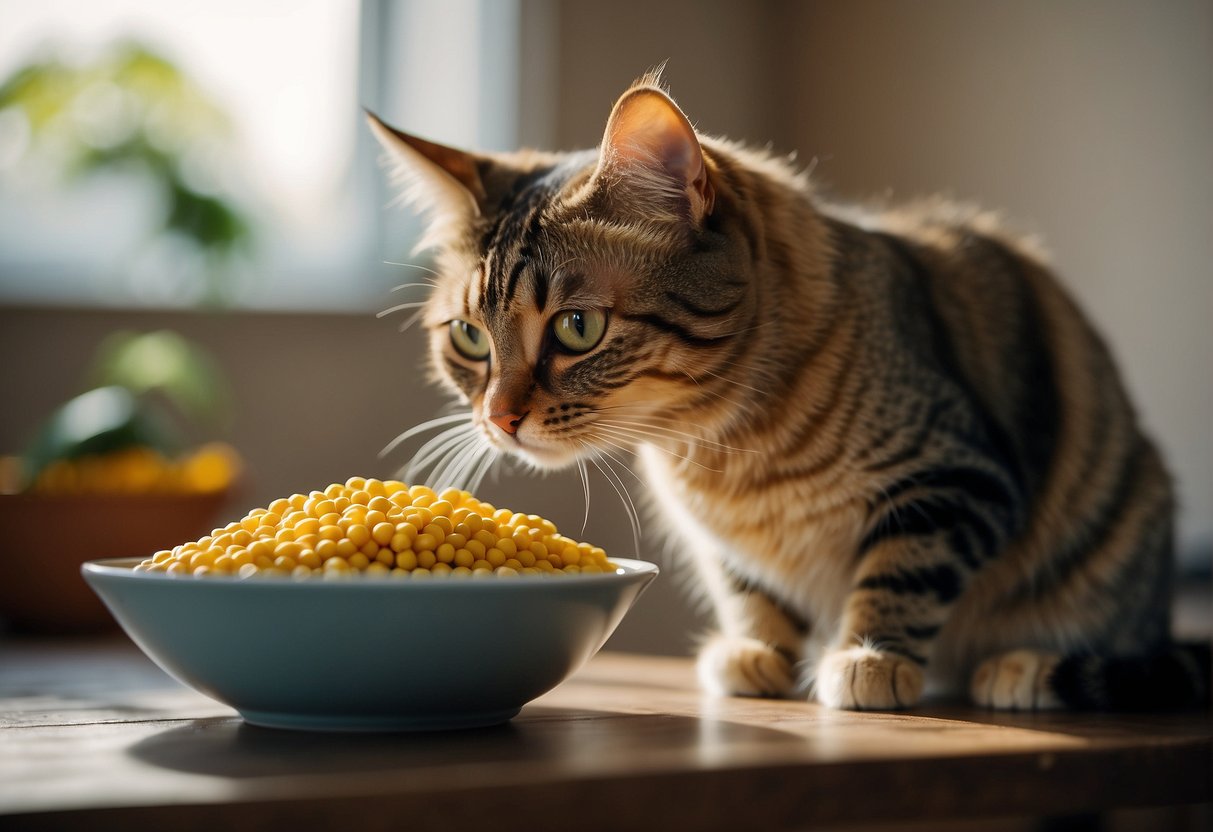
The nutritional value of corn for cats is relatively low compared to their specific dietary needs. It lacks the essential amino acids that cats require from their diet.
That said, it’s not uncommon for a curious kitty to nibble on a few pieces of cooked corn or enjoy a bit of popcorn as a snack. However, moderation is crucial, as too much corn can lead to digestive issues or contribute to obesity, given its carbohydrate content.
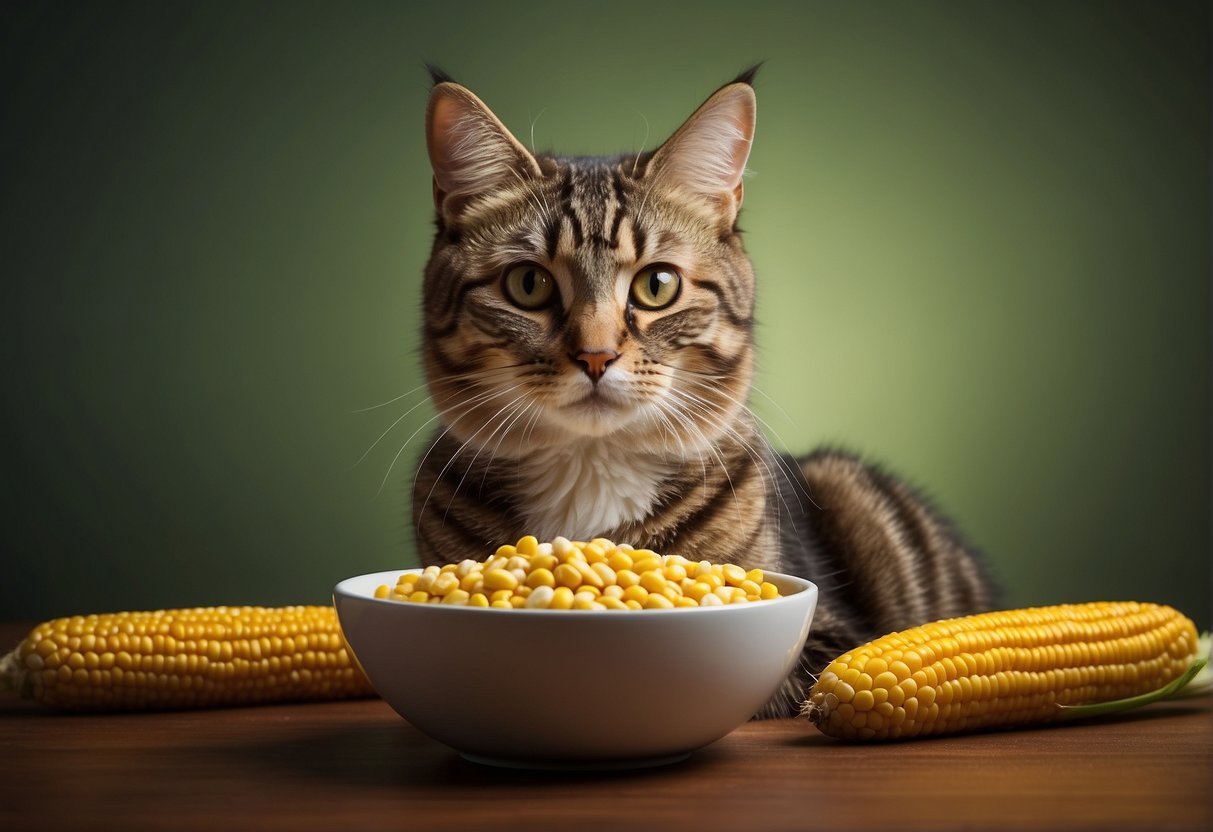
Nutritional Considerations for Cats and Corn
When considering whether to include corn in your kitty’s diet, it’s important to balance their nutritional needs with the benefits and limitations of corn as a food source. Here’s how to weigh those factors:
Understanding a Cat’s Diet
Your cat’s diet should be tailored to their specific needs as obligate carnivores. This means they derive their nutrition primarily from animal-based proteins.
Unlike omnivores, cats have a limited ability to digest plant-based substances. So, their intake of vegetables and grains, including corn, should be minimal.
Essential Nutrients for Cats:
- Protein: Maintains muscle mass and overall health
- Fiber: For a healthy digestive system
- Vitamins and Minerals: For immune function and metabolic processes
- Amino Acids: Especially taurine, for heart and eye health
- Carbohydrates: Not a primary energy source and should be limited
The Role of Protein in a Cat’s Diet
Protein is the cornerstone of nutrition for cats as it provides the energy they require and is critical for growth and maintenance. Cats are unable to synthesize essential amino acids on their own, which is why meat-based proteins, rich in these amino acids, are vital for your cat’s well-being.
Real-life Example:
- A cat thrives on a diet rich in chicken or fish rather than corn since these meats have all the necessary proteins for optimal health.
Corn’s Nutritional Profile for Cats
Corn can offer some nutritional benefits to cats in small amounts. It’s a source of carbohydrates, which can provide energy, and also contains some protein, fiber, vitamins, and minerals. However, corn lacks the amino acids that cats need from their diet.
Quick Facts:
- Protein in Corn: Incomplete for cats, as it doesn’t contain all the essential amino acids.
- Fiber Contribution: Can aid digestion, but should be fed in moderation.
- Carbohydrates: Corn is a high-carbohydrate food, but cats have little dietary requirement for this nutrient.
Potential Risks and Benefits of Feeding Corn to Cats
When contemplating whether to share a bit of your corn with your feline friend, it’s important to weigh both the potential risks and benefits. Corn isn’t toxic to cats, but it’s not an essential part of their diet either.
Digestive Issues and Allergies
Cats have different digestive systems than humans. Since they are obligate carnivores, their digestive tracts are tailored to process meat rather than plant matter.
Feeding your cat corn can sometimes lead to digestive issues such as vomiting or diarrhea. Moreover, just like us, some cats may have a food allergy to corn, which can manifest in symptoms like skin irritation or gastrointestinal upset.
If your cat displays adverse reactions after consuming corn, it’s wise to discontinue feeding it and consult your vet.
Moderation and Occasional Treats
While corn is not an essential part of a cat’s diet, offering it as an occasional treat in small quantities can be safe. Corn provides insoluble fiber, which can aid in digestion.
However, it should never be a mainstay; always practice moderation. Overfeeding corn can contribute to obesity, considering its carbohydrate content.
So, if your cat seems to enjoy a few kernels, make sure these are cooked and not a staple but a sporadic treat in their diet.
Remember, a high-quality cat food rich in animal protein should form the bulk of their nutrition, not processed foods or fillers.
Practical Advice on Feeding Corn to Cats
When considering corn as an addition to your cat’s diet, it’s important to understand the types of corn that are safe to feed as well as knowing when to seek guidance from your veterinarian.
Types of Corn and Preparation Methods
Corn is commonly found in cat food, both as a carbohydrate source and a filler. When feeding your cat corn at home, it’s crucial to ensure it’s cooked as raw corn can be hard to digest and may pose a choking hazard.
Sweet corn or boiled corn are generally safe options in moderation. However, it should be plain, without added salt, butter, or seasonings, which can be harmful.
- Corn on the Cob: While it may seem like a fun treat, it’s best to avoid giving your cat corn on the cob. It’s a choking risk and the cob can cause digestive blockages.
- Popcorn: If it’s plain and fully popped, a piece or two is typically okay. However, avoid any popcorn with added butter, salt, or flavorings.
- Corn Chips, Cornbread, and Other Processed Corn Products: These are not suitable for cats. They often contain salt, garlic, onions, or other ingredients that are toxic to cats.
- Canned Corn: It often contains high levels of sodium or preservatives. If giving canned corn, rinse it thoroughly to remove excess salt.
Always introduce any new food, including corn, gradually to observe how your cat reacts. Notice any digestive upset and discontinue if it doesn’t agree with your cat.
When to Consult a Veterinarian
If your cat shows signs of an allergic reaction or digestive trouble after eating corn, you should contact your veterinarian.
Signs to watch for include vomiting, diarrhea, or changes in behavior.
Additionally, if your cat has health conditions like diabetes, it’s essential to discuss diet changes with your vet to ensure that corn does not negatively affect their health management.
Corn as an Ingredient in Commercial Cat Foods
When perusing through aisles of commercial cat food, you’ll notice that corn frequently appears as a staple ingredient. Understanding why it’s included and how it affects your cat’s nutrition is crucial for maintaining their health.
Deciphering Cat Food Labels
When you’re reading cat food labels, it’s essential to recognize where corn fits into the ingredient list.
Corn is commonly used as a filler or a carbohydrate source in many commercial cat foods. The term “filler” may have negative connotations, but corn does provide a certain caloric content.
However, meat protein should be at the top of the ingredient list as cats are obligate carnivores requiring substantial animal protein to thrive.
Making Healthy Choices for Your Cat
Selecting the right cat food is a balance between satisfying their nutritional requirements and preventing common health issues, like obesity and heart disease.
While corn can lend a palatable flavor and texture, your feline’s diet should be high in meat protein and low in unnecessary carbohydrates.
Some pets may have sensitivities or allergies to corn, so you should monitor your cat’s reaction to foods containing this ingredient.


My name is James, and welcome to FAQCats!
Along with our team of cat owners, expert pet enthusiasts, and pet professionals, we aim to write engaging helpful, engaging content about cats. At FAQCats we strive to provide content that’s accurate and fun to read. Our team writes about everything related to cats; even the most complex of topics. Through extensive research and caring for our own fur-pals, we’re able to provide something cat owners worldwide will love. Have a look around, and leave us feedback anytime!