

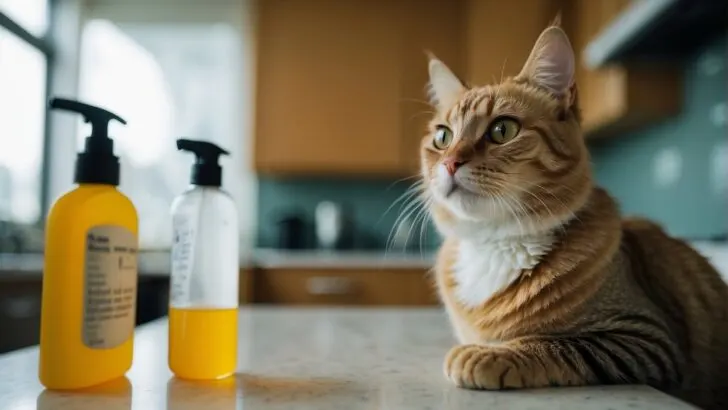
Training your cat with a spray bottle might seem like a straightforward deterrent for unwanted behaviors, but it’s not always the most effective method.
From personal experience, cats can indeed be trained, but the key lies in understanding their nature and finding what motivates them.
For example, instead of reaching for the spray bottle when my feline friend decides to scratch the couch, redirecting their attention to a scratching post with some catnip often proves more successful.
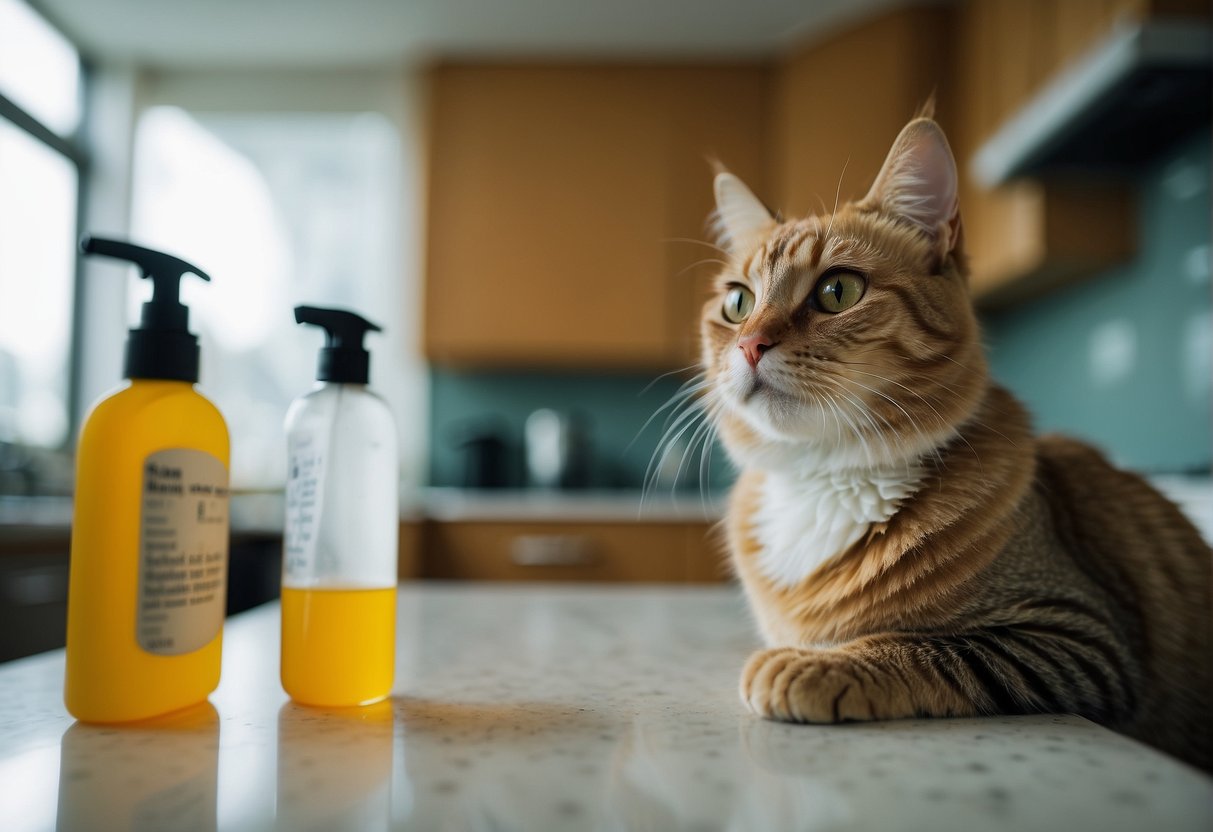
Behavior modification in cats requires patience and positive reinforcement. Using a spray bottle can sometimes lead to a cat becoming stressed or fearful, which may worsen behavioral issues or damage the trust between you and your pet.
I’ve found that rewarding good behavior with treats or affection encourages repeat performances.
The Debate on Using Spray Bottles
When training your cat, you might wonder whether a spray bottle is a suitable tool for correcting unwanted behaviors. This section explores the effectiveness of this method and potential drawbacks to consider.
Effectiveness and Alternatives
The effectiveness of spray bottles as a training tool often comes into question.
They work on the principle of negative reinforcement—using an unpleasant stimulus to deter certain behaviors like scratching furniture.
When you use a spray bottle, you’re aiming to create a negative association with the mistreated action, hoping your cat will think twice before repeating that behavior.
However, cats can be quite mischievous, and the intended message might not always get through.
Some experts believe that rather than helping, spray bottles can just startle or annoy your cat and may not lead to long-term behavior change.
Potential Risks and Downsides
Using spray bottles can have several risks and downsides, impacting your cat’s well-being and your relationship.
If misused, it can lead to a negative experience, fostering distrust or anxiety. This can lead to chronic stress, which is harmful to a cat’s physical and mental health.
The goal is to build a strong bond and harmonious relationship with respect and mutual understanding, not one based on fear.
Moreover, cats are intelligent by nature and may learn to only avoid the trigger behaviors when you’re around, not necessarily understanding that certain behaviors are always unacceptable.
Instead of punishing your cat for being mischievous, find ways to distract and redirect their energy to more acceptable outlets.
This can help maintain a happy home for both of you, free from the negative outcomes that can stem from using a spray bottle.
Addressing Problem Behaviors
When your cat exhibits problem behaviors, rather than resorting to negative forms of discipline like a spray bottle which can cause fear or anxiety, it is more effective to redirect their attention.
If your cat is scratching the couch, provide a scratching post and lead them to it, rewarding them for using it instead. If they’re jumping on counters, create a permissible alternative high spot for them to climb and rest.
Maintaining safe and clear boundaries is vital in establishing proper behavior. Here’s a strategy for addressing unwanted actions:
- Observe and Understand: Watch for what triggers the unwanted behavior.
- Redirect: Introduce a suitable alternative that fulfills your cat’s need.
- Reinforce Positively: Reward your cat when they use the alternative.
Providing the Right Resources
To truly enrich your cat’s environment, you must consider both vertical and horizontal spaces.
- Cat tree: Essential for your cat to climb and perch, it meets their need for high viewpoints.
- Scratchers: Offer a variety of scratchers—cardboard, carpet, and horizontal scratchers—to keep your cat’s claws healthy and to prevent them from scratching unwanted areas.
- Puzzle feeder: This type of feeder adds an element of challenge to mealtimes, encouraging natural foraging behaviors.
Instead of cat-repellent sprays, clear communication about where they are allowed to go and where not, through gentle redirection and positive reinforcement, is key.


My name is James, and welcome to FAQCats!
Along with our team of cat owners, expert pet enthusiasts, and pet professionals, we aim to write engaging helpful, engaging content about cats. At FAQCats we strive to provide content that’s accurate and fun to read. Our team writes about everything related to cats; even the most complex of topics. Through extensive research and caring for our own fur-pals, we’re able to provide something cat owners worldwide will love. Have a look around, and leave us feedback anytime!