
Frosty Paws is a popular ice cream treat for dogs, but plenty of cat owners are wondering if they might give Frosty Paws to their feline friends and canines.
Of course, what’s safe for dogs isn’t always safe or healthy for cats. With food meant to be an occasional treat like Frosty Paws, there’s even more risk that the ingredients will be harmful to your cat since occasional treats usually aren’t held to the same standards as regular foods.
So, can cats enjoy Frosty Paws safely?
Frosty Paws might be a delicious treat for dogs, but some ingredients are questionable in a treat for cats. While a few ingredients might not quite pass muster, the ice cream itself should be relatively safe, given only occasionally in small amounts. Of course, pet owners should decide what they expect from their cat’s food and treats.
Don’t worry if you haven’t decided. We’ve taken a close look at the ingredient list in Frosty Paws, in both the original and peanut butter versions, and will talk about each one individually so you can decide for yourself.

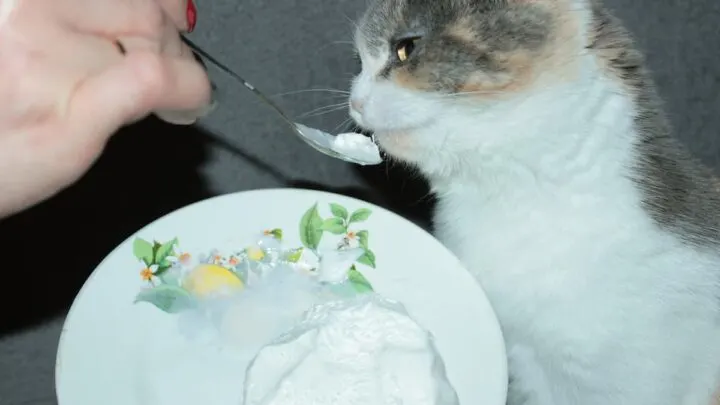
Ingredients In Frosty Paws
| Ingredient | Is It Cat Safe? | Is It Good For Your Cat? |
| Water | Yes | Water is incredibly important for cats since they do not have a strong natural instinct to drink plain water on their own. Hydrating foods and snacks help support your cat’s digestive system, kidneys, and their overall health. |
| Whey | Yes | Whey is what’s leftover from making certain kinds of cheese and is low in lactose and other potentially harmful milk components, which means it’s safe for cats. Depending on the protein content of the whey, it may even be a healthy or beneficial ingredient. |
| Soy Flour | Mixed Results | Soy flour is a common ingredient in many cat foods, but it’s also a potentially harmful ingredient. Soy flour doesn’t contain essential nutrients for your cat and can inhibit the absorption of other important minerals and nutrients. |
| Coconut Oil | Yes | Coconut oil is safe for your cat to eat, but it can cause gastrointestinal distress when eaten in large quantities. It can cause vomiting and diarrhea. |
| Polydextrose | Not Good | Dextrose, in general, is not good for cats, and Polydextrose is no exception. It’s hard to digest and can be harmful in large quantities, which means you need to limit any food that contains a lot of it, much like Frosty Paws. |
| Peanuts* (Peanut Butter Syrup) | Mixed | Peanuts aren’t toxic to cats, but they should be served in limited quantities, if at all. Cats can’t digest them very well and don’t get much nutritional value from them. Probably best to avoid the peanut-flavored version of Frosty Paws. |
| Corn Oil* (Peanut Butter Syrup) | Not Great | Corn oil doesn’t add much to your cat’s food and can be difficult for them to process. Worse, what your cat does get out of corn oil might not be very good for them. |
| Salt* (Peanut Butter Syrup) | Yes, in small amounts | Salt is generally not a good ingredient to include in food for cats, but since this is an ingredient inside of another ingredient, it’s unlikely that there is enough salt to cause a problem. |
| Maltodextrin | Unclear | This is another ingredient that has been studied and found reasonably safe in dogs but hasn’t been substantially studied in cats. It may be perfectly safe, but it’s best to limit how much your cat consumes to make sure you’re keeping them safe without more information. |
| Sorbitol | Yes, in small amounts | Unlike xylitol, which is an unsafe sweetener for cats, sorbitol is reasonably safe but needs to be kept to small concentrations. It’s similar with dogs, but the limits are slightly different. This ingredient should be safe, but it means you should limit how often you feed anything containing it. |
| Monoglycerides | Unclear | Monoglycerides are mostly studied in dogs, and it’s not entirely clear whether they’re safe for cats. Even in dogs, the amount should be kept limited, and in cats, the dose should be even smaller. This amount may be safe, but it’s not clear. |
| Microcrystalline Cellulose | Mixed | This is one ingredient that needs to be limited in pet foods, including cat food. But in this case, it seems to be below the safe limit, judging by where it is on the ingredient list. |
| Dicalcium Phosphate | Yes | Dicalcium Phosphate is a calcium supplement that is often added to improve food texture, and it can also help fight tartar buildup as a bonus. |
| Sodium Carboxymethylcellulose | Mixed | More commonly used as eye drops, this ingredient isn’t unsafe for your cat, but that doesn’t mean it’s good for them either. |
| Dipotassium Phosphate | Mixed Reports | This ingredient is pretty common in dog and cat food and can be used to help improve the texture. However, it may also contribute to the formation of kidney stones and is one of the ingredients some vets recommend you avoid. |
| Ascorbic Acid (Vitamin C) | Yes | Vitamin C probably isn’t all that important for your cat, too much can be a problem, but cats don’t have a recommended range for vit. C. Thankfully, there probably isn’t too much in this product, so it’s likely okay. |
| Ferrous Fumarate | Yes | A form of Iron, this should be okay for cats and can sometimes be used as a supplement to help cats with anemia. However, too much Iron, the opposite of anemia, can also cause problems. |
| Natural Flavor | Unknown | This ingredient is tricky because natural flavors can be almost anything. We can mostly assume that this is a dog-safe flavoring since Frosty Paws is designed for dogs, but that doesn’t mean it’s cat-safe. Probably this ingredient is fine, but we cannot guarantee it. |
| Salt | Yes and No | Because the salt in this is low down the list it may be safe. However, too much salt can cause problems for cats. Since this product is designed for dogs, who also have problems with too much salt exposure, but can be much larger than cats, this is a “proceed with caution” ingredient. Probably not a good option for cats who need a special low-sodium diet or who already have known kidney problems. |
| Pyridoxine Hydrochloride | Yes | This is vitamin B6, which is especially important for cats because it helps them process protein. |
| Thiamine Mononitrate | Yes | Thiamine is vitamin B1, and is important for kidney function and helping maintain healthy blood sugar. Very much a safe food for your cat. |
| Riboflavin | Yes | Riboflavin is just vitamin B2 and serves a variety of important roles for your cat, so it’s a good addition. Likely this is already in your cat’s food. |
*Only included in the peanut butter flavored version, not the original flavor.
Is Frosty Paws Safe For Your Cat?
Overall, it looks like Frosty Paws is safe as an occasional treat, but it might not be a perfect one for your cat. It’s probably safe, but we can’t guarantee it.
If you’re uncertain whether you should feed your cat Frosty Paws, consider consulting with a vet to help you make the final decision.


My name is James, and welcome to FAQCats!
Along with our team of cat owners, expert pet enthusiasts, and pet professionals, we aim to write engaging helpful, engaging content about cats. At FAQCats we strive to provide content that’s accurate and fun to read. Our team writes about everything related to cats; even the most complex of topics. Through extensive research and caring for our own fur-pals, we’re able to provide something cat owners worldwide will love. Have a look around, and leave us feedback anytime!