

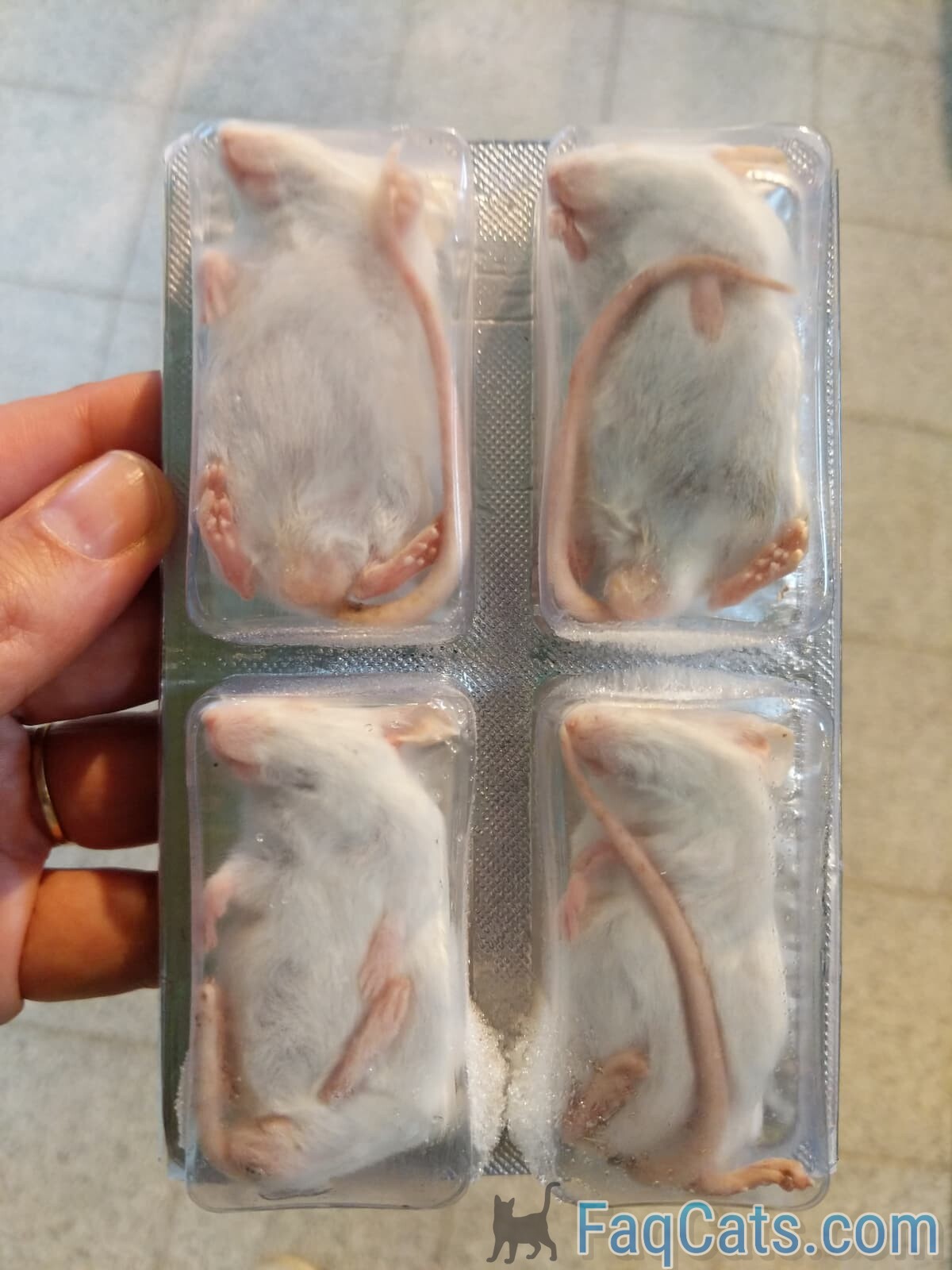
Raw food diets generally revolve around uncooked, freeze-dried, or dehydrated animal proteins and offer numerous benefits for cats as carnivores. Many cat parents gravitate towards such trends and often ask related questions. One such query is can cats eat frozen mice?
Cats can eat frozen mice because the process of freezing eliminates most pathogens and diseases that are otherwise expected in live mice. However, feeding cats frozen mice can still be problematic due to the presence of zoonotic bacterial diseases and choking hazards.
If you’re looking to learn more about the advantages and disadvantages of feeding your kitty frozen mice, we can help you out. This article highlights everything cat owners need to know about felines’ frozen mice diet options.
Can Cats Eat Mice?
Before we get to the pros and cons of feeding your fur baby frozen mice, let’s focus on should cats eat mice at all? Felines survive on several small animals in the wild, including rabbits, voles, birds, and mice. As obligate carnivores, cats have a shorter and more acidic digestive system that helps them digest raw meat without too many concerns.
However, the biggest drawback of a raw diet for felines is the presence of zoonotic bacteria (transmittable from animals to humans), such as E.coli and Salmonella. Besides that, food poisoning from such pathogens can also lead to life-threatening conditions like antibiotic resistance or septicemia in cats. That’s why experts always advise against feeding cats raw meat.
When it comes to domesticated cats eating mice, the presence of bacteria can be even more threatening because their immune systems might not be as robust as their feral counterparts. And, there’s also the danger of bones becoming a choking hazard or leading to impaction.
Cats can eat mice and generally digest them without problems, but there’s no assurance against the animals being disease-free or causing other concerns after consumption.
Is It Safe For Cats To Eat Frozen Mice?
The topic of feeder or frozen mice remains controversial in the cat community. For example, supporters of raw-food claim feeding cats a diet that closely resembles their natural intake are best for their nutritional needs. On the flip side, critics argue that the benefits of feeding felines frozen mice are outweighed by the dangers involved. Alas, both sides have valid points.
A well-balanced feline diet revolves around six main categories: protein, carbohydrates, fats, vitamins, minerals, and water. Frozen mice (like live feeder rodents) have plenty to offer on all counts. For example, 100 grams of mouse meat includes a whopping 70 percent moisture, 19 percent protein, 6.3 percent fat, along with vitamins A, D, E, and minerals like taurine, magnesium, and potassium.
In short, there’s no arguing against the nutritional benefits of feeding cats frozen mice. The problem, unfortunately, is that the advantages can’t offset or overpower the disadvantages involved in the process.
The biggest concern of feeding your cat frozen mice is that there’s always the danger of the mice carrying pathogens. Freezing the animals does not do away with all the bacteria, making them a severe risk for your cat’s well-being.
Then there are concerns like the bones of frozen mice lodging in your pet’s throat and becoming a choking hazard. And finally, the equally chilling problem is that bones can also cause impaction. So, you can’t say feeding your cat frozen mice is safe, not for you or your pet.
Why Are Some People Against Feeding Cats Frozen or Feeder Mice?
Aside from the possible health concerns, cat parents are against feedings cats frozen or feeder mice for various other reasons. One of most primary concerns against this trend is that many believe it’s not ethical to feed their pets a live creature.
Besides that, another considerable disadvantage against live and frozen mice is that they’re not the best diet option for the faint-hearted. Cats don’t gulp mice in a single go. Instead, there’s plenty of tugging and tearing involved, along with messy and gory leftovers for caretakers to dispose of.
Cat owners are also put off the frozen mice trend because the process of dethawing the animal sometimes requires chopping it up in pieces, which is not something everyone can handle. It also has hygienic implications because the knife, chopping board, and any other utensil used to prepare the frozen mice can’t be used for anything else due to cross-contamination.
How Do You Thaw Frozen Mice?
If you’re interested in learning what the technique of thawing frozen mice involves, you will want to pay attention to this section.
While thawing directions can vary based on where you purchase your frozen mice from, the general instructions remain the same and include the following:
Step One
It’s never advisable to use a microwave to thaw a frozen rodent because doing so can encourage the growth of harmful bacteria inside it, making it pretty detrimental to your feline’s health. Using a microwave can also take away from the nutritional value of the frozen mice.
Instead, cat or reptile owners are advised to place the feeder inside a Ziploc bag and seal it shut to prepare it for the next thawing step.
Step Two
Heat water in a pot until it’s somewhat near-boiling. Switch off the gas and let the water cool for several minutes. Transfer the water to a bucket (used for thawing purposes only) and place the Ziploc feeder bag in the bucket.
Step Three
Allow the bag to rest in the water for about fifteen minutes or until the mouse feels squishy to touch. Lift the bag from the water and place the feeder on your pet’s bowl or dish for consumption.
If you’re not sure about the feeding quantity or it’s your first time feeding your cat a frozen mouse, it’s best to cut the rodent in half before thawing it in warm water for a cleaner process.
Conclusion
As tempting as trying out a raw-food diet for felines can be at times, it’s always best to confer with your vet for viable information. If your kitty’s in the best of health and doesn’t require supplemental diet support, it’s best to avoid feeding it frozen mice because of the dangers involved.
Raw meat diets can lead to antibiotic-resistant bacteria, which are incredibly difficult to treat and lead to health problems in felines and humans. In short, it’s best to err on the side of caution and keep yourself, your family, and your kitty safe.


My name is James, and welcome to FAQCats!
Along with our team of cat owners, expert pet enthusiasts, and pet professionals, we aim to write engaging helpful, engaging content about cats. At FAQCats we strive to provide content that’s accurate and fun to read. Our team writes about everything related to cats; even the most complex of topics. Through extensive research and caring for our own fur-pals, we’re able to provide something cat owners worldwide will love. Have a look around, and leave us feedback anytime!