

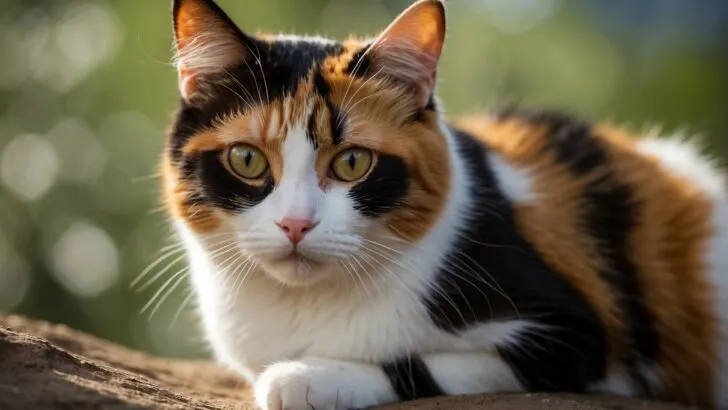
Calico cats are the result of a genetic color pattern involving multiple hues—usually orange, black, and white. The distinct mosaic on their coat isn’t a breed-specific trait but a manifestation of a genetic phenomenon related to the X chromosome.
For example, if you see a calico with a particularly vibrant patchwork, it’s because of how the genes for fur color were expressed and inherited.
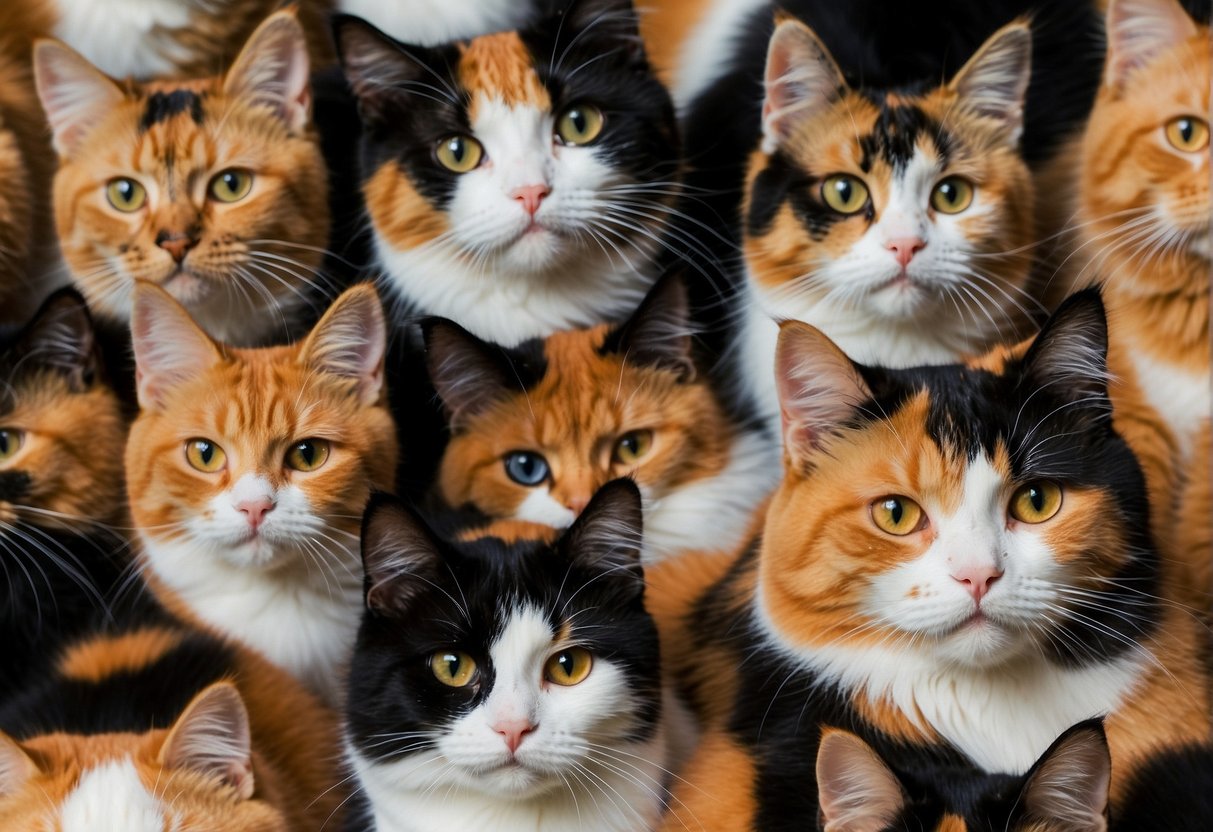
The appearance of calico cats is incredibly unique, and no two calicos have the same pattern. It’s all due to the random inactivation of one of the X chromosomes in each cell during their development.
Think of it like flipping a coin within each cell, where each side represents a different color gene that could be expressed. This genetic lottery gives them their one-of-a-kind look which is why you might find a calico with a splotch of orange on their back or an inky black patch over one eye, paired with a pure white belly.
While owning a calico, you’ll notice their personality is just as varied as their coat. They are often described as sassy and independent, but this can differ from one cat to another, as much as random streaks in their fur.
Genetics of Calico Cats
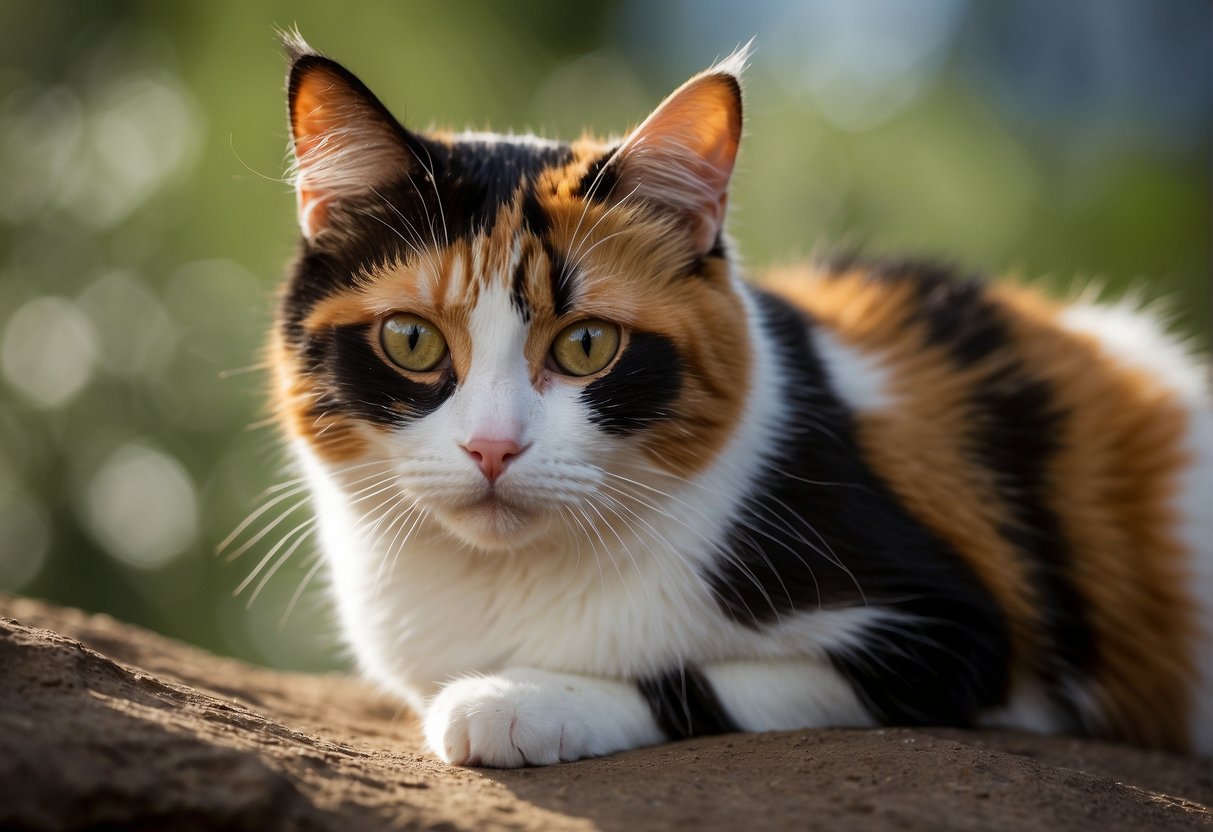
Calico cats are a fascinating display of feline genetics at work, combining a unique array of colors that is tied to their chromosomal makeup. Let’s explore how their distinctive patterns come to life through the marvels of genetics.
Chromosomal Basics
At the core of a calico cat’s genetics is the presence of two X chromosomes in females. These chromosomes are carriers of the genes that determine fur color. The black and orange colors seen in calico cats are directly linked to these chromosomes. Here’s a straightforward rundown:
- Females: XX chromosomes
- Males: XY chromosomes
Since the calico pattern requires two X chromosomes, it is predominantly seen in female cats. However, male calico cats can occur through a genetic anomaly known as Klinefelter syndrome, where the male possesses two X chromosomes and a Y (XXY).
X-Inactivation and Color Patterns
Calico coloration is an outcome of a process known as X-inactivation. This means that in each cell of a female cat, one X chromosome (with the exception of reproductive cells) is randomly inactivated to form a structure called a Barr body.
This process is crucial to prevent “double-dosing” of X-linked genes. Here’s how it plays out:
- Black fur: Inactivation of the X chromosome carrying the orange gene
- Orange fur: Inactivation of the X chromosome carrying the black gene
- White fur: Not linked to the X chromosome; due to other genetic factors
This random inactivation results in the patchwork quilt of colors—black, red, and white—that we admire in calico cats, often with sharp demarcations.
Imagine a canvas painted with splashes of orange and black, with white spaces where the brush didn’t touch. This randomness is much like how calico cats develop their distinctive coats: each cell’s decision creates the vibrant puzzle of colors unique to each cat.
And while the white color isn’t tied to X-inactivation, it often enhances the contrast of the calico’s tapestry, showcasing the interplay of genetics you can see and touch.
Your own furry friend at home might just be an example of this genetic marvel. Each time you look at her, you’re seeing a living mosaic crafted through the wonders of genetics.
Calico Cats in Modern Times
I thought here I’d share with you all the intricacies of breeding calico cats and breaking down the unique health considerations associated with them.
Breeding and Rarity
Breeding calico cats is an unpredictable endeavor as their distinctive color pattern is not tied to a specific breed but is rather a genetic characteristic. This colorful coat is predominantly found in female cats due to the unique interaction of their two X chromosomes.
The calico pattern emerges from a phenomenon called X-chromosome inactivation, which allows for the random silencing of one of the X chromosomes in each cellular division.
- Male Calicos: Male calicos are exceedingly rare, and when they do occur, it’s often the result of a genetic mutation, specifically Klinefelter syndrome, where the cat has XXY chromosomes. Unfortunately, these male calicos are usually sterile and cannot contribute to breeding programs.
- Female Calicos: As for female calicos, their breeding does not guarantee calico offspring due to the unpredictable nature of the genetics at play.
Here’s a brief look at the rarity:
| Type | Calico Possibility | Rarity |
|---|---|---|
| Female | Common | Not rare |
| Male | Uncommon | Extremely rare; genetic anomaly |
Health Considerations
When it comes to the health of calico cats, it’s important to note that they are not predisposed to conditions specific to their coat pattern. However, there are considerations to keep in mind for their overall health and lifespan, which pertain to all cats, regardless of their coloration.
- Lifespan: A calico cat’s lifespan is typically the same as any other feline, ranging from 12 to 16 years, provided they are given proper care, diet, and regular veterinary check-ups.
- Health Monitoring: It’s crucial to be vigilant about their health by monitoring for common feline diseases, ensuring they maintain a healthy weight, and staying up-to-date on immunizations.


My name is James, and welcome to FAQCats!
Along with our team of cat owners, expert pet enthusiasts, and pet professionals, we aim to write engaging helpful, engaging content about cats. At FAQCats we strive to provide content that’s accurate and fun to read. Our team writes about everything related to cats; even the most complex of topics. Through extensive research and caring for our own fur-pals, we’re able to provide something cat owners worldwide will love. Have a look around, and leave us feedback anytime!