

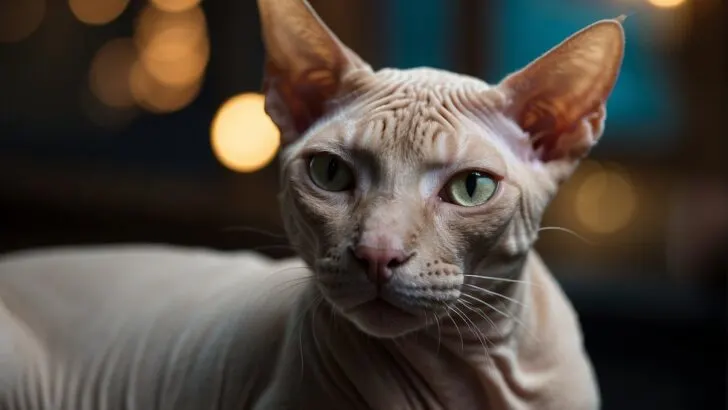
Sphynx cats typically experience their first heat at around 5 to 6 months old, and as a breed known for their intense bond with their owners, you may notice significant behavioral changes during this time.
Your Sphynx may become more affectionate, vocalize more often, or show a heightened level of activity, all telltale signs that she’s in her estrus cycle. Being aware of these changes can help you provide the comfort and attention your cat may seek during this period.
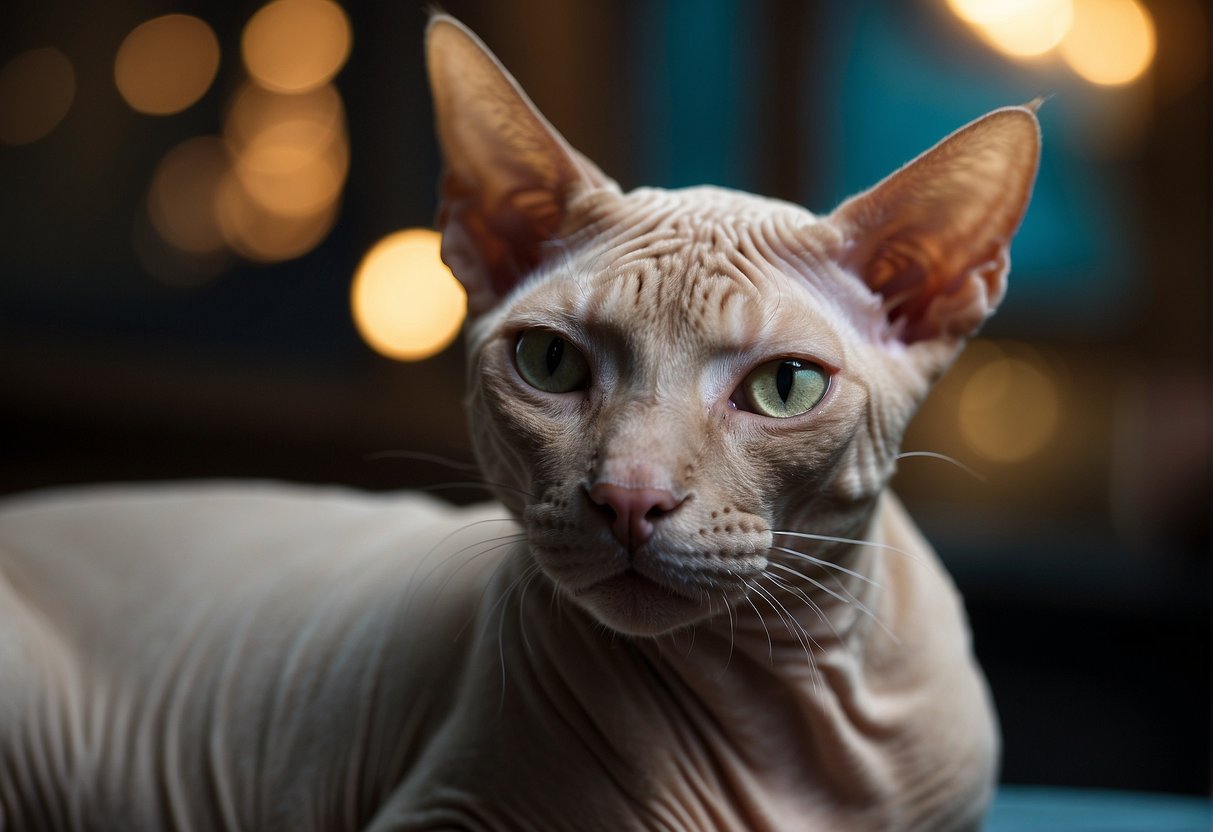
Understanding the heat cycle of your Sphynx is crucial, especially if you’re considering breeding or if you want to avoid unwanted litters. Unlike some animals that have heat cycles only a few times a year, Sphynx cats are seasonally polyestrous.
This means that they can go into heat multiple times during the longer daylight periods of spring and summer. This cycle can repeat every few weeks, so it’s not uncommon for your feline friend to be in the throes of mating season more often than you might expect.
The yowling and pacing may test your patience, but it’s important to remember that these behaviors are natural and your cat is relying on you for support. Being equipped with this knowledge, you can better care for your Sphynx’s well-being and maintain the deep bond you share.
The Heat Cycle of Sphynx Cats
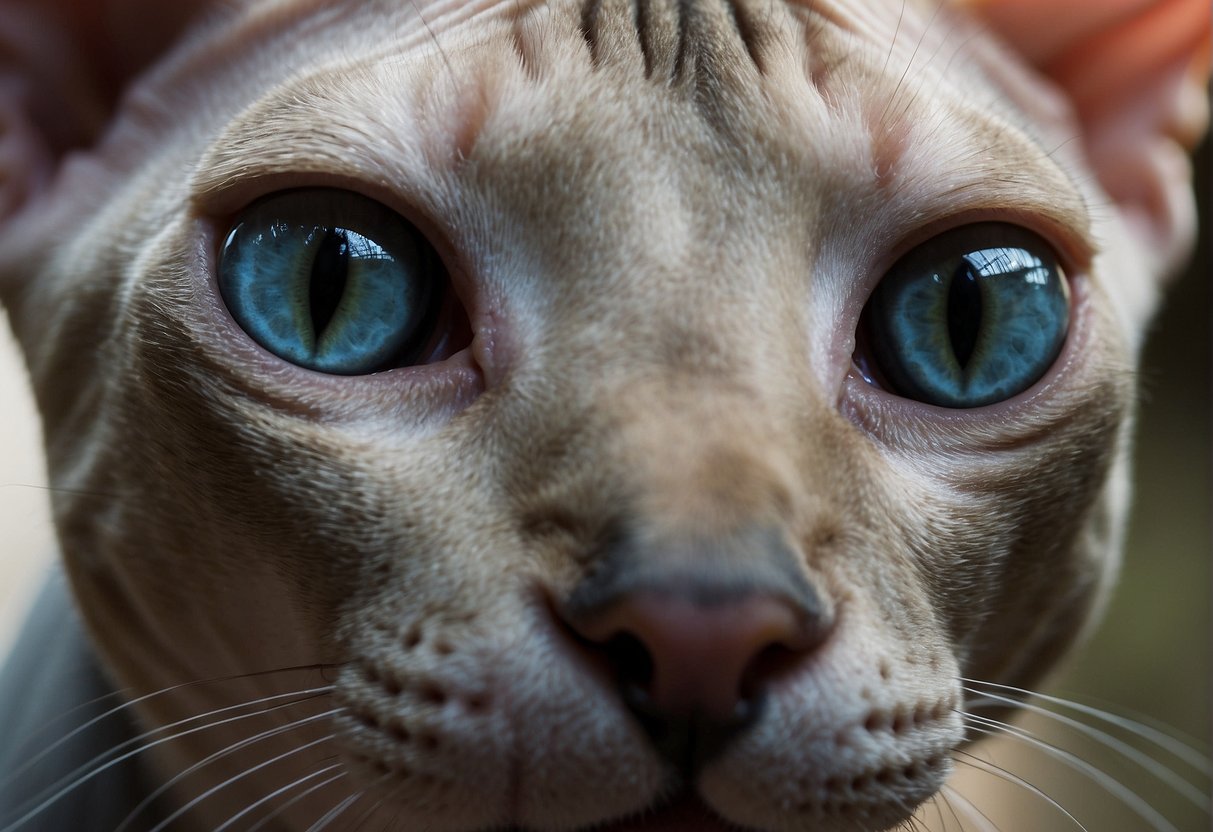
Sphynx cats, like other breeds, experience a heat cycle that’s essential to understand for responsible ownership. Let’s explore the specific stages of this cycle, when it begins, and its patterns throughout the year.
Stages of the Heat Cycle
Your Sphynx cat’s heat cycle is composed of several stages:
- Proestrus: This initial phase is short, typically lasting 1 to 2 days, and you might not notice any significant changes in behavior.
- Estrus: This is the period when your cat is receptive to mating, often lasting 4 to 14 days if she isn’t bred.
- Interestrus: If your cat hasn’t mated, she’ll temporarily cease displaying heat behavior, typically for 2 to 3 weeks.
- Diestrus: This stage occurs if your cat has mated, signalling the end of the heat cycle.
- Anestrus: This is a period of sexual and hormonal inactivity, which varies depending on seasonal changes.
Age of First Heat
Female Sphynx cats can experience their first heat as early as 4 months old, but it’s more common around the 6 monthsmark, which is when they reach sexual maturity.
Frequency and Seasonality
Sphynx cats are typically seasonally polyestrous, meaning they can go into heat several times during a breeding season, primarily in the warmer months. Each heat cycle may recur every two to three weeks during this time. To avoid unexpected litters, it’s recommended to spay your cat if you’re not planning to breed her.
Recognizing Signs of Heat in Sphynx Cats
When your Sphynx cat enters their heat cycle, typically starting around 5 to 6 months of age, you’ll notice marked changes in both their behavior and physical appearance, which indicate their readiness for breeding.
Behavioral Indicators
Your Sphynx cat’s behavior can be quite telling when they are in heat. Here are some of the key signs to look out for:
- Increased Vocalization: Prepare for a symphony of meows and yowls as your Sphynx cat becomes much more vocal, attempting to grab the attention of potential mates.
- Affection and Attention-Seeking: Don’t be surprised if your normally independent Sphynx seeks extra cuddles or rubs against you and objects more persistently.
- Restlessness: A Sphynx in heat can appear agitated, pacing around the house and showing a decrease in their usual lazy lounging habits.
- Spraying: In an effort to advertise their availability, your Sphynx might spray urine around the house—this is more common in unspayed females and unneutered males.
Physical Changes
Observing your Sphynx closely will also reveal physical changes that accompany their heat cycle:
- Vulva: The vulva may become slightly swollen, although this can be more challenging to spot than in other breeds due to the Sphynx’s lack of fur.
- No Bleeding: Unlike some other mammals, cats do not typically bleed when they are in heat, so don’t expect to see any bleeding from your Sphynx during this time.
During this period, your feline friend might exhibit a beacon of “come hither” signals to announce their readiness to nearby toms.
Health and Management During Heat
Knowing how to care for your Sphynx cat during heat cycles and the options for preventing heat are critical for maintaining their health and managing behaviors.
Caring for a Sphynx in Heat
During a Sphynx cat’s heat cycle, your feline friend might exhibit more affectionate behavior, increased vocalization, or even attempt to escape to find a mate. Stress can be a factor for your Sphynx during this time, and maintaining a calm environment is essential. Ensure their litter box is kept clean as cats may spray urine more frequently to attract mates.
- Provide extra attention and playtime.
- Use pheromone diffusers to help calm your cat.
Options for Preventing Heat
If you’re not planning on breeding your Sphynx, discussing spaying with your vet is a prudent choice for preventing heat cycles. Spaying is the surgical removal of reproductive organs and can prevent the onset of heat entirely.
- Spaying before the first heat cycle can reduce the risk of certain health issues.
- A veterinarian can provide the best guidance on when to spay your cat to ensure they stay healthy.
Making informed decisions about spaying or providing special care during heat cycles will help keep your Sphynx cat happy and healthy.
Breeding and the Impact of Heat
As a Sphynx cat owner, understanding your cat’s breeding cycle is crucial, especially since they are polyestrous and can go into heat multiple times a year. Breeding Sphynx cats requires knowledge of their heat cycles to time mating effectively.
Breeding Considerations
When planning to breed your Sphynx cat, timing is everything. Sphynx cats can become sexually mature as early as 5 months old, although most reach maturity around 6-9 months.
They can experience multiple heat cycles throughout the year, particularly when exposed to the right conditions of warmth and light, mimicking the breeding season.
During the heat cycle, you may notice your cat becoming more vocal and affectionate, signaling that she’s ready to mate. Successful mating during this time can lead to pregnancy, typically lasting around 65 days.
A pregnant Sphynx cat should be provided with a nutritionally rich diet and proper veterinary care to ensure the health of the litter to come.
Potential Challenges and Issues
Breeding Sphynx cats also introduces potential challenges that you should prepare for. Here are a few:
- Overpopulation: Without careful planning, breeding can contribute to overpopulation, so it’s important to ensure that there is a demand for kittens before deciding to breed your Sphynx.
- Health of the Mother: Pregnant Sphynx cats require additional care; any complications could impact both the mother and her unborn kittens. Your vet should monitor the health of her uterus and developing embryos closely.
- The Stress of Heat: Being in heat can be stressful for your Sphynx; she may display restlessness or aggressive behavior. Understanding and managing this behavior is key to her wellbeing.
Breeding Sphynx cats is not just about creating cute kittens; it’s about understanding and managing their reproductive cycles for the betterment of the breed. If you’re up to the challenge and responsibility, breeding can be an enriching experience.


My name is James, and welcome to FAQCats!
Along with our team of cat owners, expert pet enthusiasts, and pet professionals, we aim to write engaging helpful, engaging content about cats. At FAQCats we strive to provide content that’s accurate and fun to read. Our team writes about everything related to cats; even the most complex of topics. Through extensive research and caring for our own fur-pals, we’re able to provide something cat owners worldwide will love. Have a look around, and leave us feedback anytime!