
Most cats are pretty good about keeping themselves clean. But, every once in a while, every cat will need a little help. They can get into messes, feel sick and not take as good care of their fur, or run into numerous health problems that mean they need an occasional bath.
There’s just one problem: not all soaps are safe for cats!
There are a lot of problems to worry about when it comes to choosing the right soap for your cat. Some ingredients are too harsh or dry for your cat’s skin and fur, while others can be toxic. Certain scents can also cause problems, both because the scent might be toxic and because some scents will bother your cat.
Generally, it’s best to go with an unscented or only lightly scented soap or shampoo designed for cats. There are a lot of products out there if you’re looking for cat-specific shampoos. Your vet may also be able to provide a shampoo or medicated shampoo specific to your cat’s needs. Alternatively, almost all small-animal shampoos are safe and effective on cats. Just don’t use dog shampoo on your cat!
But, if we’re being honest, that isn’t always an option and isn’t always available when you need it.
So, here are the soaps you can use on your cat and the soaps and soap ingredients you should avoid when looking for good options.
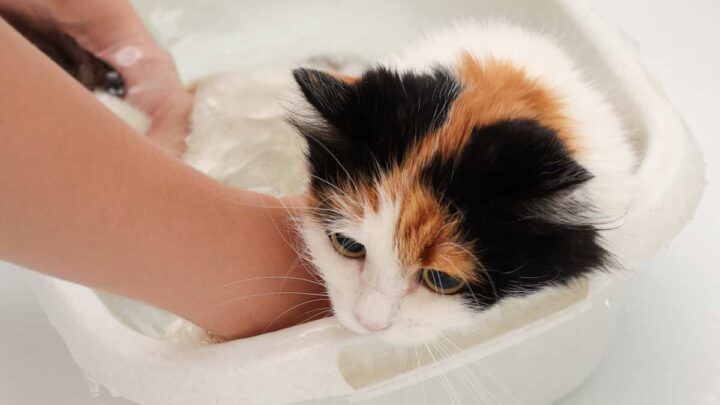
Can I Use Human Shampoo On My Cat?
Generally, no. Human shampoo has a few problems that make it a less-than-ideal option.
The main problem with most shampoos designed for people is that they are too harsh and can strip too much oil from your cat’s fur and skin. Those oils are critical for keeping their skin hydrated and avoiding itchiness, so you don’t want to remove too much of them when you’re cleaning your cat.
The other problem with human shampoos is that they are typically highly scented and contain many potentially toxic or overly-drying ingredients. For instance, tea tree essential oil is common in many anti-dandruff or hair growth shampoos, but that oil is far too strong to be safe for your cat.
In addition, many human shampoos contain alcohols designed to help strip oils out of your hair. Some of them can be hydrating, but for the most part, alcohol ingredients are drying.
When it comes to your cat, those alcohols are both drying and toxic, leading to itchiness and potentially other negative symptoms.
If you’re in a pinch, unscented baby shampoo is safer than most adult shampoos, but it’s still not ideal. Even baby shampoo can be too harsh and too drying for your cat, especially if you have to give baths regularly.
Can I Use Dish Soap On My Cat?
Yes and no.
Dish soap is a relatively safe alternative for cats, especially Dawn brand dish soap and unscented varieties.
However, it’s important not to use any citrus-scented soap on your cat as citrus can be both irritating and toxic to them. Pine, peppermint, and other strong scents should also be avoided due to toxicity and irritation.
That said, even with Dawn and other soaps designed to be gentle, non-toxic, and animal-safe, dish soap is too strong for regular use.
If your cat or cats need regular baths to stay healthy, using Dawn and other dish soap will probably exacerbate their existing problems by giving them dry skin, making them itch, potentially damaging their fur, and making it rougher and more prone to breakage.
So, in an emergency, feel free to use unscented Dawn. But otherwise, it’s probably better to wait until you can get a shampoo that’s designed for cats.
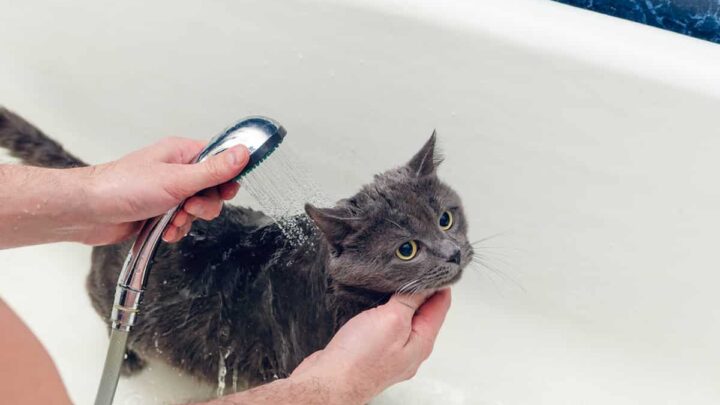
What Soap Can I Use On My Cat If I Don’t Have Cat Shampoo?
Pretty much all cat owners have been there at some point. Your cat gets into something messy and needs an immediate bath, but you don’t have the supplies you need.
One option, depending on what you’re trying to wash off, is to just wash your cat with water. It won’t remove the tiny molecules of the mess that soaps and shampoos can, but you can still probably do a pretty good job if you rinse your cat thoroughly.
Otherwise, you can use some relatively safe alternatives in a pinch. Remember, with any soap, there is a small chance that your cat will have an adverse reaction, especially if they have a history of allergies, including food allergies.
- Dawn unscented dish soap
- Unscented Castile Soap (liquid and bar forms both work. Use as little as possible)
- Baking soda and warm water (dilute the baking soda heavily before using)
- DIY oatmeal shampoo (ground oats or oat flour, a small amount of baking soda or cat safe-shampoo, and water. Good for soothing itching.)
- Unscented baby shampoo (use as little as possible)
Ingredients And Scents You Should Avoid
There are a lot of ingredients and scents you should avoid when you’re looking at shampoos and soaps for your cat. This isn’t a complete list, but it’s a good place to get started:
Scents To Avoid:
- Lavender
- Eucalyptus
- Tea Tree
- Mint (catnip is a mint and the only exception to this one)
- Pine
- Citrus (any)
- Cinnamon
- Clove
- Pennyroyal
- Sweet Birch
- Ylang Ylang
- Artificial Fragrances
Make sure you check the ingredient for these scents or essential oils. In some cases, these essential oils are used to boost soaps or give them specific benefits without being used as a scent. Even used this way, these scents are potentially dangerous to cats.
Shampoo Ingredients To Avoid:
These ingredients are all potentially harmful, either because they are too harsh or because they can be toxic. Avoid shampoos with them, even shampoos marketed for small animals or cats.
- Artificial Fragrances
- Parabens
- Sulfates
- Propylene Glycol
- Mineral Oil
- Methylchloroisothiazolinone
- Pyrethroids
- Phenols
- Formaldehyde
You’ll notice that some of these ingredients are actually a type of chemical rather than a specific ingredient. For instance, all parabens are potentially harmful.
Things To Consider
Remember a few rules when you’re giving your cat a bath.
- Bath water should be warm, not hot.
- The room you’re giving a bath in should also be warm.
- Have towels ready, and be prepared to cuddle or give your cat a heating pad until they are completely dry. Kittens especially may struggle to stay warm enough while their fur is wet.
- Never get water in your cat’s ears.
- Avoid your cat’s eyes, nose, and mouth, even when using a shampoo designed for cats.]
- Your hands will be better than washcloths, sponges, loofas, or scrubbing tools–even tools designed for hair.
It’s also important to remember that unless your cat has a specific reason for needing baths, you shouldn’t give them a bath more than every once in a while. Cats have evolved to mostly keep themselves clean and frequent baths can lead to dry skin and other kinds of irritation.
If your cat has an area-specific irritation or something that needs to be cleaned occasionally, it’s better to wash only the area that needs cleaning.


My name is James, and welcome to FAQCats!
Along with our team of cat owners, expert pet enthusiasts, and pet professionals, we aim to write engaging helpful, engaging content about cats. At FAQCats we strive to provide content that’s accurate and fun to read. Our team writes about everything related to cats; even the most complex of topics. Through extensive research and caring for our own fur-pals, we’re able to provide something cat owners worldwide will love. Have a look around, and leave us feedback anytime!