
Everyone wants the best for their cats. We spend a lot of time and money on toys, cat beds, and other products designed to keep cats happy, healthy, and entertained.
But, when it comes to fleas, things can get a little trickier. There are a lot of different products out there designed to help your cat avoid getting fleas, especially if you have an outdoor or indoor/outdoor cat.
Even exclusively indoor cats can get fleas. Fleas can get into your home, hop from your dog onto your cat, or get to your cat through tears in your window screens and other routes.
So, if your cat needs flea treatment, what do you do next? Should you give them a bath? What about bathing your cat because they got fleas before you gave them the treatment?
Baths can be helpful for cats who have fleas, but they aren’t typically necessary after flea treatment. Every flea treatment is different, but the oils and medication should be absorbed from topical treatments within 24-48 hours after treatment. You don’t need to wash the residue off, and it can hurt treatment effectiveness to bathe your cat too early after treatment. And even if your cat has fleas, plenty of other options can treat fleas without a bath.
If your cat needs occasional baths, or you’re used to bathing your cat to reduce allergens or just to help them stay a little cleaner, here’s what you need to know about bathing your cat when they have or have been exposed to fleas.

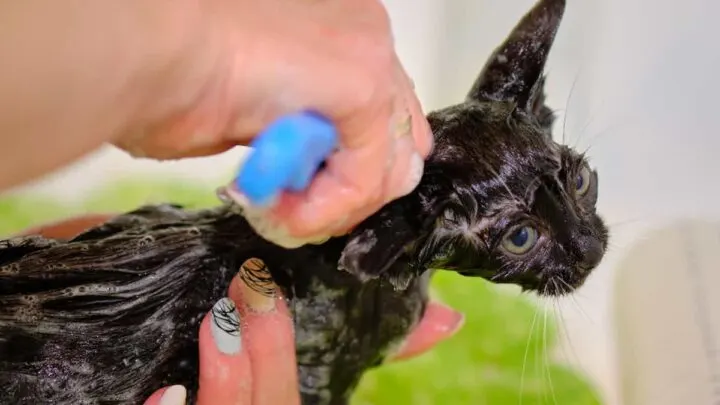
Should I Give My Cat A Bath If They Have Fleas?
Baths are one technique that can help get fleas off your cat fast, which makes them a good option if you have a cat with a severe flea problem, health issues, or allergies related to fleas. But giving a healthy cat a bath for just a few fleas might not be as good an idea.
Why?
Well, there are two reasons why most vets no longer really recommend flea baths for cats.
- Baths are stressful and difficult for most cats, and the benefits often aren’t worth the added stress.
- There are effective alternatives to giving your cat a bath that can take care of flea problems almost or more effectively than baths, which aren’t as stressful and are generally easier on you and your cat.
That’s not to say that baths aren’t one way of dealing with fleas if your cat has them. Baths are an option.
Instead, most experts agree that topical flea treatments, brushing with a flea comb, and other techniques to manage fleas are less stressful and easier to use.
Do You Have To Reapply Flea Treatment After A Bath?
Regarding most flea treatments for cats, you shouldn’t need to give them more after a bath as long as you waited long enough after the original treatment.
If you use oral medication, there is no waiting time after the treatment before your cat can have a bath.
If you use a topical treatment, you should wait at least 48 hours before giving your cat a bath to ensure the medication is fully absorbed and active. You don’t want to give more medication, though, to make sure you don’t accidentally give them too much, thanks to the partial absorption of the first dose.
So, don’t double medicate; just wait a little longer for bath time if you need to.

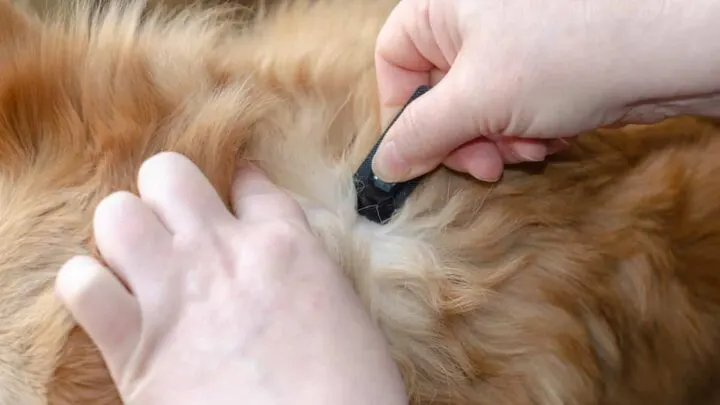
Should I Give My Cat A Bath Before Flea Treatment?
No. Interestingly enough, even though it might seem like a good idea to give your cat a bath before applying a topical flea treatment, that can actually make it harder for your cat to fully absorb and benefit from that treatment!
The reason is that the oils on your cat’s skin help medication get absorbed, and most topical formulas are designed to have that medication there.
If you bathe your cat ahead of time, especially if you use a cat shampoo, you’ll remove most of the oils from their skin, which can lead to lower-than-average absorption and only partial flea protection.
When Can I Touch My Cat After Flea Treatment?
Every topical flea treatment for cats is a little different, so they should all have instructions for how long after application you can start petting and scratching your cat again.
That said, a good rule of thumb is to avoid petting the area with the treatment for about 24-48 hours to ensure you don’t accidentally get some treatment on you.
Thankfully most flea treatments aren’t harmful to people, so it’s not a health risk if you do get some on you.
The real problem is that you might remove part of the dose accidentally, which could mean that your cat will only get partial flea protection coverage.
Can I Brush My Cat After Flea Treatments?
It’s generally better to wait 1-2 days after a flea treatment to brush the treatment area. You can brush other parts of your cat, just not the immediate area around the flea treatment.
However, it is perfectly safe to brush your cat completely before the flea treatment. So if you have a long-hair cat or a cat that needs frequent brushing to help them feel comfortable and to prevent fur matting, go ahead and give them a once over first. Then, after two days, you can start brushing your cat again.
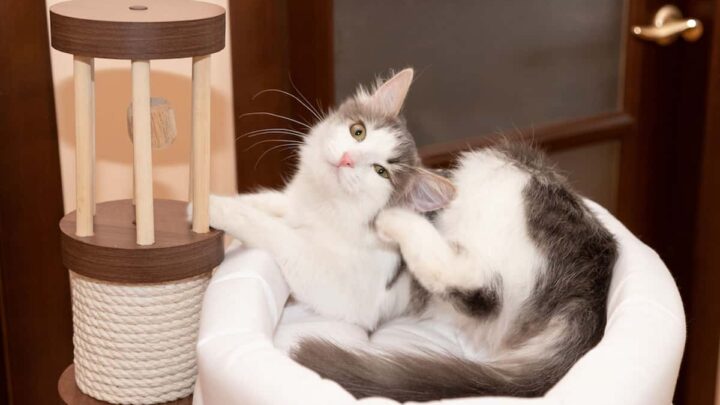
Should I Put A Cone On My Cat After Flea Treatments?
A cone of shame isn’t usually recommended after giving your can flea treatments, but there are other ways you can protect your cat and stop them from grooming a flea treatment out of their fur.
Cones of shame aren’t usually recommended, mostly because they are stressful for your cat and because they can make it harder for cats to get around and eat while they are wearing them.
Alternatively, consider getting a couple of onesies designed for a two-year-old and button those on your cat. They may not like it, but they’ll be more mobile and unable to get to the flea treatment.
Things To Consider
Remember that all cats are different; not all cats will need additional help leaving their flea treatment alone while it sinks in. If your cat doesn’t seem to need help, you might not have to worry about it.
After giving them new flea treatments, you should also monitor your cat closely. There is a small but possible chance that your cat may have an allergy to the treatment and may need extra help.
If your cat does show any signs of an allergic reaction, from unusual behavior to excess itching or even seeming like it might be in pain, you should contact your vet immediately and see if they can help.
If you can’t get your cat to a vet immediately, you can also ask if any anti-histamines are safe for your cat or over-the-counter remedies you can try to help.
For topical flea treatments, if your cat does show signs of an allergic reaction, you may want to give them a bath to get the treatment off as quickly as possible.
Remember to check and see what the treatment is made of. Oil-based treatments may require cat-safe shampoo or soap to remove fully. If you aren’t sure whether a bath might help, call your vet and ask.
Taking care of your cats can sometimes be complicated, but flea treatments don’t have to be. Read the instructions, follow them as closely as you can, and make sure to call your vet for any complications. If you can do that, you should easily keep your cat safe from fleas!

My name is James, and welcome to FAQCats!
Along with our team of cat owners, expert pet enthusiasts, and pet professionals, we aim to write engaging helpful, engaging content about cats. At FAQCats we strive to provide content that’s accurate and fun to read. Our team writes about everything related to cats; even the most complex of topics. Through extensive research and caring for our own fur-pals, we’re able to provide something cat owners worldwide will love. Have a look around, and leave us feedback anytime!