

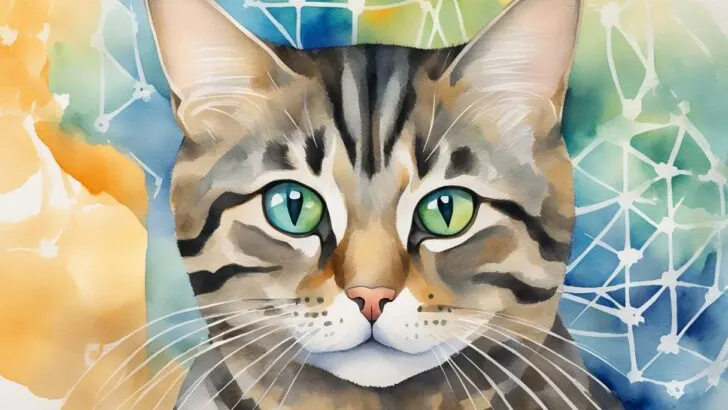
The distinctive ‘M’ on a cat’s forehead is a hallmark of tabby cats, a trait you might have noticed whether snuggling with your own furry friend or admiring a feline from afar.
This feature is not indicative of a specific breed, but rather a common characteristic of the tabby coat pattern that can appear in many cat breeds. Tabbies are known for their striking patterns that also include stripes, whirls, and spots on their sides and limbs.
You may be familiar with the various tabby patterns that feature the ‘M’, such as the classic or marbled tabby with its well-defined swirls and the mackerel tabby with narrow stripes reminiscent of a fish skeleton.
These patterns, and the accompanying ‘M’, arise due to genetic factors controlling fur pigmentation and are a visual representation of a cat’s genetic history.
As a cat enthusiast, you’ll appreciate that while the ‘M’ might not tell a cat’s life story, it certainly adds to the mystery and charm of these beloved animals. The tabby pattern is so prevalent that even if you adopt a mixed-breed kitten, there’s a good chance it will flaunt an ‘M’ on its forehead.
The Genetics of the Tabby Pattern
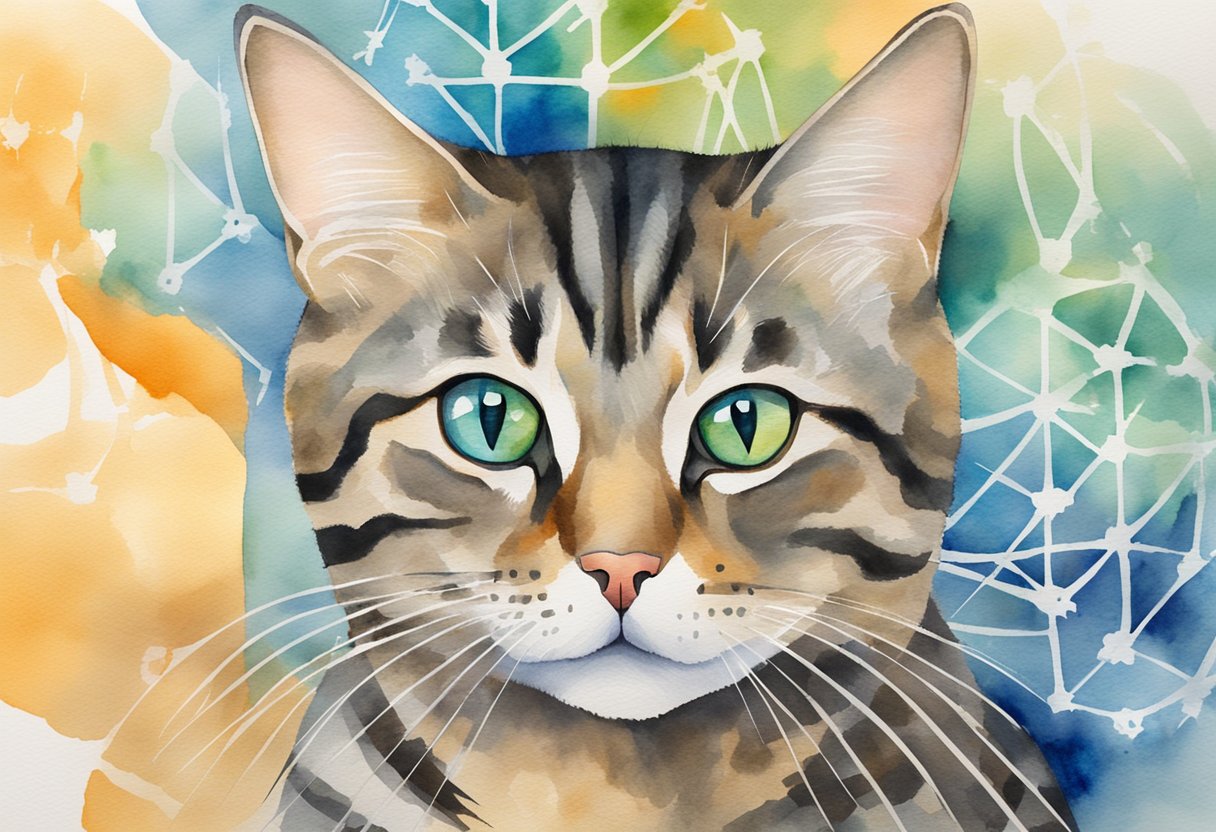
The distinctive “M” on a tabby cat’s forehead and the intricate coat patterns they flaunt are written in their genes. As you dive into the fascinating world of feline genetics, you’ll discover how these genes dictate the array of patterns that make tabby cats so unique.
Understanding Tabby Coat Genetics
Tabby is not a breed but a coat pattern influenced by the agouti gene. This gene regulates whether a hair strand has a banded appearance, typical of tabby cats.
The tabby pattern emerges from a combination of two genetic elements: the agouti gene and the tabby pattern gene. There are different alleles, or variations, of these genes that can result in the common tabby patterns you see.
- M allele: Leads to the classic M marking on the forehead.
- agouti allele: Determines whether the pattern is solid or banded.
A dominant form of the tabby pattern gene will produce the typical tabby markings. If tabby is visible on a cat, it means it has at least one dominant allele of this gene.
Types of Tabby Patterns
There are four recognized tabby patterns, each with its unique genetic twist:
- Mackerel (Striped):
- Vertical stripes run along the sides.
- This pattern is like fishbones, thus the name ‘mackerel.’
- Classic (Blotched):
- Swirled or marbled pattern.
- Often has a bullseye mark on the side.
- Spotted:
- Spots vary in size and form.
- Can range from large blotches to small dots.
- Ticked (Agouti):
- Each hair has multiple bands of color.
- No stripes or spots, giving a salt-and-pepper or sand-like appearance.
Each fur pattern you see, from the bold stripes of a mackerel tabby to the soft flecks of a ticked one, is an expression of these genetic factors at play. And while the “M” on their foreheads is a hallmark of the tabby, it’s possibly a pleasant quirk of the pattern’s complex genetics, one that cat lovers and scientists alike continue to study and admire.
Cultural and Mythological Significance
As you explore the mysteries of your feline friend, you’ll find that the ‘M’ on their forehead is not just a pattern; it’s steeped in cultural and mythological stories that span across civilizations.
Symbolism and Superstitions Associated with the ‘M’
Ancient Egypt revered cats as sacred animals, closely associating them with the goddesses Isis and Bastet. The ‘M’ was thought to be a sign of the mystical powers that cats held and was linked to good fortune and fertility. The mau, which is the Egyptian word for cat, suggests a divine status, highlighting cats’ importance in that culture.
Legends from various cultures have specific tales explaining the ‘M’. Christianity for instance has a tale involving the Virgin Mary. As the legend goes, Mary marked the cat on the forehead as a sign of gratitude for providing warmth and comfort to baby Jesus in the manger, thereby also associating the ‘M’ with love.
Islam contributes another fascinating story, where a tabby cat named Muezza earned the ‘M’ by saving the life of the Prophet Muhammad. The ‘M’ here symbolizes the special connection and the bond of love that can exist between humans and cats, reflective of the love and respect Muhammad had for the animal.
When it comes to superstitions, many believe the ‘M’ announces good fortune. There’s a romantic notion that the ‘M’ is related to the moon, suggesting cats have a celestial connection or mystical powers over the unseen, which is probably why so many superstitions circle around cats and the night.
Remember, while these stories and beliefs add an air of enchantment to your cat’s forehead ‘M’, it all boils down to genetics. Yet, the ‘M’ does lend a certain allure to tabbies, contributing to the legacy of cats as creatures surrounded by mystery and allure.
It’s a conversation starter and yet another reason to adore these purring companions. Whether or not you hold these myths close to heart, there’s no denying that the ‘M’ adds to the majestic nature of cats and the myriad reasons why we cherish them.


My name is James, and welcome to FAQCats!
Along with our team of cat owners, expert pet enthusiasts, and pet professionals, we aim to write engaging helpful, engaging content about cats. At FAQCats we strive to provide content that’s accurate and fun to read. Our team writes about everything related to cats; even the most complex of topics. Through extensive research and caring for our own fur-pals, we’re able to provide something cat owners worldwide will love. Have a look around, and leave us feedback anytime!