

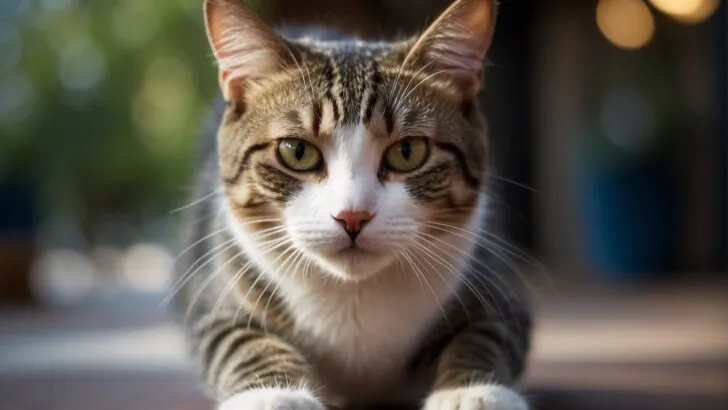
Cats kick their back legs as a part of their natural behavior, often during playtime or when they exhibit hunting instincts. You might have noticed, during moments of play with a string or feather wand, how they suddenly grasp the object with their front paws and ferociously kick with their back legs.
This is a simulation of their instinctual hunting technique used to disarm prey.
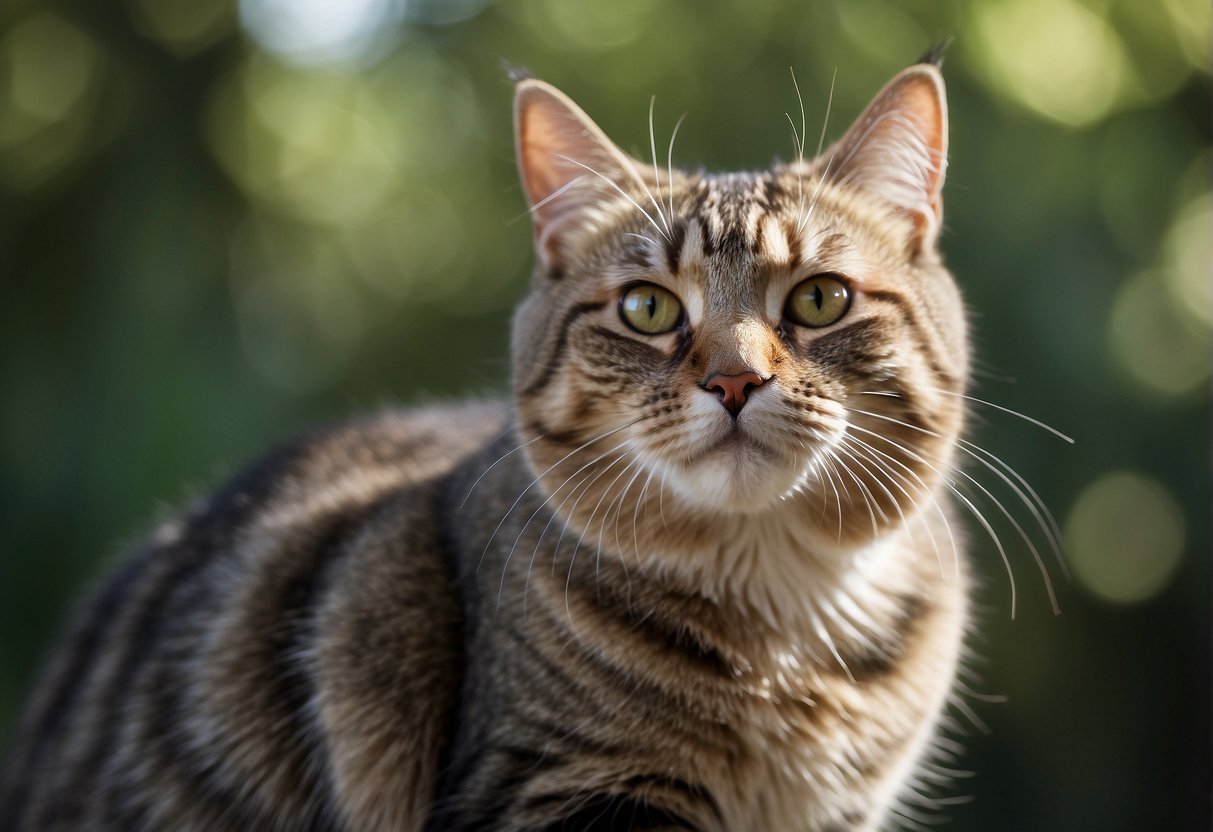
Their powerful hind legs are designed to deliver swift and strong kicks that, in the wild, could incapacitate or kill their prey. Observing your cat in play, you’ll see this action replicated as they try to ‘catch’ toys or when they’re play-fighting with you or other animals.
It’s how they practice their survival skills.
Aside from play and practice, this kicking motion, known as ‘bunny kicking,’ could also be a part of a defensive maneuver.
When a cat flips onto its back—something which might happen during an altercation—they’re in a potentially vulnerable position with their stomach exposed. By kicking, they are activating a key defense mechanism to ward off any perceived threats.
So when you’re engaging with your cat, watch for the signs. If they start kicking while on their back during a particularly spirited play session, it’s their way of saying they’re getting a bit overstimulated or they’ve had enough.
Behaviors Behind Cats Kicking
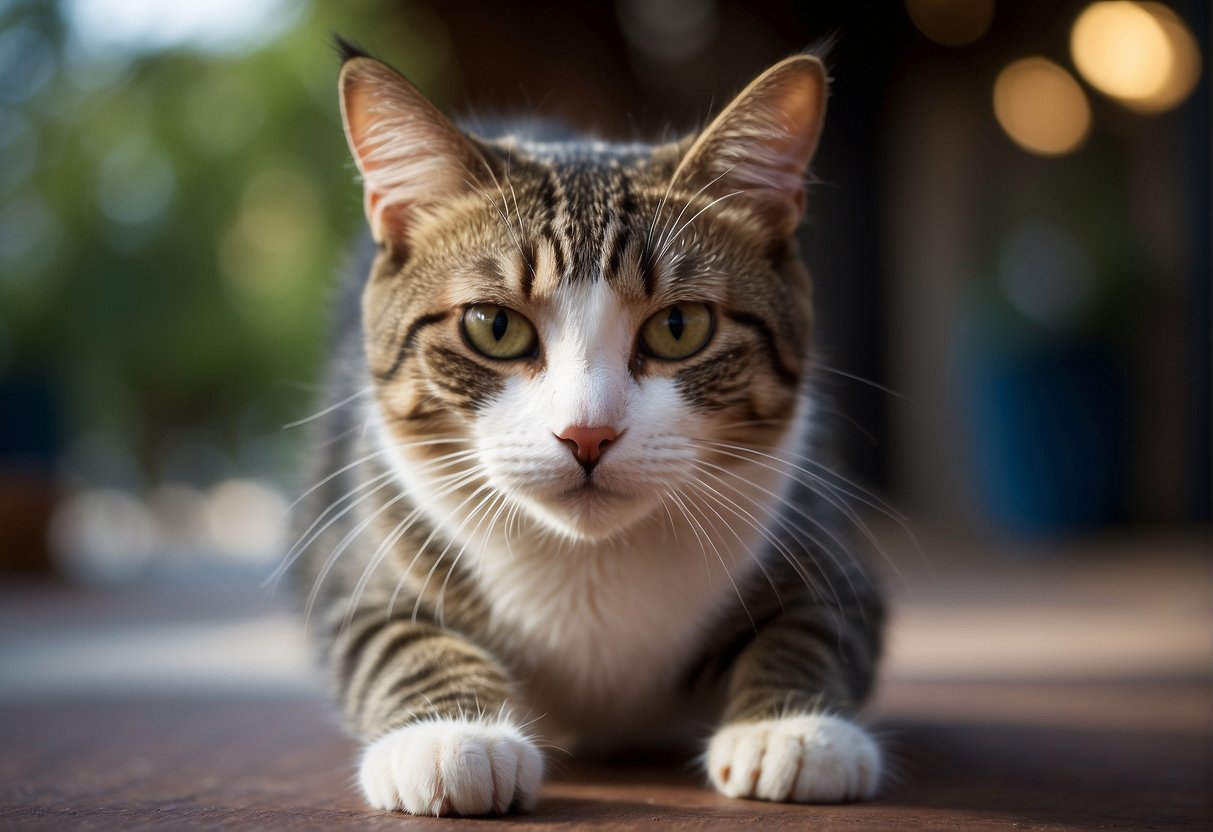
Cats are complex creatures with behaviors that intrigue and delight their human companions. The kicking you’ve seen during playtime is deeply rooted in their natural instincts and serves as a miniature display of their fascinating predatory prowess.
The Basics of Feline Play
Feline play is more than just entertainment; it’s a critical part of a cat’s development. Your furball uses play to learn vital survival skills.
They simulate hunting when they pounce, chase, and tug at toys – or sometimes your unsuspecting hand.
It’s not just about having fun; play is a formative exercise for shaping a cat’s behavior and refining their innate abilities.
- Educational Play: Cats, especially kittens, learn the coordination and timing needed for hunting.
- Exercise: Regular play keeps cats in tip-top shape, promoting muscle development and flexibility.
- Bonding: Playing with your cat can help strengthen your bond with them.
Instinctual Drivers Behind Kicking
The notorious bunny kick is a powerful move where your cat grasps an object with its front paws and kicks it fiercely with the back legs. It’s not just playful aggression; it’s an instinctual behavior linked to hunting.
In the wild, a cat would use this kick to disarm prey or defend itself.
- Survival Instinct: The kicking mimics how a cat would strike at vital organs of its prey, showcasing their hunting instinct.
- Display of Power: It can also be a display of strength, communicating a cat’s capability to other cats and creatures.
Cats are compelling students of life, and their kicking behavior is a window into their wild heritage. As you interact with your cat using toys that trigger this bunny kicking, remember you’re engaging with a miniature predator honing its instincts.
Always be gentle, and respect their boundaries, especially when the kicks are more than playful!
Kicking as a Defensive Mechanism
Cats possess a unique defensive move known as “bunny kicking,” in which they use their back legs to protect themselves. This tactic is a powerful part of a cat’s instinctual repertoire, employed in moments of distress or fear.
Self-Defense and Fear Responses
When you startle or scare your cat, its natural response might be defensive aggression. This can manifest in various behaviors, including:
- Bunny kicking: A forceful, rapid thrashing with their hind legs.
- Biting and hissing: Often accompany kicking as warning signs.
- Growling: An auditory cue signaling a scared or aggressive mood.
These actions are instinctual and mean your cat feels threatened and is trying to defend itself. It’s crucial to recognize and address these fear responses to prevent escalation and ensure your cat’s comfort.
Recognizing Stress and Aggression Signs
Understanding when your cat is stressed or showing aggression allows you to preemptively calm or remove them from the situation. Here’s what to watch for:
- Body language: Ears flattened, whiskers back, tail puffed up.
- Vocalizations: Hissing or growling can indicate your cat feels threatened.
- Warning signs: If your cat is cornered, it may lash out with a combination of biting and bunny kicking.
Health and Physical Factors Influencing Kicks
When you observe your cat kicking its back legs, it could be as simple as getting some exercise or as complex as responding to a health issue. In attempting to understand this behavior, it’s important to explore both medical reasons and the role exercise plays in these kicking behaviors.
Medical Conditions and Kicking
If your pet begins to kick more often or more violently than before, it might be trying to indicate that something is wrong. Health issues such as arthritis can cause discomfort, leading to kicking as a response to pain.
Cats suffering from neurological disorders may also display unusual kicking as a manifestation of their condition. If an injury is present, kicking might be a way to alleviate the discomfort or a reaction to the pain.
- Arthritis or joint pain: Frequent kicking may soothe the soreness.
- Injury: Be observant of any behavioral changes; they could signify an injured limb.
- Neurological disorders: Repetitive kicking might point to a deeper neurological issue.
The Role of Exercise in Kicking Behaviors
Exercise is a crucial aspect of pet health, and kicking is one means by which cats engage in physical stimulation.
It might look like your feline friend is simply releasing energy, and in many cases, you’d be right. Exercise-induced kicking serves as an outlet for excess energy and to keep their reflexes sharp.
This is especially true for indoor cats that might not receive as much physical stimulation as their outdoor counterparts.
- Overstimulation: Rapid kicking might occur when cats become overly excited during play.
- Exercise: Encourage your cat with toys that promote healthy kicking during playtime.
Upon noting any persistent or unusual kicking, it’s best to consult a veterinarian to rule out or address any possible health issues.
Interactive Play and Enrichment
Keeping your cat engaged and happy involves more than just providing food and comfort. It’s crucial to satisfy their instinctual needs through interactive play that simulates their natural behaviors, such as the instinctive kicking motion seen in hunting.
Choosing Appropriate Toys
When selecting toys for your cat, consider those that stimulate their natural kicking behavior. Appropriate toys typically include:
- Stuffed Animals: Soft toys resembling prey allow your cat to wrap their paws around and kick with their hind legs.
- Kicker Toys: These are elongated plush toys that your cat can hold with the front paws and kick with the back legs.
A table of toys to consider for various cat personalities:
| Toy Type | Best For | Purpose |
|---|---|---|
| Stuffed Animal | Simulating prey; cuddling after play | Kicking; biting; promoting comfort |
| Kicker Toy | Encouraging active play | Full-body engagement; kicking; wrestling |
| Interactive Toy | Mental stimulation; coordination skills | Hunting skills; focus; biting |
Note: Avoid toys with small parts that may detach and present a choking hazard.
Establishing a Positive Playtime Routine
Playtime is a vital part of your cat’s day, and it’s essential to establish a positive routine. Here’s how you can ensure that your cat’s playtime is always a joyous occasion:
- Schedule Consistent Play Sessions: Cats thrive on routine. Aim for at least two play sessions daily. This helps manage their excitement and ensures a stable outlet for their energy.
- Monitor Excitement Levels: Keep an eye on signs of overstimulation. These include dilated pupils or twitching tails, which might lead to aggressive play. A clear indication is when gentle biting or scratching becomes more intense.
- Respect Personal Space: Allow your cat to have their own space. If they seem to retreat or their body language suggests they need a time-out, give them the room to cool down.
- End on a High Note: Finish each play session before your cat loses interest to leave them wanting more. This keeps excitement levels high for the next playtime.

My name is James, and welcome to FAQCats!
Along with our team of cat owners, expert pet enthusiasts, and pet professionals, we aim to write engaging helpful, engaging content about cats. At FAQCats we strive to provide content that’s accurate and fun to read. Our team writes about everything related to cats; even the most complex of topics. Through extensive research and caring for our own fur-pals, we’re able to provide something cat owners worldwide will love. Have a look around, and leave us feedback anytime!