

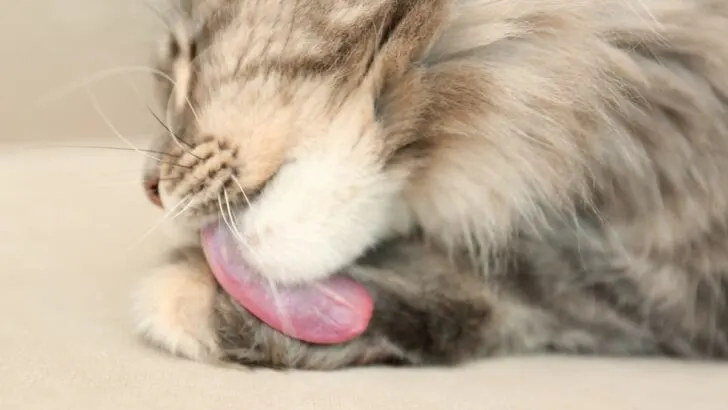
Cats, known for their impeccable grooming habits, can often be seen licking themselves to stay clean. Many pet owners wonder why these feline friends can lick even their rear ends without getting sick. It’s an interesting and puzzling aspect of feline behavior that has left many curious.
As it turns out, there are several reasons why cats dodge falling ill from self-grooming. Keep reading as we explore the fascinating world of feline hygiene, delving into the factors that make cats resistant to infections caused by their own saliva and the bacteria potentially present in their fur.
Why Don’t Cats Get Sick From Licking Themselves?
You may wonder how cats don’t get sick from all that licking, especially when they clean their rear ends. Well, the answer lies in their immune and digestive systems.
Cats possess a robust immune system that is well-equipped to handle the bacteria and pathogens in their waste. They have evolved to be able to handle bacteria that would otherwise make other animals, or even humans, sick. This immunity also extends to consuming raw food without negative consequences.
Their immune systems are exceptional, and their saliva plays a crucial role in maintaining their health. Cats’ saliva contains enzymes that help break down bacteria, preventing infections and keeping their fur clean. The saliva also helps prevent the growth of bacteria, which could make them sick.
Lastly, it’s worth mentioning that licking is not just about cat hygiene; it also serves a social purpose. In the wild, cats that live in groups, like lions, grooming each other strengthens bonds and helps maintain social harmony.
In essence, our domesticated cats have adapted to the demands of their environment and have developed effective mechanisms to stay healthy through self-grooming.
Is It Safe For Cats To Lick Themselves?
Cats have barbed tongues that are designed for grooming. Their saliva contains lysozyme, an enzyme with antibacterial properties that helps keep their fur clean and free from harmful bacteria. This self-grooming behavior also stimulates the cat’s immune system, providing a protective barrier against potential infections.
So yes, it’s safe for cats to lick themselves. We see our cat do it all the time, and he’s never gotten sick in the 6 years we’ve had him.
In addition to grooming, cats lick their private areas for various reasons. It’s a natural and vital part of their hygiene routine. Normal, firm bowel movements are not usually followed by licking. Still, if a cat has a gastrointestinal problem or inflammation, it might lick its private parts for relief.
However, excessive licking can indicate an underlying health issue. If you notice your cat licking itself more than usual, it’s important to consult a veterinarian to rule out any physical or psychological problems. For instance, over-the-top licking can sometimes stem from stress or anxiety.
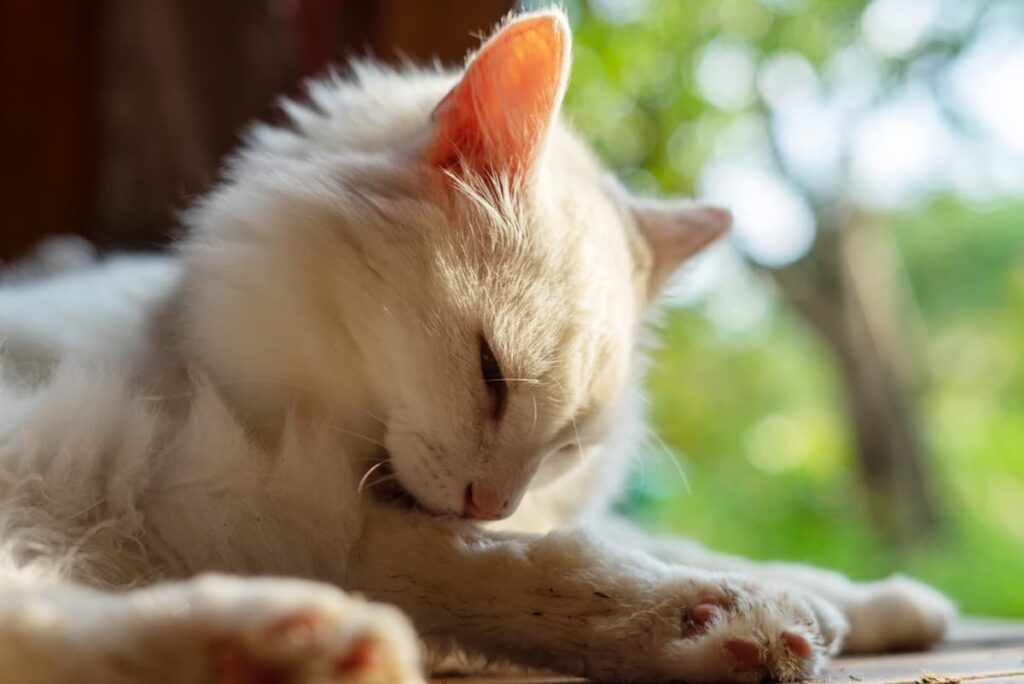
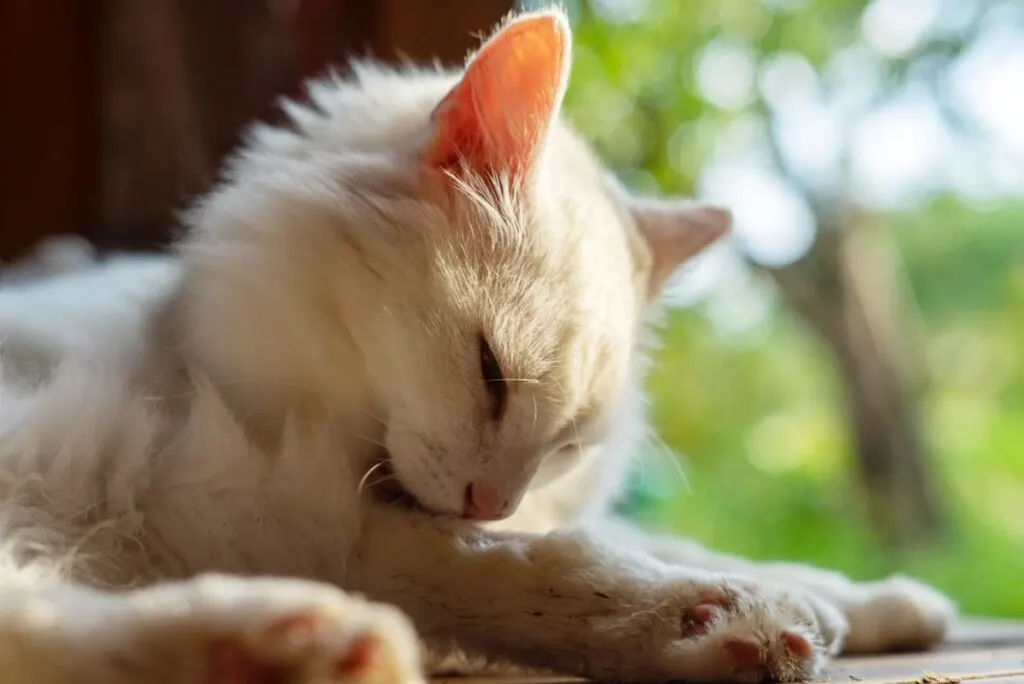
Reasons for Licking
As a cat owner, you may wonder why cats spend so much time licking themselves. The truth is, our feline friends have several good reasons for this behavior.
Benefits of Self-grooming
First and foremost, licking serves as a cleaning and pest control mechanism. Cats are meticulous groomers, and their uniquely barbed tongues help to remove dirt and debris deep within their fur.
This thorough grooming also helps disperse sebum, an oil produced by sebaceous glands at the base of each hair, which is vital in maintaining healthy skin and fur.
Another benefit of self-grooming is that it helps to reduce the risk of infection. No infection will occur as long as the licking doesn’t break the skin’s surface. However, excessive licking that results in hair loss and bald skin can lead to sunburn, frostbite, or other environmental insults.
Self-grooming also provides comfort and helps to alleviate anxiety. Cats might lick themselves more than usual when experiencing stress, lack of social interaction, or health issues.
Separation anxiety may also result in increased licking. It is important to consult a veterinarian for a full health exam if you notice your cat licking excessively.
Licking can also serve as a sign of a medical issue. For example, cats with a bladder infection or stone/crystal materials may lick their genitals for an extended period after urinating. They may also urinate more frequently and strain to do so. In such cases, it is crucial to consult a veterinarian for a proper diagnosis and treatment.

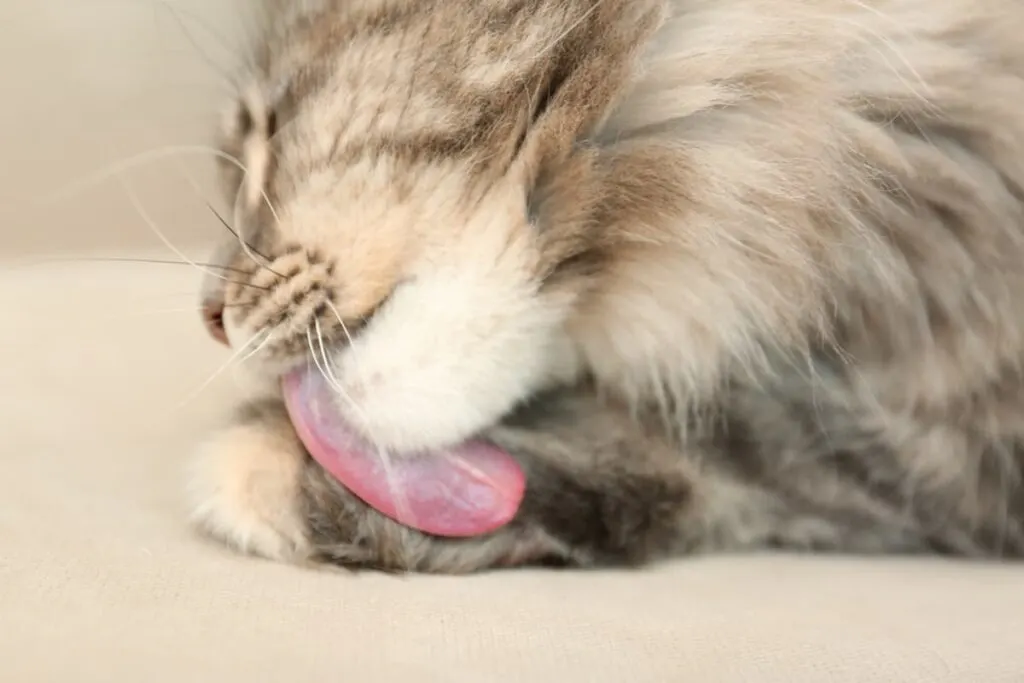
Potential Health Risks
As we dive into feline grooming, it’s important to discuss the potential risks involved, even though cats don’t usually get sick from licking themselves. In this section, we’ll explore hairballs and hygiene-related illnesses.
Hairballs
While most cats can groom themselves without any issues, one common problem is the formation of hairballs. As cats lick their fur, they sometimes swallow hair, which can accumulate in their digestive system.
Over time, this can form hairballs that may be coughed up or, in some cases, cause blockages in the digestive tract.
It’s essential to monitor your cat’s grooming habits, and if you notice excessive hairball production, consult your veterinarian for advice. Some helpful remedies may include increasing fiber intake or using specialized hairball control cat food.
Hygiene-related Illnesses
Another potential risk involved in our feline friends’ grooming habits is hygiene-related illnesses. Cats are pretty thorough in grooming, reaching even their private parts. Of course, this raises some concerns regarding potential infections.
Luckily, cats’ immune systems are generally strong enough to handle the pathogens they encounter while grooming themselves. While they may not get sick, you might unknowingly pick up on some bacteria from them.
That’s why we always wash our hands when we handle our little tabby cat. This is especially important to do before preparing meals or touching our faces or other items in the house.
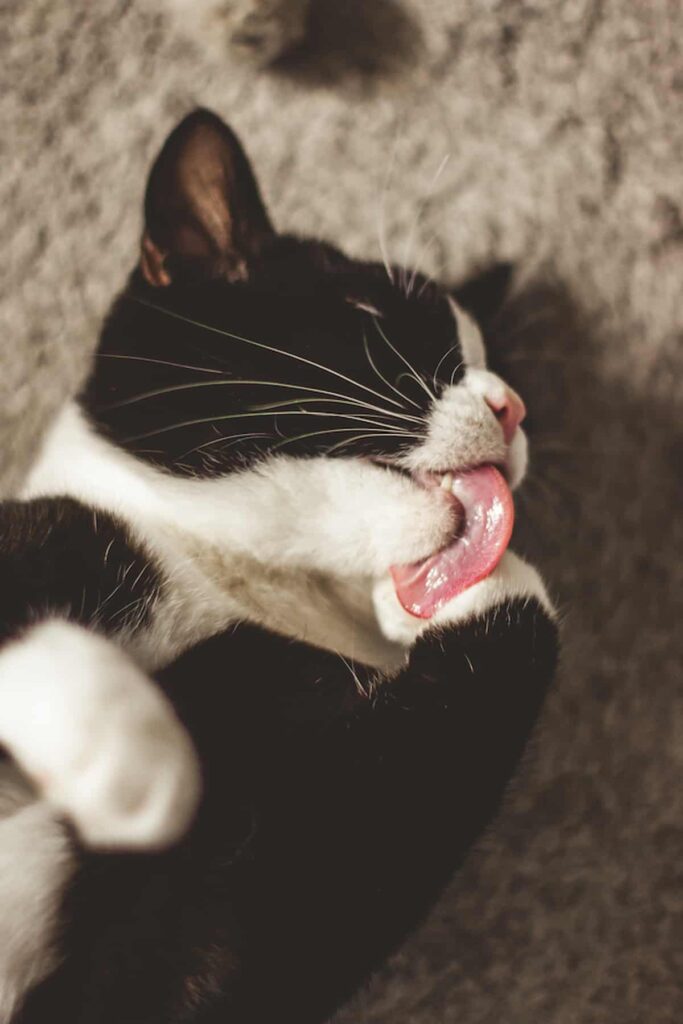
Can A Cat Lick Itself Too Much?
Having raised our cat for many years, one thing I’ve seen him do is to lick himself for long periods. It’s like he’s licking himself anytime I look in his direction. And that makes sense because cats typically spend up to 50% of their waking hours grooming.
But if a cat licks, bites, chews, or scratches excessively, it can lead to hair loss and even sores on its body. PetMD explains that fur loss in strips along the cat’s back, belly, or inner legs may indicate over-grooming behavior.
And we’ve seen this happen with our cat sometimes too. In those cases, we do try to limit his licking and keep him active to help alleviate any stress he’s dealing with.
There are various reasons why a cat might over-groom. Cornell University College of Veterinary Medicine mentions that compulsive licking at the tail head may be due to a flea infestation. At the same time, pollen or food allergies could prompt a cat to lick other parts of its body.
Another common reason for excessive licking is stress. Treating the source of stress and adding stress-relieving activities can help reduce over-grooming.
It’s important to monitor my cat’s grooming habits and look for any signs of excessive licking. If I notice any unusual behavior, I should consult a veterinarian to determine the underlying cause and develop a treatment plan. Some of the ways I can help my cat include:
- Checking for fleas and treating them promptly
- Identifying and minimizing exposure to allergens
- Providing a stress-free environment and engaging my cat in interactive play
- Considering the use of pheromones or other calming aids
Being attentive to my cat’s grooming habits can help me ensure its well-being and address any issues before they become health problems.
Final Thoughts
So, as It turns out, cats have robust digestive systems, and their immune systems can quickly adapt to harmful pathogens typically encountered through their self-cleaning process. Long story short, licking themselves rarely, if ever, gets them sick.
My name is James, and welcome to FAQCats!
Along with our team of cat owners, expert pet enthusiasts, and pet professionals, we aim to write engaging helpful, engaging content about cats. At FAQCats we strive to provide content that’s accurate and fun to read. Our team writes about everything related to cats; even the most complex of topics. Through extensive research and caring for our own fur-pals, we’re able to provide something cat owners worldwide will love. Have a look around, and leave us feedback anytime!