

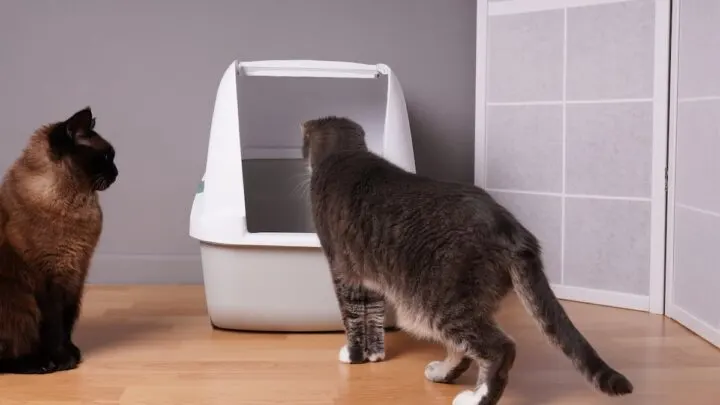
Felines are meticulous about their hygiene. Not only do they spend hours grooming and cleaning themselves, but they almost always prefer using a freshly cleaned litter box. So, it makes sense when cat parents have queries like: can two cats share the same litter box?
Here’s the thing, it’s a bad idea to make two cats share the same litter box because it can stress out your feline. Generally, a good rule of thumb to follow for litter boxes is one box per kitty and an extra to spare.
If you’re wondering how making your kitties share a litter box can affect them negatively or why they’re not very good with sharing their bathroom space – we’ve got just the thing for you. This article will walk you through everything you need to know about setting up litter spaces for multiple cats, including some helpful cleaning tips!
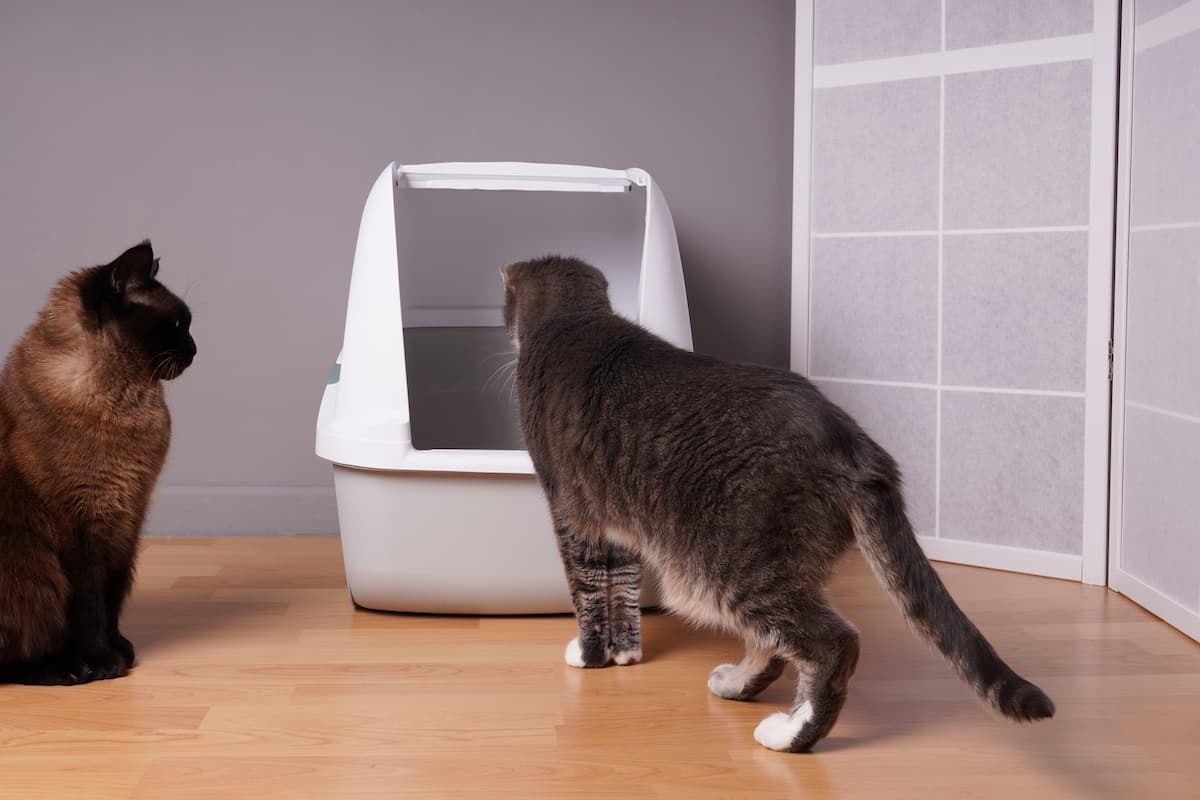

Do Cats Like Using The Same Litter Box
According to the Merck Veterinary Manual, cats are social creatures, and in the wild, they live in groups made up of queens and their litters. However, domesticated felines often exhibit solitary traits and prefer not to share their territory with another if they can help it.
That’s why cat parents trying to introduce another feline pet into their household might run into issues if one or both of the kitties are already adults. It’s much easier for kittens to get used to each other because they get used to each others’ presence and scents much faster.
Speaking of scents, one of the biggest reasons cats don’t like sharing their litter boxes is their remarkable sense of smell. Felines tend to mark their territory through the sebaceous glands in their cheeks and bodies. They also single out their area by urination or defecation.
It’s your cat’s way of claiming you as family and your home as its territory, and it’s also a warning to keep other feline contenders away. However, when you bring home another kitty to add to your feline family, suddenly, your original fur baby has to deal with an intruder it can’t get rid of.
Cats have trouble adjusting to changes in their daily routine. So, dealing with the presence of another cat is bad enough, but being forced to share a litter is like adding fuel to the fire.
How Can You Tell Your Cat Is Stressed From Sharing A Litter Box
Stress in felines can manifest in various ways, but physical or behavioral symptoms can manifest. If you’d like to know whether your kitty is affected by having to share its litter, here are some of the signs to watch out for:
Physical Signs
- Vomiting
- Poor coat condition
- Inappetance or overeating
- Bald patches on fur due to excessive grooming
- Weight loss or weight gain
- Lethargy
Behavioral Signs
- Eliminating outside the litter tray
- Scratching furniture excessively
- Spraying urine in different parts of the house
- Aggression
- Constant attention seeking
- Constant meowing
- Reluctance to play
If your cat is exhibiting one or more of the symptoms mentioned above, there’s a good chance it’s stressed out from the recent pet addition. You can help your pet adjust to the change by ensuring each cat has its own litter space to use. This way, your cat won’t feel like the newcomer is taking over its territory entirely.
The Pros and Cons Of Having Multiple Litter Trays Around the House
Pet parents always want what’s best for their fur babies. But, the truth is that the care and upkeep of a pet is a significant responsibility and often requires caretakers to conduct a balancing exercise. Similarly, opting to keep multiple litter trays around your house includes specific pros and cons that pet owners should be aware of. That way, you’ll be able to make an informed decision without missing out on anything. Here’s what you need to know:
Pros
- Keeping more than one litter means your cats will stay stress-free and happy.
- Multiple litters can also help put a stop to your pets eliminating outside the litter box.
- Having two cats share one litter box is unhygienic and can help spread illnesses; for example, cats can give each other worms. Having two litter boxes can help avoid such problems.
- Two litter trays for two cats equals less odor around the household.
Cons
- Keeping multiple litter trays can equal more work for pet parents. Besides daily cleaning (scooping out the gunk), cat owners will also have to expend time and energy washing the litter tray clean weekly.
- If you live in a space that doesn’t have too much legroom, accommodating multiple litters can become a hassle and eat-up space.
- Cats like digging before and after they have done their business. They do this to cover up their feces. However, sometimes excessive digging can lead to fallout from the tray, especially if the litter is made from bentonite clay. In the case of multiple litters, this means cat parents will have the added responsibility of clearing away any mess around the litter tray.
There’s no doubt keeping multiple litters can help your kitties adjust to their surroundings better. The practice is also more hygienic and can help ward off diseases in felines. Nonetheless, pet parents are looking at spending more time and effort to keep the litter trays and the surrounding areas clean and odor-free.
Why Do Cats Like Sharing A Litter Box
Strangely enough, cats are known to share a litter box despite the presence of several trays around the household. It’s not entirely clear why some felines are alright about sharing their bathroom space while others don’t like to. Still, here are some logical reasons why your kitties like using the same litter box:
Habit
If your cat has been using the same litter box from day one, the addition of another tray might not sway its preference. As we like to keep reminding our readers, felines are creatures of habit, and once they like a particular litter space, that’s what they’ll prefer using, even if another cat is using the same tray.
Convenience
Sometimes a feline’s preference for litter trays revolves around convenience. For instance, the litter tray is close to its sleeping spot.
Necessity
If one of your litter boxes is bigger than the other, it’s likely your cats are sharing the larger one because it takes longer to get dirtier. Additionally, if the tray isn’t adequately-sized and your felines have trouble moving around, they will naturally use the larger, more comfortable litter box.
Things To Consider
If you’ve made up your mind to add another box to your home litter setup, here are some practical tips that help you achieve the proper placement and format.
- While you can’t place a litter tray right in the middle of a hallway, it’s best not to put a tray within touching distance of the wall. That might lead to litter debris sticking to the walls or encourage your kitty to spray on the flat surface. Instead, leave a gap of two to three inches between the wall and the litter.
- Make sure to keep the litter somewhere with plenty of ventilation so that there’s no odor buildup from your felines using their bathroom space.
- It’s best to avoid placing the litter anywhere too close to your sleeping or eating spaces.


My name is James, and welcome to FAQCats!
Along with our team of cat owners, expert pet enthusiasts, and pet professionals, we aim to write engaging helpful, engaging content about cats. At FAQCats we strive to provide content that’s accurate and fun to read. Our team writes about everything related to cats; even the most complex of topics. Through extensive research and caring for our own fur-pals, we’re able to provide something cat owners worldwide will love. Have a look around, and leave us feedback anytime!