


When it comes to kitten ownership, most owners constantly think about their furry friends and worry about leaving them alone for extended periods.
As pet-friendly workplaces and extra malleable working spaces become increasingly prevalent, bringing your furry friend to work with you is more attainable than ever.
It’s not all rainbows and sunshine, though; taking a cat to work has some pros and cons. So, let’s do that. We’ll explore the pros, cons, and risks associated with taking a kitten to work and tips and considerations for creating a safe and comfortable work environment for everyone.


Pros of Taking a Kitten to Work
We all know about taking dogs to work, but it’s common to find people who want to do the same with their cats. Here are some of the pros:
Increased socialization for the kitten
Bringing your kitten to work can provide an opportunity for increased socialization and exposure to new experiences, people, and other animals. This can be especially advantageous for kittens who may have missed socializing during their early growth.
The corporate world can be ideal for your kitten to mature and build self-esteem. By introducing it to new experiences, you can build a better bond with your cat.
Reduced separation anxiety for the owner
For owners who worry about leaving their kittens home alone, bringing them to work can help reduce separation anxiety for both the owner and the kitten.
Knowing that their kitten is close by and well taken care of can help alleviate stress and anxiety for the owner, while the owner’s presence can help provide comfort and reassurance to the kitten.
Improved morale and productivity in the workplace
Consider the power of a playful kitten in your workplace – it can help lift spirits, reduce stress, and foster positive employee morale. Taking breaks for cuddle sessions with an adorable feline companion is proven to promote greater productivity and provide workers with a much-needed respite from their hectic schedules.
Studies have shown that when people are allowed to bring their pets to work, they are happier with their job and work harder.


Cons of Taking a Kitten to Work
With the pros come the cons. Here are a few disadvantages to bringing your cat to work:
Potential health and safety hazards in the workplace
Introducing a kitten into the workplace could harm its well-being. Cleaning agents, exposed wires, and pointed items are only some of the hazardous materials that can be dangerous for a curious feline.
For this reason, employers should make sure their environment is safe for pets before introducing them into the office space.
Then, there’s the possibility that kittens may get hurt more easily in a busy workplace. It’s important to take the nature of your job into account. What kind of tasks goes on? Could your kitten get lost or into trouble? All those points matter, so weigh the risks.
The kitten’s age and temperament
Although kittens are undeniably adorable, bringing them into the workplace may not be practical. Kittens can demand more supervision than adult cats to remain healthy and happy – think regular feedings, naps, and litter box cleanups that could prove too time-consuming amidst a bustling business atmosphere.
Furthermore, a kitten’s personality is another important aspect to consider. Kittens with very timid or combative personalities may not be suitable for a business setting.
Conflicts with coworkers who may not support bringing a kitten to work
Bringing a kitten to work may be a practice that is only sometimes accepted among coworkers. Some coworkers may have allergies or phobias or prefer a pet-free workplace.
When deciding to bring a kitten into your work environment, it is imperative to be aware of the potential conflicts and address any hesitations or objections from colleagues with respect.


Risks and Challenges of Taking a Kitten to Work
I briefly mentioned risk earlier, but let’s get into more detail here. The reality is that any job can pose some risk to a kitten. For example, taking a kitten to a construction job is obviously more dangerous than a small work office.
Managing the kitten’s behavior in the workplace
Implement regular instruction and socialization for your pet to guarantee that your kitten is kept in line and does not disturb the workplace.
Additionally, design a pleasant and safe work area to reduce any tension or discomfort experienced by the little one. Doing so will help keep him or her from making too much noise at inappropriate moments!
Considerations for adult cats in the workplace
When deciding to bring your cat into the workplace, it’s important to consider their needs and wants. Kittens tend to be more adaptable in this environment than adult cats, who may require extra space for privacy or alone time. Plan to ensure a comfortable home away from home for both you and your feline friend.
Kittens as Service Animals or Emotional Support Animals
Although it may appear like a great plan to bring your beloved kitten with you to work, it’s critical to remember that kittens are not counted as service animals under the Americans with Disabilities Act (ADA).
Service animals are specifically trained to perform tasks that aid people with disabilities, and the ADA only recognizes dogs and, in some cases, miniature horses as service animals.
Additionally, while emotional support animals (ESAs) may be permitted in some workplaces under certain circumstances, they also require specific documentation and approval.
Unlike service animals, Emotional Support Animals (ESAs) provide comfort and support to individuals suffering from mental health issues without extensive training.
Feline friends are undoubtedly lovely and affectionate, but unfortunately, they do not generally meet the qualifications to be considered an Emotional Support Animal (ESA). So while you may discover your kitten to be a comforting companion in the home environment, it is vital to consider that bringing them with you to work won’t always be feasible.

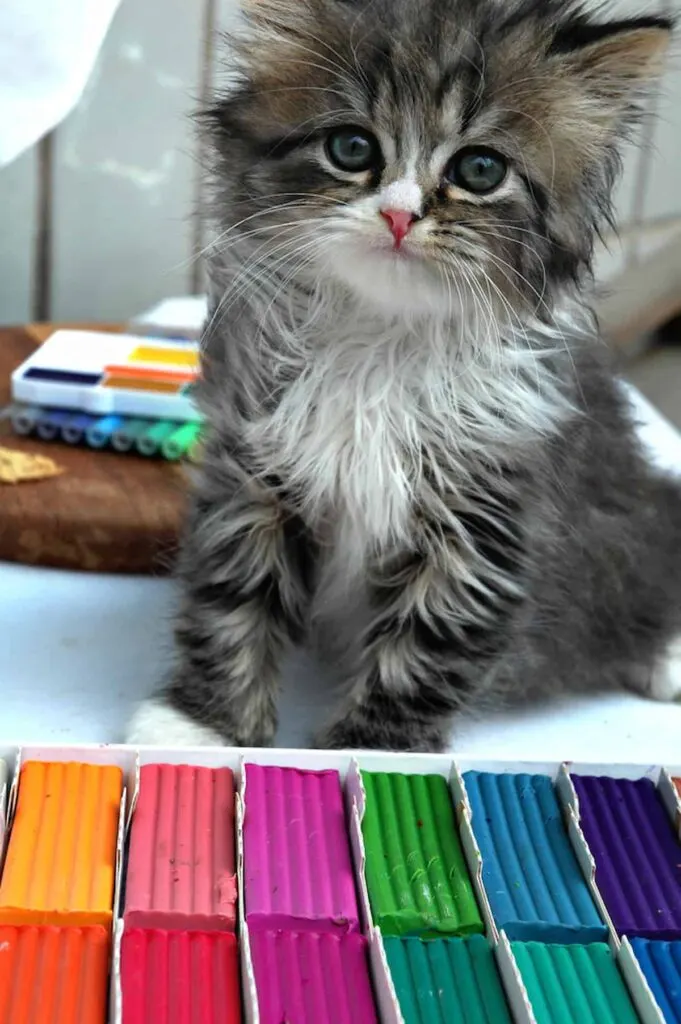
Preparing to Bring a Kitten to Work
So, if you’ve read this far and still want to bring your kitten to work, then great! But, before you go and do that, let’s make sure you and kitty are prepared for what’s ahead.
Kittens’ Needs and Requirements
Before introducing a kitten to the office, it’s imperative that you can provide for all of its needs. Kittens have specific demands, such as:
- Food and water: Kittens need to eat and drink regularly, and you’ll need to provide fresh water and food throughout the day.
- Litter box: Kittens need a clean and accessible litter box when nature calls.
- Lightweight cat toys: To help keep the kitten entertained while you’re working, it’s a good idea to have some lightweight toys on hand that they can safely play with.
- Soft pet brush: A soft pet brush can help keep your kitten’s coat in good condition and also imitates the mother cat grooming her young, which can help keep the kitten calm.
Setting up a Safe and Comfortable Work Environment for the Kitten
Before introducing a kitten into your workplace, you must guarantee its safety and contentment in the setting. Here are some tips to make sure the kitten has a comfortable place to spend the day:
- Provide a separate cage or enclosure: A cage or enclosure provides a safe space for the kitten to rest and play in. This also helps keep the kitten away from potential hazards in the workplace.
- Kitten-proof your workspace: Make sure the area where the kitten will be is free from potential dangers such as sharp objects, open containers of liquids, or anything that the kitten could chew or ingest.
- Small room exposure: Consider exposing the kitten to a small room to help them get used to the new environment before they can roam around the whole workspace.
Training the Kitten for the Workplace
You must create an inviting and secure area to ensure your kitten has a safe space to explore in their new environment. Once this is done, the kitten must adapt to their surroundings quickly. Here are some tips for training your kitten for the workplace:
- Periodic and brief handling: Start by handling the kitten for short periods throughout the day. This helps the kitten get used to human contact and helps them feel more comfortable in the workplace.
- Speak softly and calmly: Use a soft and gentle voice when talking to the kitten to help them feel calm and relaxed in the new environment.
- Bonding process: Take the time to bond with the kitten throughout the day by giving them treats or playing with them during breaks. This helps the kitten associate the workplace with positive experiences and makes them more comfortable there.
By preparing the kitten’s needs, setting up a safe and comfortable work environment, and training them for the workplace, you can ensure they are happy and healthy at work.


My name is James, and welcome to FAQCats!
Along with our team of cat owners, expert pet enthusiasts, and pet professionals, we aim to write engaging helpful, engaging content about cats. At FAQCats we strive to provide content that’s accurate and fun to read. Our team writes about everything related to cats; even the most complex of topics. Through extensive research and caring for our own fur-pals, we’re able to provide something cat owners worldwide will love. Have a look around, and leave us feedback anytime!