


Cats turn their ears back for a variety of reasons, often as a response to their environment or internal feelings. If you’ve ever noticed your cat with its ears flat against its head, you might have been witnessing a sign of fear or aggression.
For instance, when I’m vacuuming, my cat’s ears often pin back as the roar of the vacuum signals a potential threat. Similarly, during a vet visit, those same flattened ears can indicate annoyance or fear due to the unfamiliar smells and sounds.

Understanding these ear movements is like learning a silent language, giving insight into your cat’s emotional state.
When your playful feline is stalking a toy mouse, its ears might swivel back in concentration right before pouncing. It’s like they’re honing in on their target, tuning out distractions to focus on their “prey.”
But it’s not all about play or discomfort; sometimes, a cat’s ears may turn back when they’re feeling particularly relaxed and are about to drift off to sleep, ears easing into a position of comfort.
Each flick, twitch, and turn of a cat’s ears is a piece of a conversation they’re sharing with you.
Understanding Cat Ear Language
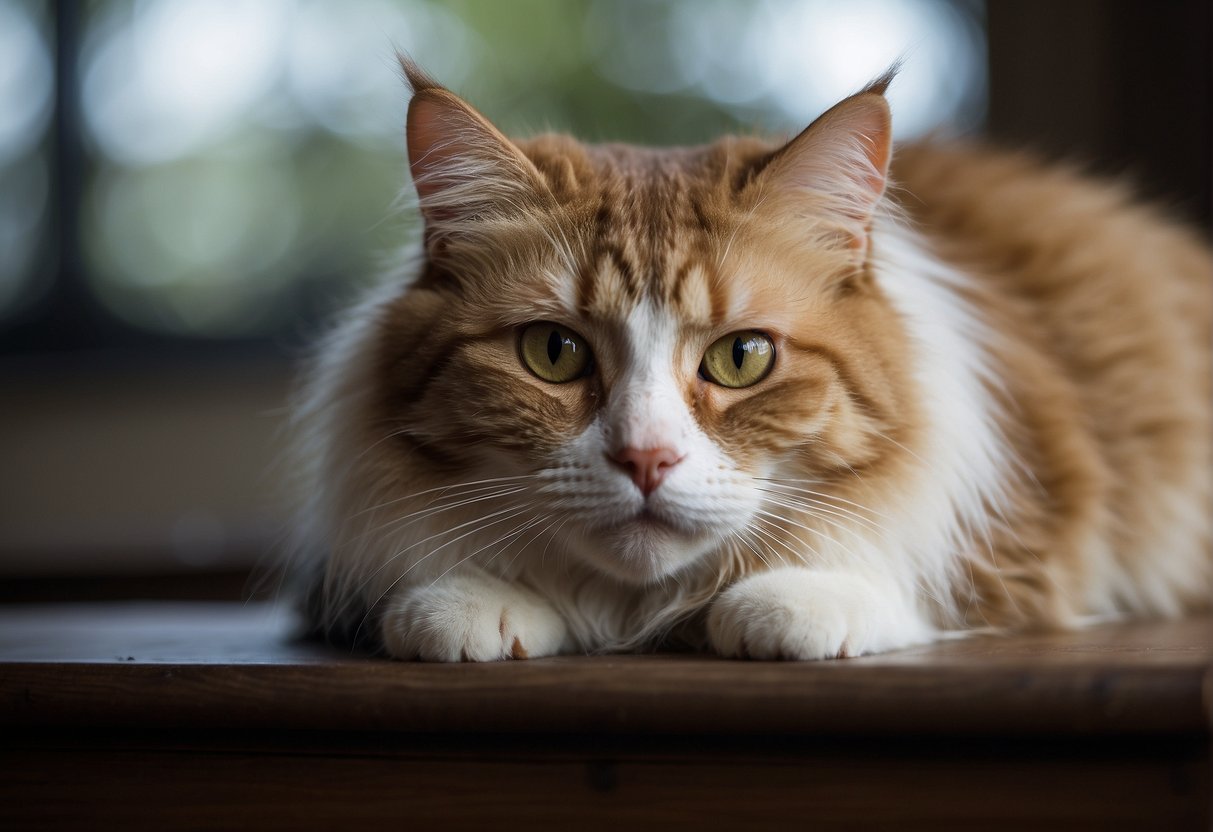
Cats communicate volumes through their ears, offering insights into their emotions and intentions. By learning to read these subtle signals, you can better understand and connect with your feline friends.
Ear Positions and Emotions
Ears Forward: When your cat’s ears are upright and facing forward, they’re likely content or curious. This position indicates a relaxed state, where they’re open to friendly interactions or are interested in their surroundings.
Ears Slightly Sideways: Also known as “airplane ears,” this ear position can suggest mild anxiety or uncertainty. Your cat might be assessing a new situation or deciding how to react to a perceived threat.
Ears Back: This is a clear indication of a more intense mood. Ears flat against the head can signal fear, aggression, or irritation.
- Fear or Anxiety: Ears back can be a sign of a scared cat, especially if accompanied by crouching or backing away. They’re trying to protect their ears, usually from a threat, and may be poised for a quick escape.
- Aggression: If your cat feels cornered or is ready to stand its ground, ears back might be a prelude to defensive action. Approach with caution, as they may be more likely to scratch or bite.
Subtle Signs of Feline Communication
Cats use ear movements, often combined with other body language, to convey complex messages. Here are some points to look for:
- Quick Twitches: If you notice your cat’s ears twitching or rotating frequently, your pet is highly alert and focusing on surrounding sounds.
- Mixed Signals: Sometimes, one ear may be forward and one back, indicating a conflict of emotions. Your cat might be simultaneously intrigued and cautious.
Cat Ear Health and Care
Taking care of your cat’s ears is crucial for their overall well-being. Regular check-ups can help detect issues early, which is key for maintaining good ear health.
Recognizing Ear Health Issues
Your cat’s ears should be clean, with no excessive wax or debris.
Signs of ear health issues include:
- Excessive scratching or pawing at the ears
- Unpleasant odor coming from the ear canal
- Redness, swelling, or discharge
- Loss of balance or hearing
If these symptoms are present, it could indicate ear mites, infections, or other health issues.
It’s essential to schedule an appointment with a vet for an accurate diagnosis and prompt treatment.
Ensuring Proper Ear Care
Here are steps to ensure the well-being of your cat’s ears:
- Inspect your cat’s ears regularly for signs of dirt, wax build-up, or infection.
- Clean the ears gently with a vet-recommended cleanser; never insert anything deep into the ear canal.
- Preventative care is paramount. This could include treatments for ear mites, which are common and highly contagious pests.
- Monitor for any changes or symptoms post-treatment, and consult your veterinarian if issues persist.
- Annual vet check-ups are recommended to keep your cat’s ears healthy.
Remember, while at-home care is important, nothing can substitute for professional advice.
Always contact your veterinarian if you’re uncertain about how to care for your cat’s ears effectively.
Responses to External Stimuli
As a cat owner, you’ll notice your feline friend is extremely responsive to the external world around them, particularly when it comes to sounds and their environment.
This section dives into why your cat turns their ears back in reaction to these stimuli, paving the way for better understanding and communication with your pet.
Reacting to Sounds and Environment
Cats have an extraordinary auditory system that allows them to detect even the faintest noises, a trait essential for a predator.
Their ears, equipped with 32 muscles, can rotate like satellite dishes, independently zeroing in on sounds from different directions.
When a cat turns its ears back, it’s often a response to loud noises or an unfamiliar new environment.
- Noise: Ears back can indicate a sound is too loud or unpleasant.
- New Environment: A new setting may cause them to be on high alert, ears flat and swiveling to catch every sound and assess safety.
In situations where they feel the need for a fight or flight response, such as a dog’s bark or the crash of a dropped pan, they’ll flatten their ears to protect them during a potential altercation or to streamline themselves if they need to make a hasty retreat.
Interactions with Humans and Other Pets
Your cat’s ear movements are also a barometer for their feelings towards human interaction and the presence of other pets.
You’ll notice a stark difference when your hand gently approaches your cat for a scratch and when a new or boisterous pet enters the scene.
- Human Interaction: When comfortable, their ears may pivot back toward your hand as a sign of trust when you go in for a gentle scratch behind the ears.
- Other Pets: With other animals, especially unfamiliar ones, ears back can mean they’re uneasy or even fearful, which might be followed by hissing if the interaction doesn’t improve.
Physical Mechanics of Cat Ears
Cats’ ears are remarkably engineered, combining intricate anatomy with flexible movement, which allows them to communicate and navigate their environment effectively.
Anatomy of the Feline Ear
The feline ear, or pinna, is the external part you often rub affectionately, and it’s just the tip of the iceberg in terms of the ear’s complex structure.
The pinna is composed of a thin layer of skin covering cartilage, making it both firm and pliable.
This structure houses a myriad of muscles—about 30 in total—which gives your furry friend the ability to move their ears independently.
- Muscle groups:
- Intrinsic muscles: inside the pinna, control the ear’s shape
- Extrinsic muscles: connect the pinna to the skull, control the ear’s position
This ear anatomy is key in allowing your cat to express emotions and react to their environment with precision.
The Flexibility and Movement of Ears
Consider your cat’s ears as their personal radar systems. Thanks to those many muscles, cats can swivel their ears up to 180 degrees, and move them separately.
This kind of movement is what cat owners often refer to as “airplane ears” because they can flatten and rotate their ears back akin to airplane wings.
- Ear movements:
- Forward: indicates interest and attention
- Sideways: often a sign of relaxation or mild irritation
- Backward (Flat against the head): can indicate fear, aggression, or defensive behavior
The range of motion in your cat’s ears is not just expressive; it’s highly functional.
The sensitivity of their sensitive ears can pick up even the faintest of sound waves from various directions, making them excellent hunters and alert companions.
These ear movements are a cat’s way of honing in on the exact location of a sound—a survival skill in the wild.


My name is James, and welcome to FAQCats!
Along with our team of cat owners, expert pet enthusiasts, and pet professionals, we aim to write engaging helpful, engaging content about cats. At FAQCats we strive to provide content that’s accurate and fun to read. Our team writes about everything related to cats; even the most complex of topics. Through extensive research and caring for our own fur-pals, we’re able to provide something cat owners worldwide will love. Have a look around, and leave us feedback anytime!