


Cats roll on the floor for a variety of reasons that range from feeling secure and content to signaling that they’re ready for interaction.
If you’ve ever noticed your cat suddenly tossing back onto the carpet, exposing their belly, and wiggly twisting, they could simply be basking in a safe and comfortable environment.
At times when I’ve been lounging on the sofa, my cat would do just this right beside me, eyes half-closed, the picture of relaxation.
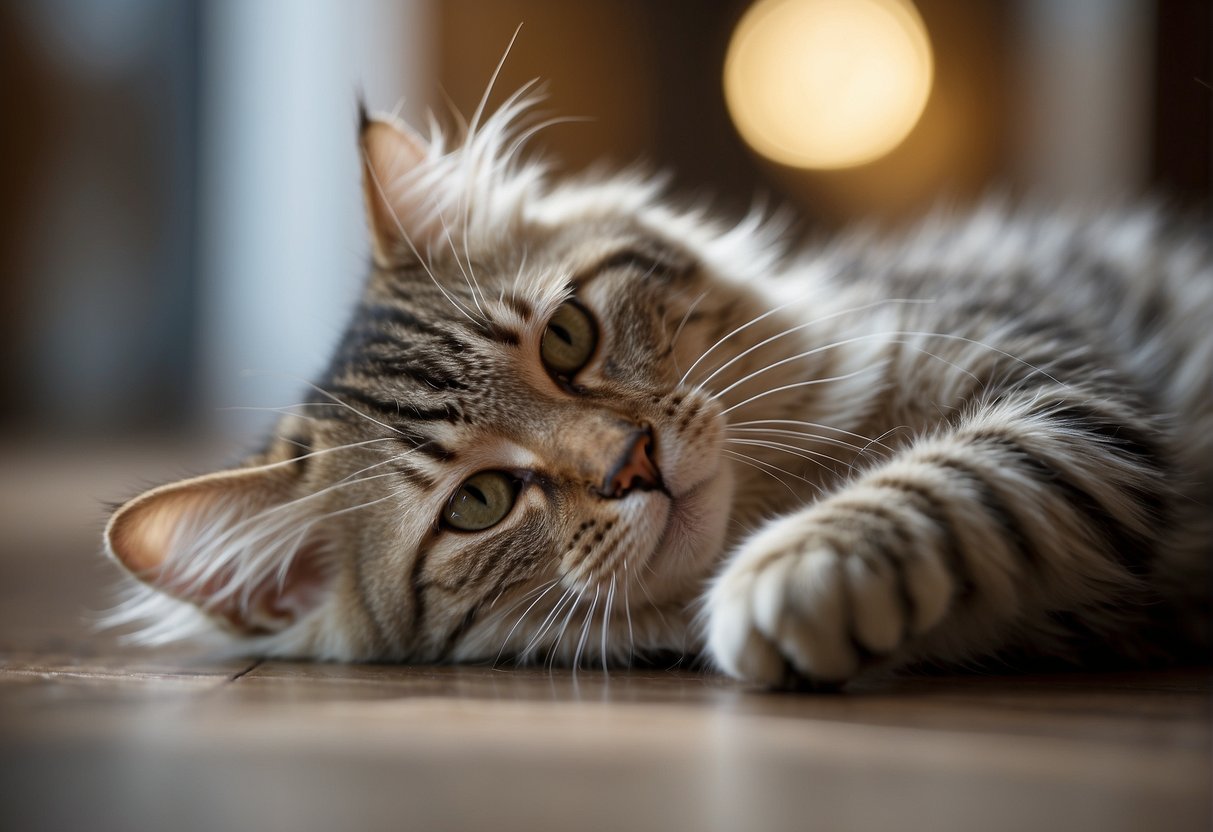
This rolling behavior isn’t just a sign of relaxation; it can also be a way for cats to mark their territory. They have scent glands on their bodies and when they roll around, they’re leaving their scent behind, claiming the floor as their own domain.
Just the other day, while cleaning, I observed my cat methodically rolling over a freshly vacuumed area, almost as if to say, “This spot is mine again!”
Lastly, a cat that rolls on the floor might have social motives—it’s their way of expressing a desire for attention.
It’s not uncommon to walk through the door after a long day to be greeted by your cat sprawling on the ground, signaling they want to be petted or played with.
It’s their endearing way of saying, “You’re home! Now it’s time for us.” This social gesture is a clear invitation to interact, and responding to it can further strengthen the bond between you and your feline friend.
Understanding Cat Rolling Behavior
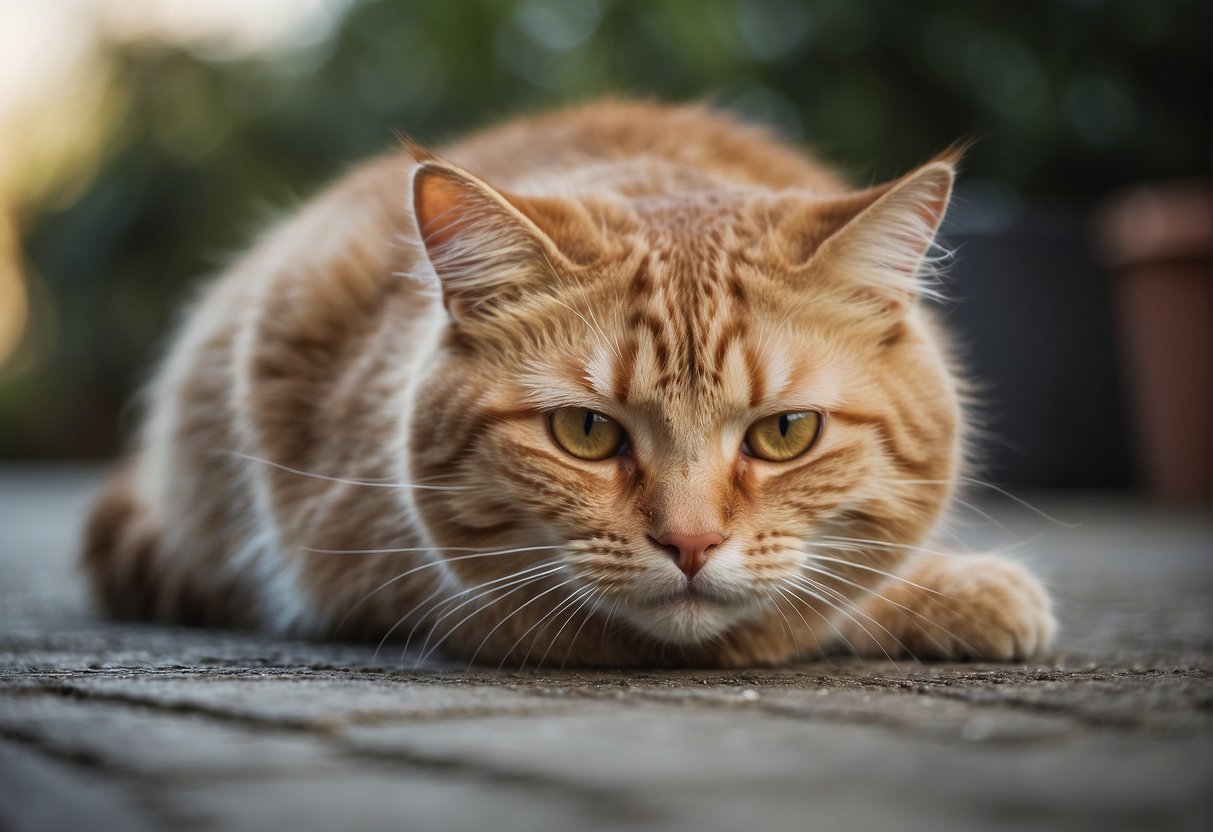
Cats display a variety of behaviors that may seem puzzling, but they’re often related to communication and health.
Communication and Marking Behavior
Cats use body language extensively to communicate and one key aspect is scent marking.
When your cat rolls on the floor, it’s often a way to deposit their scent via pheromones from their scent glands.
This simple action can signify several things, such as claiming territory, showing comfort and trust, and inviting play.
- Scent: Scent is a primary communication method for cats. Their bodies have multiple scent glands, especially on their cheeks, paws, and the base of their tails.
- Territory: By rolling on the ground, cats can spread their scent to mark their territory, letting other cats know this space is taken.
- Pheromones and Scent Glands: Pheromones carry specific messages and are released from their scent glands when they roll, which is detected by other cats.
- Marking: Apart from territorial claims, marking may also be a way to create a familiar and comforting environment for themselves.
Physical and Health-Related Causes
Sometimes, your cat’s rolling is more than communication—it can indicate a physical itch or a response to health issues.
An occasional roll is normal, but if you notice excessive rolling accompanied by other symptoms, it can signal something more serious.
- Itch and Skin Irritation: Cats may roll on the floor to alleviate an itch. Reasons for itching might include parasites like fleas, allergies, or general skin irritation.
- Health Issues: Keep an eye out for signs of pain or discomfort, urinary tract infections, abdominal pain, or nerve damage. Repetitive rolling or other unusual behaviors can be a red flag.
- Pruritus: This is a condition leading to intense itchiness and may result in your cat rolling around frequently as an attempt to get relief.
Social and Environmental Factors
When your cat rolls around on the floor, they’re often influenced by the social and environmental factors that surround them.
These behaviors can be a sign of your cat seeking attention or finding comfort in their territory. Let’s explore how your home and relationships with your cat can lead to this adorable display.
Attention and Affection
Cats are known to seek attention from their owners.
If they roll over and expose their belly, it can mean your cat trusts you and is requesting affection.
It’s their way of saying, “Hey, I’m here, and I’d love some cuddles!” However, not all cats enjoy belly rubs, so it’s essential to understand your furry friend’s preferences.
- Seeking Attention: Cats might roll around to grab your eye and encourage interaction. Positive reinforcement through petting or play can strengthen this behavior.
- Playfulness: A rolling cat may be in a playful mood and looking for a game. Grab a toy and enjoy this opportunity to bond.
Comfort and Security
In the comfort of their own home, cats perform behaviors that exhibit they feel safe and secure.
Rolling on the floor can be a part of marking their scent and claiming the space as their own.
- Trust and Environment: A cat rolling freely is a sign they trust their environment. It’s a response to feeling relaxed in a stress-free home.
- Routine and Home: Maintaining a consistent routine can create a sense of security, reducing anxiety and related stress behaviors in cats.
Common Behaviors in Cats
When your cat rolls around on the floor, they’re not just being cute; they’re displaying behaviors that are deeply ingrained in their feline nature.
These actions can vary from playful frolicking to instinctive displays, all telling you a story about your cat’s current mood and needs.
Play and Predatory Instincts
Cats are natural hunters, and their play involves behaviors that hone their predatory instincts.
You might notice that during playtime, your cat will often exhibit behaviors like pouncing, stalking, and yes, rolling around on the floor.
These activities are not just for fun; they’re essential in keeping your cat’s agility and hunting skills sharp.
Using toys that mimic prey, such as a feather wand or a laser pointer, can really bring out these instincts in a safe and controlled environment.
Additionally, the presence of catnip, which contains nepetalactone, can cause a euphoric reaction in many cats.
This may intensify their playful behavior, resulting in more dramatic rolling and flipping as they react to the invisible “prey” the scent makes them feel.
Responses to External Stimuli
Cats use their whole bodies to interact with the world around them, and rolling on the floor can be a response to various external stimuli.
For instance, pheromones can affect your cat’s behavior profoundly.
A cat in heat might roll around more frequently as a way to spread their scent and signal their availability to males.
During hot days, rolling on cool surfaces can help your cat cool down, as it exposes their belly, which doesn’t have as much fur, allowing them to regulate their body temperature.
Conversely, on colder days, you might find your cat seeking out patches of sunlight on the floor for a bit of extra warmth.
Interpreting Your Cat’s Actions
When your cat starts rolling around on the floor, communication is key. They are using their body language to convey various messages.
If you see your feline companion flopping onto their back and rolling, it’s often a sign of trust and contentment. They’re exposing their vulnerable belly to you, a sign they feel safe in your environment.
As they roll around, listen for purring; this is an additional signal that your cat is relaxed and happy. However, if the rolling is accompanied by meowing, it could be a request for attention—your cue to engage in some play or offer a few gentle pets.
Here’s a simple guide to understand what your cat may be trying to tell you with their rolling behavior:
- Affectionate Greeting: Soft purrs and a belly exposed with some gentle rubbing against the floor indicate they’re happy to see you.
- Seeking Attention: Meowing or persistent rolling may be a plea for interaction, whether it’s playtime or cuddles.
- Stretching: Rolling on the floor is a way for cats to stretch their muscles and boost their flexibility. It’s akin to you stretching after a long sit—feeling good is universal!
Remember, if a cat rolls around but then walks away or flicks their tail irritatedly, it’s a signal that they want to be left alone.
My name is James, and welcome to FAQCats!
Along with our team of cat owners, expert pet enthusiasts, and pet professionals, we aim to write engaging helpful, engaging content about cats. At FAQCats we strive to provide content that’s accurate and fun to read. Our team writes about everything related to cats; even the most complex of topics. Through extensive research and caring for our own fur-pals, we’re able to provide something cat owners worldwide will love. Have a look around, and leave us feedback anytime!